
Natural Supplements to Clean Arteries: A Cardiology Dietitian Reviews the Evidence
Natural Supplements to Clean Arteries: A Cardiology Dietitian Reviews the Evidence
Written by: Lian Liu, MPH, RD, CDCES | Specializing in Cardiac & Menopause Nutrition. Reviewed and updated: June 2026.
> Direct Answer: The idea that over-the-counter natural supplements can quickly "clean" or unclog arteries is a dangerous myth. While atherosclerotic plaque regression is biologically possible, clinical evidence shows it requires profound interventions like intensive prescription cholesterol-lowering medications or highly restrictive plant-based diets, rather than taking a daily unregulated supplement.
Key Takeaways
- Clinical Evidence: In a recent trial, popular supplements like fish oil, garlic, and red yeast rice failed to significantly lower LDL cholesterol compared to a low-dose statin.
- Actionable Step: Focus on proven dietary adjuncts instead; aim for 10-15 grams of viscous soluble fiber and 2-3 grams of plant sterols daily to actively trap and excrete cholesterol.
- Safety Warning: Herbal supplements are not benign. High-dose fish oil and turmeric can dangerously increase bleeding risks when mixed with prescription blood thinners like warfarin.
It’s one of the most common questions I hear from patients in my cardiology clinic: “Lian, what natural supplements to clean arteries do you recommend?”
After experiencing a cardiac event or receiving a scary lab report, it is completely understandable to search for a quick, natural fix to "unclog the plumbing." The supplement industry aggressively markets products that promise to dissolve plaque and restore heart health overnight. But as a cardiology dietitian, I need you to know the clinical truth: relying on over-the-counter pills to reverse heart disease can be a dangerous, expensive mistake.
Here is what the medical research actually says about plaque regression, popular supplements, and what you should be doing instead.
Do Supplements Actually Shrink Arterial Plaque?
The short answer: No. OTC dietary supplements do not significantly shrink or "clean" established arterial plaque.
When it comes to cardiovascular disease, any intervention must be judged on two criteria: does it lower atherogenic lipids, and does it reduce clinical events like heart attacks? A recent randomized clinical trial (the SPORT trial) compared a low-dose statin (rosuvastatin 5 mg) against a placebo and six of the most popular heart health supplements: fish oil, garlic, cinnamon, plant sterols, turmeric, and red yeast rice. After 28 days, none of the dietary supplements demonstrated a significant decrease in LDL ("bad") cholesterol compared to the placebo, whereas the statin provided considerable LDL reduction.
While atherosclerotic plaque regression (shrinking existing plaque) is biologically possible, it requires profound, aggressive interventions. This typically involves intensive cholesterol-lowering prescription medications (like statins or PCSK9 inhibitors) combined with highly restrictive, whole-food, plant-based dietary overhauls.
The Truth About Popular Heart Supplements
Let's break down the evidence behind the most commonly promoted natural remedies:
| Supplement | The Claim | The Clinical Reality |
|---|---|---|
| Fish Oil (OTC) | Prevents heart attacks and cleans arteries. | OTC fish oil supplements do not prevent cardiovascular events. They often lack purity and adequate EPA doses. (Note: Prescription-grade purified EPA, like icosapent ethyl, is clinically proven to stabilize plaque). |
| Garlic & CoQ10 | Reverses atherosclerosis. | Some evidence suggests Aged Garlic Extract (1200 mg) and CoQ10 (120 mg) can improve vascular elasticity, but they do not completely erase existing plaque. |
| Red Yeast Rice | A "natural" statin alternative. | Contains monacolin K (identical to the statin lovastatin), but OTC versions in the US are highly unregulated. Active ingredients vary wildly, and some are contaminated with citrinin, a kidney toxin. |
The Dangers of Mixing Supplements with Cardiac Medications
The short answer: Herbal supplements can interact dangerously with prescription heart medications, causing bleeding or toxicity.
A critical part of cardiovascular recovery is pharmacovigilance. Supplements are not always benign just because they are labeled "natural."
If you are taking blood thinners like warfarin (Coumadin), adding supplements with antiplatelet effects—such as high-dose fish oil, garlic, ginkgo, ginseng, or turmeric—can dangerously increase your risk of uncontrolled bleeding. Furthermore, supplements like St. John's wort can decrease the effectiveness of statin drugs, while grapefruit juice can inhibit the enzymes that metabolize statins, causing the drug to build up to toxic levels and triggering severe muscle breakdown (rhabdomyolysis).
What Should You Do Instead to Protect Your Arteries?
The short answer: Focus on a "Food First" dietary pattern rich in soluble fiber and plant sterols, alongside your prescribed medical therapy.
Instead of wasting money on unregulated supplements, redirect your focus to evidence-based dietary strategies that actively lower inflammation, improve endothelial function, and slow atherosclerosis progression. The strongest nutritional evidence favors whole-food patterns like the Mediterranean diet or the DASH diet.
If you want to actively trap and excrete cholesterol from your body, focus on these two proven dietary adjuncts:
- Viscous Soluble Fiber: Consuming 10 to 15 grams daily of viscous soluble fiber (found in oats, barley, psyllium husks, beans, and eggplant) acts as a physical binder in the gut, providing a 5% to 10% reduction in LDL. An easy way to hit this target is with a daily supplement like Metamucil Sugar-Free Psyllium.
- Plant Sterols and Stanols: The American College of Cardiology recommends 2 to 3 grams daily of plant sterols or stanols. These naturally occurring compounds can safely lower LDL cholesterol by 9% to 20%.
If you're confused by complex lipid panels and want to understand exactly what your numbers mean for your arterial health, I highly recommend reviewing my detailed guide on how to interpret a high LDL particle number to better assess your true cardiovascular risk.
Related Reading: Continue your recovery journey with our guide on Recovery After Heart Cath: 5 Milestones for Your First 30 Days.
Summary
When searching for natural supplements to clean arteries, it is crucial to separate marketing hype from clinical reality. Over-the-counter supplements like garlic, fish oil, and red yeast rice will not dissolve plaque, and they may pose serious risks if they interact with your prescribed heart medications. To truly protect your cardiovascular future, prioritize evidence-based medical therapies alongside a robust, whole-food dietary pattern rich in soluble fiber and plant sterols.
Stay Ahead of Your Heart Health
Want to stay up-to-date with current science-backed nutrition tips to protect your cardiovascular future?
- Free Resource Library: Access practical tools like our Cardiac Recovery Grocery List to jumpstart your dietary changes.
- Subscribe to the Newsletter: Get practical, clinical-strength tips on diet, labs, and lifestyle adjustments sent straight to your inbox.
- Get the Master Course: Secure immediate access to the Heart Disease Risk Reversal Master Course and start reversing your risk today. 👉 Join the Newsletter & Master Course here
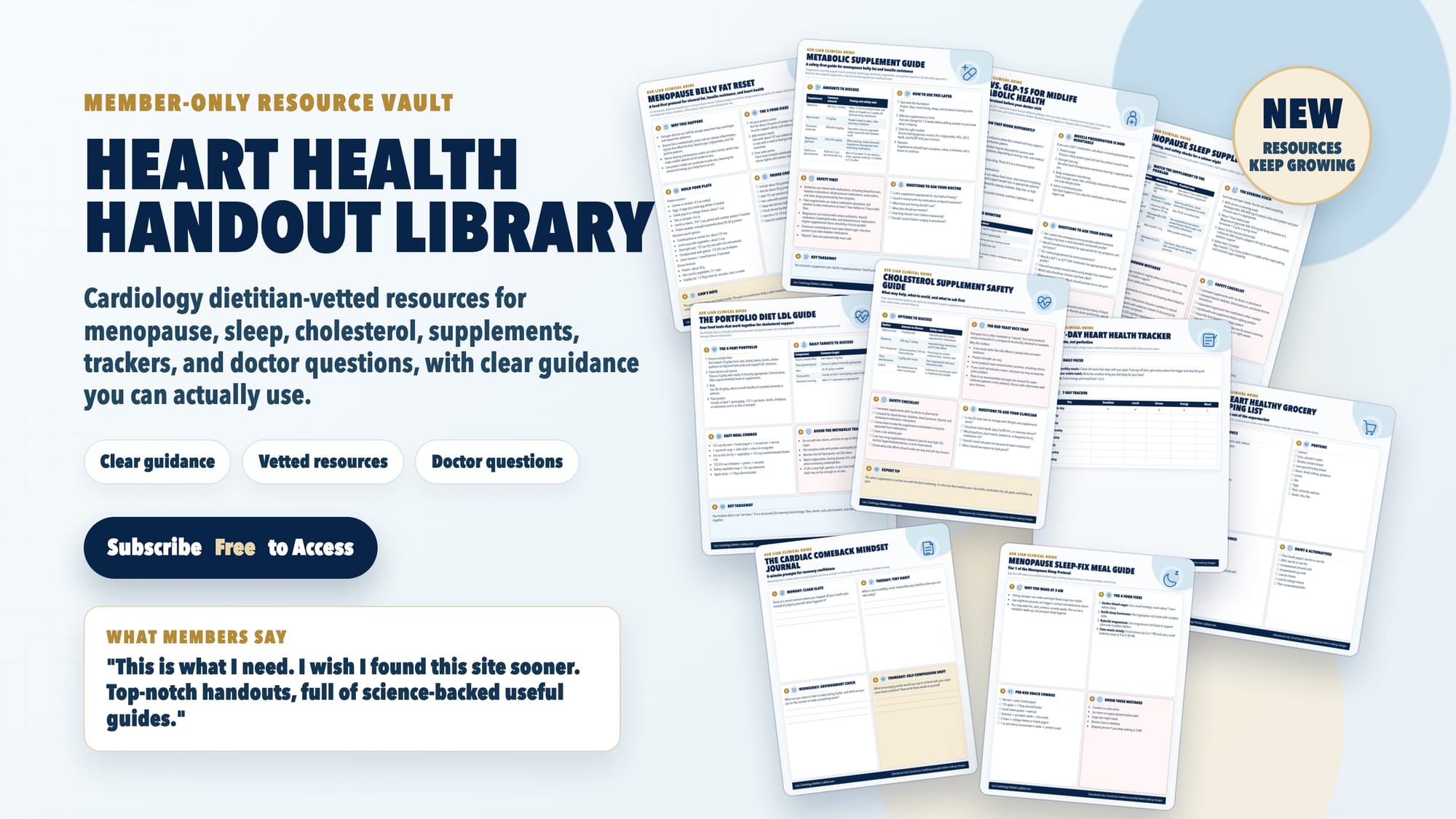
Download Vetted Clinical Handouts & Trackers
Get instant access to a growing library of evidence-based guides, food protocols, and symptom logs vetted by a cardiology dietitian. Access is completely free—simply subscribe to view.
Access Handout Library

Member discussion