
Chickpea Milk: Is It Heart Healthy for Menopause?

Chickpea Milk: Is It Heart Healthy for Menopause?
Title Variations:
- Chickpea Milk for Menopause: What You Need to Know
- Is Chickpea Milk the Best Heart Healthy Dairy Swap?
- How To Switch to Plant Milk Without Losing Protein
Written by: Lian Liu, MPH, RD, CDCES | Specializing in Cardiac & Menopause Nutrition. Reviewed and updated: June 2026.
> Direct Answer: While whole chickpeas actively lower cholesterol, commercial chickpea milk lacks clinical evidence for menopausal heart health. If you are substituting cow's milk, the American Heart Association (AHA) and clinical guidelines recommend fortified soy milk, as its isoflavones and complete protein provide superior cardiovascular protection and symptom relief during menopause.
Key Takeaways
- Soy over Chickpea: Soy milk contains isoflavones that help reduce menopausal hot flashes and maintain bone mineral density, a benefit not established for chickpea milk.
- Check the Label: If you choose plant milks, always ensure they are unsweetened and fortified with calcium and Vitamin D to meet daily requirements.
- Complete Proteins Matter: Soy is a complete protein (PDCAAS of 1.0), whereas chickpeas are limited in certain essential amino acids, making soy a stronger direct swap for cow's milk.
The Search for the Perfect Plant Milk
Chickpea milk is catching the attention of many women looking to step away from traditional dairy. When you're managing the sudden metabolic shifts of menopause, finding the right milk alternative isn't just about taste—it's about protecting your heart and your bones. You want something creamy for your morning coffee, but you also need a beverage that supports your cardiovascular system during this critical transition.
Let's look at what the clinical data actually says about chickpea milk and how it compares to the gold standard of dairy swaps.
Is Chickpea Milk Good for Your Heart?
While whole chickpeas are a cornerstone of the cardioprotective Mediterranean diet, the liquid extracted to make chickpea milk hasn't been rigorously studied for cardiovascular benefits.
Whole chickpeas contain viscous soluble fiber and plant sterols (like sitosterol) that actively pull cholesterol out of your bloodstream. They are fantastic for your heart. However, it's unclear how much of these protective fibers and sterols make it into commercial chickpea milk. Furthermore, chickpeas have a Protein Digestibility Corrected Amino Acid Score (PDCAAS) of 0.77, meaning they lack some essential amino acids compared to a perfect 1.0 score found in animal dairy or soy.
The Superior Swap: Why Soy Wins for Menopause
When we look at the American Heart Association (AHA) guidelines and menopause research, soy milk emerges as the clear winner over newer alternatives like chickpea milk.
Soy is rich in isoflavones, which are phytoestrogens—plant compounds that gently bind to estrogen receptors. Clinical studies show these compounds effectively reduce the severity of menopausal hot flashes and help preserve bone mineral content. Additionally, soy protein provides active cardiovascular protection by helping to lower blood pressure and improve overall cholesterol profiles.
| Feature | Soy Milk (Fortified) | Chickpea Milk (Commercial) | Whole Cow's Milk |
|---|---|---|---|
| Protein Quality (PDCAAS) | 1.0 (Complete) | 0.77 (Incomplete) | 1.0 (Complete) |
| Menopause Symptom Relief | High (Isoflavones) | Unproven | Low |
| AHA Endorsed Swap | Yes | No | N/A |
What to Look for on the Label
No matter which plant-based milk you choose, the AHA recommends always buying the unsweetened version. Ensure the carton states it is fortified with calcium and vitamins A and D so you don't miss out on vital bone-building nutrients.
If you want to read more about how dietary shifts can protect your heart during this stage of life, check out our guide on foods to lower LDL in menopause.
> Free Resource: Navigating dairy alternatives and building a heart-healthy pantry doesn't have to be overwhelming. Download my Free Heart Healthy Grocery List from the Free Resource Library to ensure you are picking up the best staples on your next shopping trip.
Related Reading: Continue your recovery journey with our guide on How to Set Up a Heart-Healthy Kitchen: Your Cardiac Pantry Guide.
Summary
Switching to a plant-based milk is a simple way to adjust your diet, but not all milks are created equal. While chickpea milk is a creamy and interesting new option, fortified soy milk remains the most evidence-based choice for menopausal women focused on heart health. If you are looking to easily integrate heart-healthy soy into your diet, consider organic tempeh for dinner or a high-quality organic soy milk with your next breakfast bowl.
Stay Ahead of Your Heart Health
Want to stay up-to-date with current science-backed nutrition tips to protect your cardiovascular future?
- Subscribe to the Newsletter: Get practical, clinical-strength tips on diet, recipes, and lifestyle adjustments sent straight to your inbox.
- Get the Master Course: Secure immediate access to the Heart Disease Risk Reversal Master Course and start reversing your risk today. 👉 Join the Newsletter & Master Course here
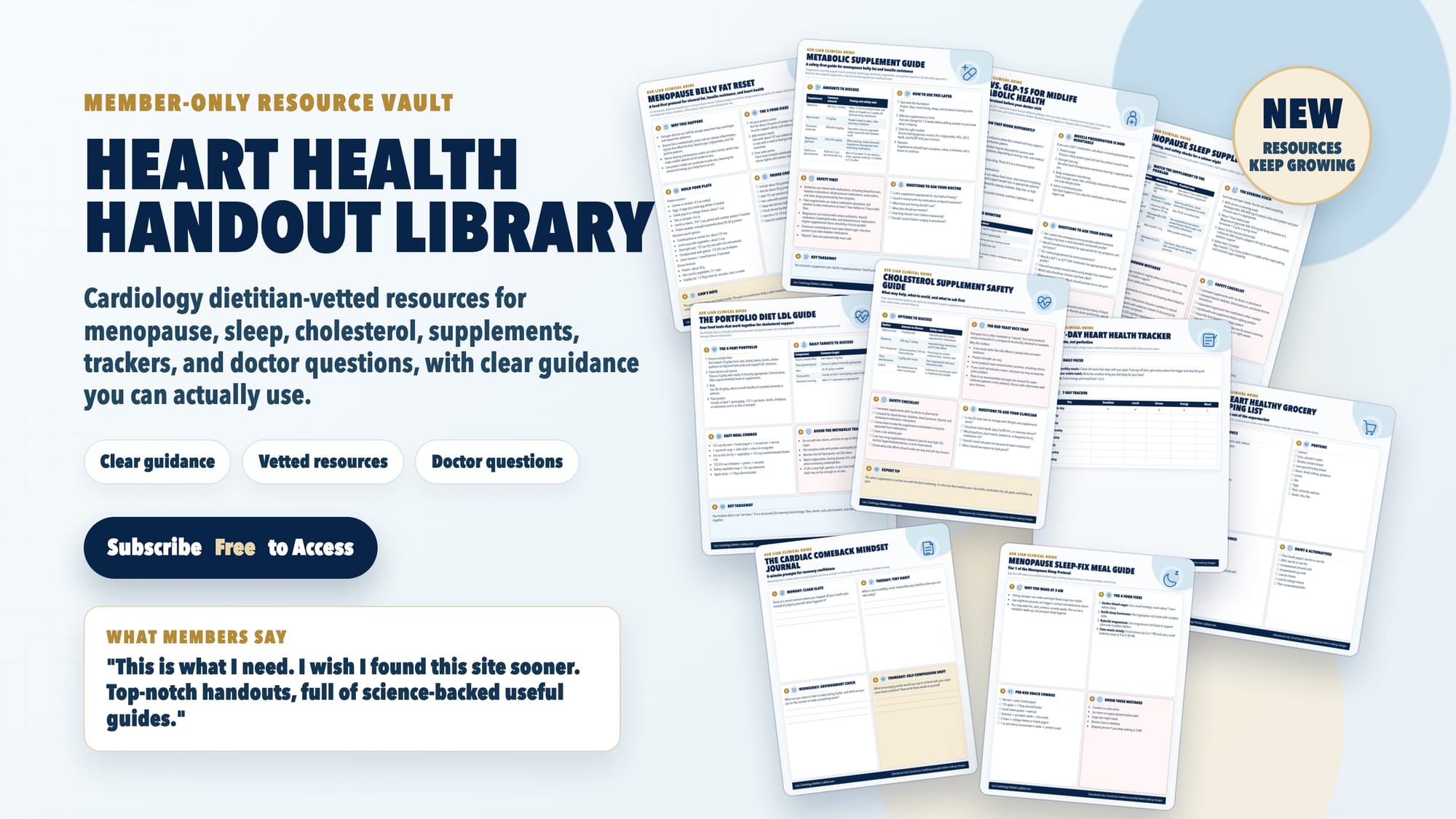
Download Vetted Clinical Handouts & Trackers
Get instant access to a growing library of evidence-based guides, food protocols, and symptom logs vetted by a cardiology dietitian. Access is completely free—simply subscribe to view.
Access Handout Library


Member discussion