
How to Track High Cholesterol In Menopause Without Fear

How to Track High Cholesterol In Menopause Without Fear
Written by: Lian Liu, MPH, RD, CDCES | Specializing in Cardiac & Menopause Nutrition. Reviewed and updated: June 2026.
> Direct Answer: High cholesterol in menopause is driven by declining estrogen, which leads to insulin resistance, visceral fat storage, and an increase in atherogenic particles. To properly track your risk, request advanced lipid testing like ApoB and Lp(a) rather than relying solely on standard LDL panels, and shift your exercise toward strength training and moderate cardio.
Key Takeaways
- The steepest increase in LDL cholesterol and ApoB particles occurs within the 12-month window bracketing your final menstrual period.
- Request an ApoB test to measure the exact number of plaque-causing particles in your blood, which is a stronger predictor of risk than standard LDL-C.
- Avoid hours of extreme high-intensity cardio (HIIT); it can spike cortisol in midlife and encourage the body to store dangerous visceral belly fat.
Discovering you have high cholesterol in menopause can feel like an unfair betrayal by your own body. You might be eating the same foods, exercising the same way, yet your annual lab results suddenly flag your lipids as elevated. You are not alone, and it's not a failure of willpower. The hormonal shift of the menopausal transition fundamentally rewires your metabolism, demanding an updated strategy to protect your heart.
Why Does High Cholesterol Spike During Menopause?
During your reproductive years, estrogen acts as a powerful cardiovascular shield, actively suppressing LDL-C ("bad" cholesterol) and elevating HDL-C ("good" cholesterol). When estrogen fluctuates and permanently declines during perimenopause and menopause, that shield drops.
In fact, the steepest rise in cholesterol particles—specifically LDL-C, total cholesterol, and ApoB—happens in the specific 12-month window bracketing your final menstrual period. Without estrogen's protection, the body becomes less sensitive to insulin. This mild insulin resistance prompts the body to redistribute fat from the hips and thighs deep into the abdominal cavity. This visceral fat isn't just cosmetic; it is metabolically active, pumping inflammatory signals and fatty acids to the liver, which then produces more dangerous, dense cholesterol particles.
Advanced Labs: What You Should Be Tracking
Standard lipid panels often miss the full picture of cardiovascular risk for women in midlife. If you are navigating high cholesterol in menopause, here are the precise labs you should ask your doctor to pull (if you need help discussing these with your physician, refer to our Advanced Lipid Testing Advocacy Guide):
(Need a convenient way to track these labs over time? Download our free 7-Day Tracker from the Free Resource Library to keep your results organized.)
| Lab Marker | What It Measures | Standard Normal Range | Why It Matters In Menopause |
|---|---|---|---|
| ApoB (Apolipoprotein B) | The total number of plaque-causing particles in your blood. | Optimal: < 90 mg/dL | A far more accurate predictor of cardiovascular risk than LDL-C, especially if you have insulin resistance. |
| Lp(a) (Lipoprotein a) | A highly proatherogenic, genetically determined particle. | Normal: < 30 mg/dL (or < 75 nmol/L) | Menopause is one of the few events that can further elevate Lp(a). Test this at least once in a lifetime. |
| hsCRP | High-Sensitivity C-Reactive Protein. | Low Risk: < 1.0 mg/L | Measures systemic vascular inflammation. Levels ≥2 mg/L act as a clinical "risk enhancer." |
| HOMA-IR | A ratio of fasting insulin to fasting glucose. | Optimal: < 1.9 | Catches hidden insulin resistance long before prediabetes develops. |
| CAC Score | Coronary Artery Calcium scan. | Optimal: 0 | An imaging scan that detects calcified plaque in the arteries, guiding lipid-lowering therapy decisions. |
Practical Actions to Protect Your Heart Today
Managing your heart health through menopause is about adding the right things, not restricting yourself into misery.
Shift Your Exercise Routine Stop punishing yourself with hours of intense, exhausting endurance cardio. In midlife, excessive, unrecovered high-intensity interval training (HIIT) can chronically elevate cortisol, which may promote visceral fat storage. Instead, prioritize moderate-intensity steady-state cardio (like brisk walking) and mandate strength training at least two days a week. Building muscle helps regenerate your metabolic engine and soak up excess blood sugar.
Focus on Protein Pacing and Fiber To combat menopause-related muscle loss and stabilize hunger, aim to consume roughly 30 grams of protein per meal. Pair this with at least 25 grams of dietary fiber daily. Fiber acts like a broom, sweeping excess cholesterol out of your system while feeding the gut bacteria that help metabolize remaining estrogen. For practical ideas on how to incorporate this fiber, explore our guide on foods that lower LDL in menopause.
Discuss Medical Interventions Early Lifestyle changes are crucial, but they aren't always enough to combat genetic or profound hormonal shifts. Statins remain the first-line therapy for drastically lowering LDL-C. Additionally, discussing Menopausal Hormone Therapy (MHT) with your doctor is vital. Initiating MHT within 10 years of menopause onset can preserve endothelial function and significantly reduce all-cause mortality.
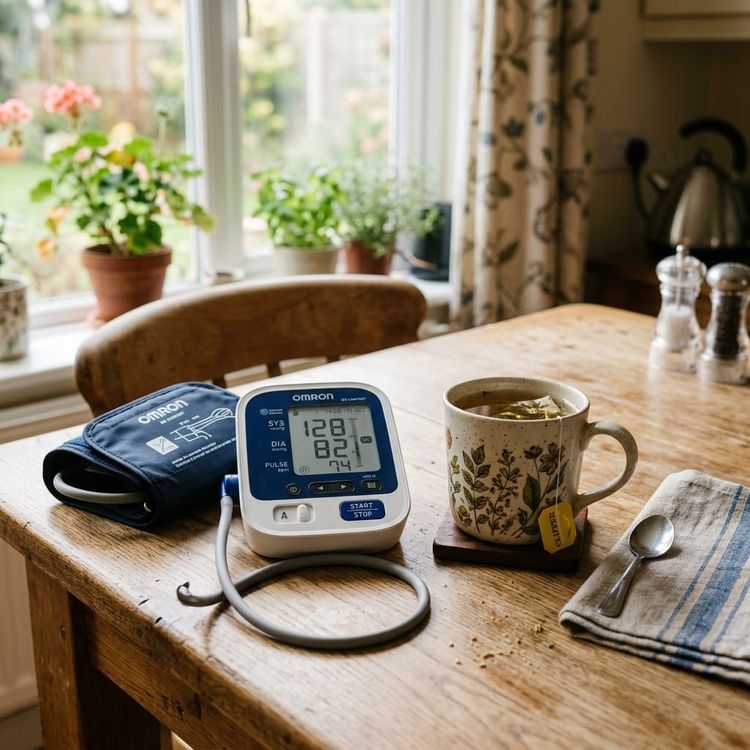
Before wrapping up, it is crucial to recognize how these changes connect to your overall vascular system. For a deeper understanding of how these hormonal shifts impact your arteries, read our complete guide on home blood pressure monitoring and what your numbers mean.
Related Reading: Continue your recovery journey with our guide on The Ultimate Cardiac Rehab Wearable Comparison: Apple vs. Garmin.
Summary
Navigating high cholesterol in menopause requires stepping away from outdated advice and advocating for advanced testing like ApoB and Lp(a). By shifting your focus toward strength training, protein pacing, and understanding your true metabolic markers, you can confidently steer your heart health without fear or restrictive dieting. To easily boost your daily fiber intake, a viscous soluble fiber supplement like Metamucil Sugar-Free Psyllium is a simple, effective tool to help sweep excess cholesterol from your system.
Disclosure: We may earn a small commission from products recommended in our articles to help support our clinical writing.
Stay Ahead of Your Heart Health
Want to stay up-to-date with current science-backed nutrition tips to protect your cardiovascular future?
- Subscribe to the Newsletter: Get practical, clinical-strength tips on diet, labs, and lifestyle adjustments sent straight to your inbox.
- Get the Master Course: Secure immediate access to the Heart Disease Risk Reversal Master Course and start reversing your risk today. 👉 Join the Newsletter & Master Course here
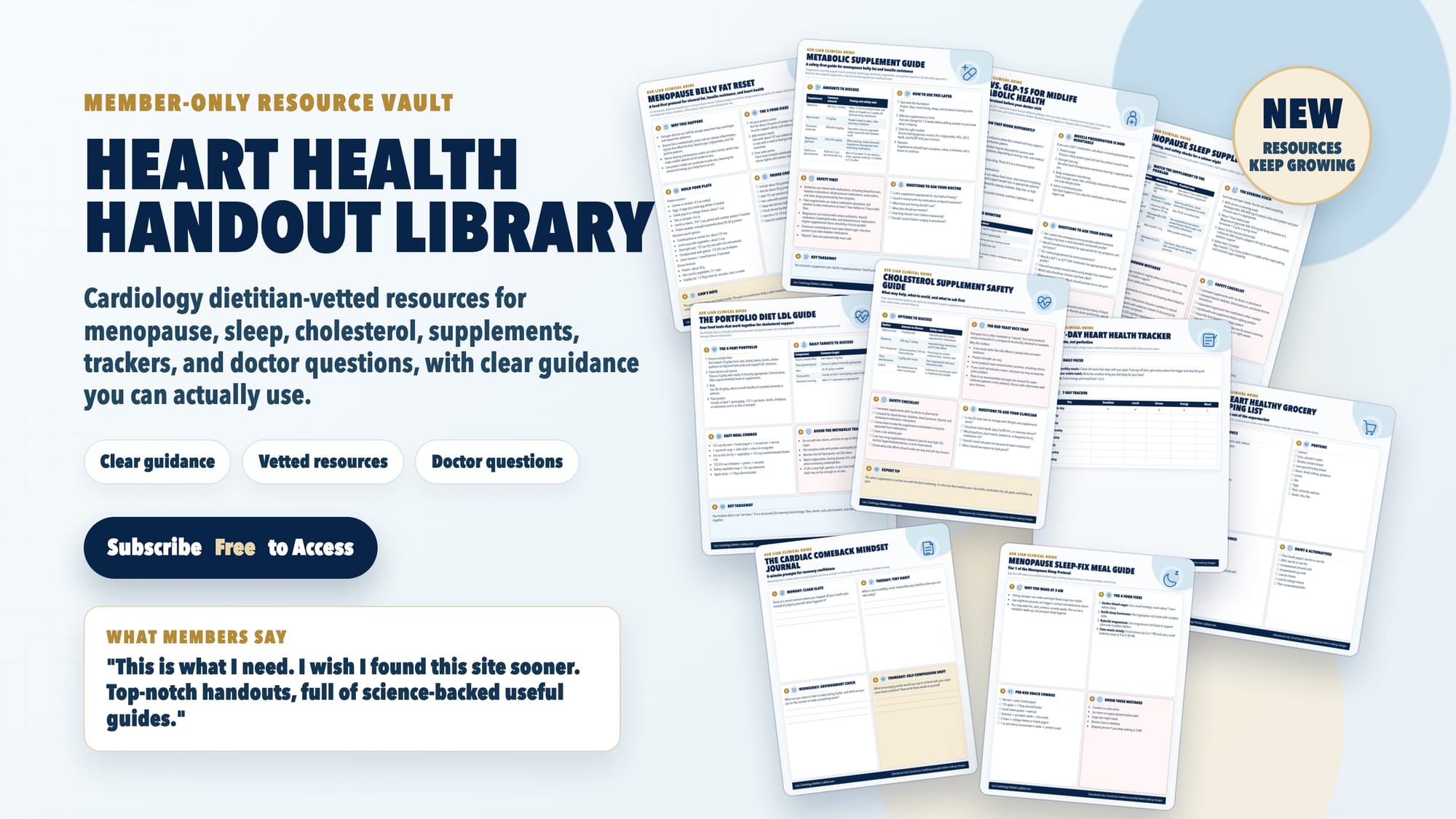
Download Vetted Clinical Handouts & Trackers
Get instant access to a growing library of evidence-based guides, food protocols, and symptom logs vetted by a cardiology dietitian. Access is completely free—simply subscribe to view.
Access Handout Library
Member discussion