
Is Cod Fish High in Cholesterol? Best Fish Choices After a Heart Event

Is Cod Fish High in Cholesterol? Best Fish Choices After a Heart Event
Written by: Lian Liu, MPH, RD, CDCES | Specializing in Cardiac & Menopause Nutrition. Reviewed and updated: June, 2026.
> Direct Answer: No, cod fish is not high in cholesterol. A 4-ounce serving contains only about 50 mg of cholesterol and just 1.5 grams of total fat. Furthermore, clinical guidelines emphasize that dietary cholesterol from fish does not drive blood cholesterol levels; it's saturated fat that causes concern. Cod is extremely low in saturated fat, making it an excellent lean protein choice for heart health.
Key Takeaways
- Clinical Evidence: Blood cholesterol levels are primarily driven by saturated and trans fats, not the natural cholesterol found in lean seafood like cod.
- Practical Action: Aim to eat at least two servings (about 3.5 to 4 ounces cooked) of un-fried fish per week to support cardiovascular health.
- Safety Consideration: Never fry your fish. Frying negates the cardiovascular benefits; always choose to bake, broil, grill, or poach using heart-healthy oils.
Many of my patients come to me terrified of eating the wrong thing after a cardiovascular event. A common question I hear in the clinic is: is cod fish high in cholesterol? When you're trying to protect your heart, it’s easy to start second-guessing every piece of protein on your plate. But let me reassure you—you don't need to fear the seafood aisle. Let's break down exactly why cod is a safe choice, how it compares to other fish, and what the clinical guidelines actually say about seafood in a cardiac diet.
The Nutritional Truth About Cod and Cholesterol
If you are wondering whether cod fits into your dietary plan, the answer is a resounding yes. Cod is not high in cholesterol, nor is it high in fat. According to nutritional profiles from clinical cookbooks, a standard 4-ounce serving of cod contains only about 49 to 53 mg of cholesterol.
More importantly, modern clinical cardiology guidelines emphasize that you should not fear the natural cholesterol found in fish. The American Heart Association (AHA) and the US Dietary Guidelines have officially conceded that dietary cholesterol is not a nutrient of concern for overconsumption. Instead, your blood cholesterol levels are primarily driven by the consumption of saturated and trans fats. Because a 4-ounce serving of cod contains as little as 1.5 grams of total fat—with a mere 0.5 grams of saturated fat—it is a highly cardioprotective and lean protein choice.
Cod vs. Fatty Fish: Which is Better for Cardiac Patients?
While all un-fried fish are excellent for a cardiac diet, they differ primarily in their fat and omega-3 content. Lean white fish like cod are incredibly low in calories and fat, but they offer very little of the heart-protective omega-3 fatty acids. On the other hand, fatty cold-water fish like salmon provide these crucial nutrients in abundance.
Here is a quick breakdown to help you compare:
| Fish Type | Total Fat (g) | Cholesterol (mg) | Omega-3 Content | Best For |
|---|---|---|---|---|
| Cod (4 oz) | ~1.5g | ~50mg | Low | Lean protein, low calorie |
| Salmon (4 oz) | ~10-15g | ~56-78mg | High (EPA/DHA) | Reducing vascular inflammation, secondary prevention |
For secondary prevention—preventing a recurrent heart attack or cardiovascular event—clinical guidelines strongly point to fatty fish as the superior choice. The omega-3 fatty acids (EPA and DHA) found in salmon actively reduce vascular inflammation, lower triglyceride levels, and stabilize arterial plaque.
Clinical Guidelines for Eating Fish After a Heart Event
The AHA, Mediterranean, and DASH dietary frameworks all mandate eating at least two servings (about 3.5 to 4 ounces cooked) of fish per week. For patients with established coronary heart disease, the AHA suggests aiming for about 1 gram of combined EPA and DHA per day, preferably sourced from oily fish rather than unregulated over-the-counter supplements.
There is, however, one explicit preparation warning: your fish must not be fried. Frying fish completely negates its cardiovascular benefits. Instead, you should always bake, broil, grill, poach, or lightly sauté your seafood in heart-healthy oils like olive or canola oil.
Heart-Healthy Cod Recipes
If you want to incorporate cod into your diet, here are a few excellent, low-sodium recipes to get you started:
1. Greek-Style Cod with Olives & Tomatoes This recipe utilizes Mediterranean diet staples to flavor the fish without excess sodium.
- Instructions: Toss 1 pint of halved cherry tomatoes and ⅓ cup chopped olives in 1 tsp olive oil and roast at 375°F for 15 minutes. Add two 5-8 oz cod fillets, sprinkle with Herbs de Provence, and bake for another 15 to 20 minutes until the fish flakes easily. Serve with fresh lemon.
2. Crispy Baked Fillets If you miss the crunch of fried fish, this shake-and-bake method creates a crisp crust in the oven.
- Instructions: Grind ⅓ cup rolled oats, ⅓ cup whole-wheat flour, 2 Tbsp fresh parsley, lemon zest, and a pinch of salt/pepper in a food processor. Dip 4 oz cod fillets into lightly beaten egg whites, then press into the oat mixture. Bake at 400°F for 5-10 minutes.
3. Tex-Mex Cod with Roasted Peppers & Corn A quick, smoky, one-pan sheet meal.
- Instructions: Roast 6 quartered mini bell peppers and 1 cup frozen corn with 1 tsp olive oil and ½ Tbsp salt-free Tex-Mex seasoning at 400°F for 10 minutes. Add the cod, drizzle with more oil and seasoning, and roast for 10-12 minutes. Top with plain Greek yogurt and lime.
Understanding the difference between dietary cholesterol and how your body processes fats is critical, especially if you are actively trying to manage a high LDL particle number. Once you grasp the mechanics of lipid health, making choices at the grocery store becomes second nature.
Related Reading: Continue your recovery journey with our guide on How to Prevent a Second Heart Attack: The Complete Recovery Guide.
Summary
Adding fish like cod to your weekly rotation is a fantastic way to secure lean protein without loading up on saturated fat. Whether you choose the mild, flaky texture of cod or the rich, omega-3 dense profile of salmon, the most important step is simply getting more un-fried seafood onto your plate.
If you miss the crunch of fried fish, using an appliance like the Ninja Air Fryer Max is a brilliant way to achieve that crispy texture without the harmful deep-frying oils that negate the cardiovascular benefits.
If you’re ready to master your nutrition and stop second-guessing every meal, we have the resources to help you build a sustainable, heart-protective lifestyle. Be sure to visit our Free Resource Library and download the Heart Healthy Grocery List to get started immediately.
Stay Ahead of Your Heart Health
Want to stay up-to-date with current science-backed nutrition tips to protect your cardiovascular future?
- Subscribe to the Newsletter: Get practical, clinical-strength tips on diet, labs, and lifestyle adjustments sent straight to your inbox.
- Get the Master Course: Secure immediate access to the Heart Disease Risk Reversal Master Course and start reversing your risk today. 👉 Join the Newsletter & Master Course here
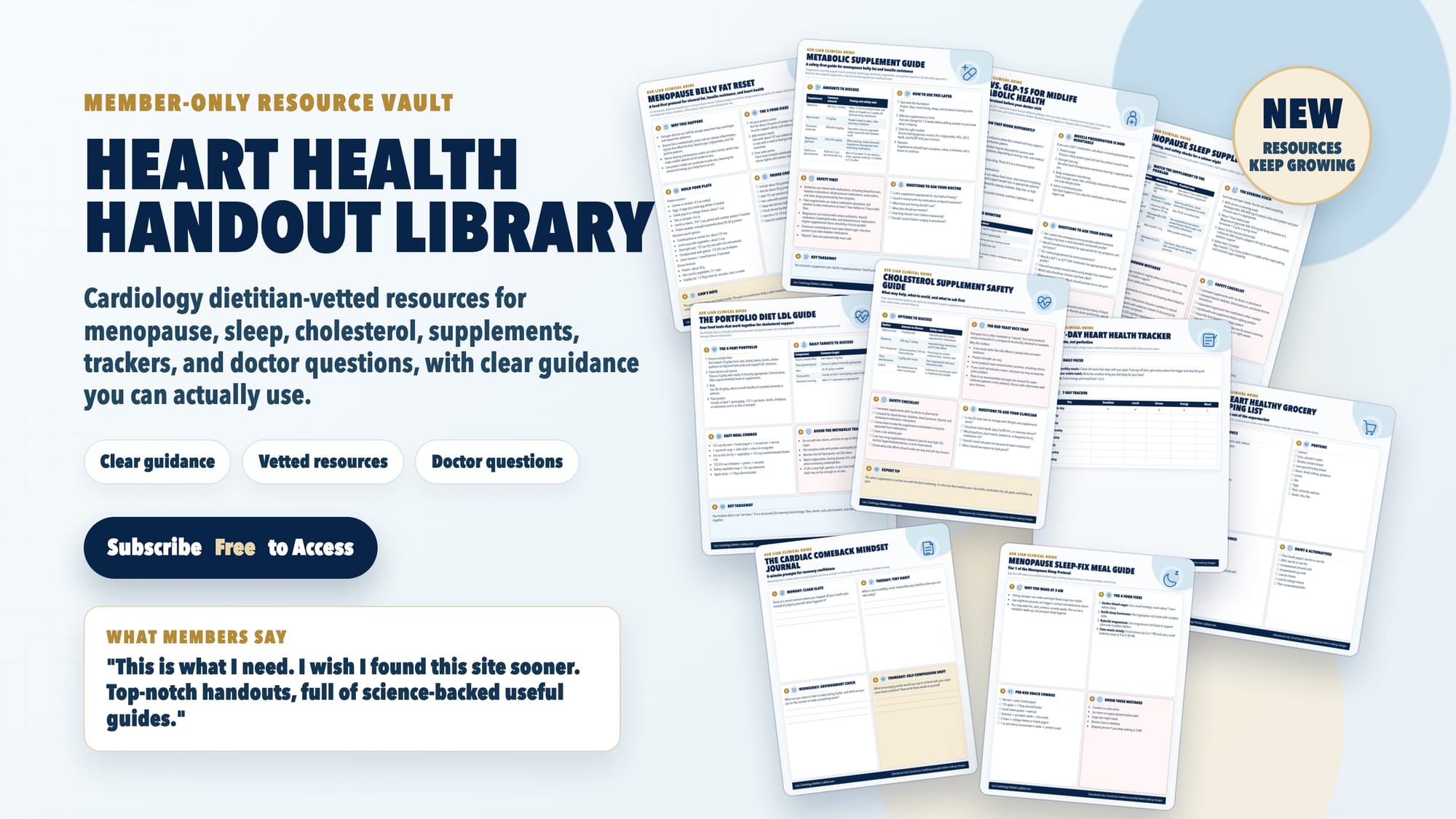
Download Vetted Clinical Handouts & Trackers
Get instant access to a growing library of evidence-based guides, food protocols, and symptom logs vetted by a cardiology dietitian. Access is completely free—simply subscribe to view.
Access Handout Library



Member discussion