
The Ultimate Guide to Heart Failure Diet Recommendations

The Ultimate Guide to Heart Failure Diet Recommendations
Written by: Lian Liu, MPH, RD, CDCES | Specializing in Cardiac & Menopause Nutrition. Reviewed and updated: June 2026.
> Direct Answer: The most effective heart failure diet recommendations focus on managing congestion through moderate sodium awareness (1,500–3,000 mg/day) without over-restricting, which can lead to dangerous muscle loss. Priority should be given to a high-quality protein, layered cardioprotective template like a modified DASH or Mediterranean diet, while strictly monitoring hidden sodium and potentially dangerous high-potassium foods depending on your medications.
Key Takeaways
- Malnutrition is a major risk: Severe restrictions can trigger cardiac cachexia (muscle wasting); adequate protein and muscle support (like creatine or HMB) is crucial.
- Hunt for hidden sodium: Instead of extreme low-sodium diets (<1,500mg) which don't necessarily improve survival, focus on eliminating hidden sodium traps in convenience foods like canned soups and deli meats.
- Watch out for potassium: If you are on ACE inhibitors, ARBs, or MRAs, potassium-based salt substitutes and high-potassium foods can be dangerous and cause fatal arrhythmias.
Disclosure: I only recommend products I would use myself and all opinions expressed here are my own. This post may contain affiliate links that at no additional cost to you, I may earn a small commission.
When a patient asked me for heart failure diet recommendations last week, she was exhausted. She'd been eating nothing but boiled chicken and plain rice, terrified that a single grain of salt would send her back to the hospital. But instead of getting stronger, she was losing muscle and feeling weaker every day. This is a common trap. We often think that a heart failure diet means punishing restriction, but the truth is, managing heart failure is about strategic addition just as much as it is about limitation. Let's look at what the latest evidence actually says. (Note: If you are overwhelmed by meal planning, grab the free Low-Sodium Grocery List from my Free Resource Library to get started).
What Are the Core Heart Failure Diet Recommendations?
When we talk about dietary recommendations for heart failure (HF), it’s fundamentally different from a general heart-healthy diet for someone who just had a stent. Standard cardiac diets focus on reversing plaque buildup. Heart failure nutrition, on the other hand, targets congestion control, sodium vigilance, and the prevention of malnutrition.
Is Extreme Sodium Restriction Necessary?
Historically, patients with heart failure were told to restrict sodium as aggressively as possible. However, the 2022 AHA/ACC/HFSA Guideline for the Management of Heart Failure clarifies that while restricting sodium is common to manage congestion, these specific recommendations are based on low-quality evidence.
Rather than mandating a strict target for everyone, the guidelines note that clinical trials have evaluated dietary restrictions ranging from 1,500 mg to 3,000 mg per day, showing improvements in quality of life and swelling (edema), but without reducing overall mortality or readmission rates. Furthermore, the landmark SODIUM-HF trial confirmed that restricting sodium to under 1,500 mg/day did not reduce hospitalizations or cardiovascular deaths compared to standard care.
The consensus is clear: sodium restriction should be highly individualized and implemented as part of a comprehensive, nutrient-rich pattern like the DASH diet to avoid nutritional deficiencies. Instead of an extreme restriction that ruins your appetite, focus on avoiding hidden sodium.
| Food Category | Hidden Sodium Traps to Avoid | Heart-Healthy Alternatives |
|---|---|---|
| Breakfast | Instant oatmeal packets, baked goods | Rolled oats, plain Greek yogurt |
| Proteins | Deli meats, canned soups, frozen meals | Fresh poultry, dried lentils, tofu |
| Snacks | Flavored nuts, commercial protein bars | Unsalted nuts, fresh fruit |
How Does Protein Impact Heart Failure Recovery?
One of the most dangerous, yet overlooked, complications in heart failure is cardiac cachexia—severe muscle wasting. Malnutrition drastically worsens outcomes for older HF patients.
Focusing on high-quality protein is vital. In the NOURISH trial, providing a specialized high-protein oral nutritional supplement containing HMB (a muscle-preserving ingredient) and Vitamin D was associated with a 50% lower mortality rate 90 days post-discharge. For patients with advanced HF, preserving muscle mass sometimes even outweighs the risks of mild sodium intake.
HMB vs. Creatine: Balancing Muscle Preservation and Medication Timing
If you are trying to combat muscle wasting, two key ingredients often come up: HMB (Beta-hydroxy beta-methylbutyrate) and Creatine. Here is how to choose between them safely based on your medications:
- HMB (and the Calcium Dilemma): Clinical-grade HMB is typically formulated as Calcium-HMB (CaHMB), which can deliver up to 520 mg of calcium per serving.
- Medication Interference: Calcium salts can decrease the absorption of foundational heart failure medications like ACE inhibitors and beta-blockers. To prevent this, HMB must be scheduled at least 2 hours apart from these drugs.
- Diuretic Interactions: Heart failure diuretics affect calcium levels in opposite ways. While loop diuretics (like Lasix) deplete calcium, thiazide diuretics retain it. Adding a high-calcium supplement requires close monitoring.
- When to use: If you are recovering from a recent hospitalization and malnourished (similar to the NOURISH trial population), HMB offers profound survival benefits, making the careful timing adjustments highly worthwhile.
- Creatine (The Lower-Friction Alternative): Creatine monohydrate is a safer, well-researched alternative for protecting muscle mass (sarcopenia) and supporting cardiac rehabilitation.
- No Interference: Unlike HMB, creatine does not contain calcium and does not interfere with the absorption or excretion of your heart failure medications.
- Cellular Energy: Creatine helps resynthesize ATP (cellular energy) directly in the heart muscle under stress.
- When to use: If your daily medication schedule is already complex and you want a low-friction option to support strength and recovery, creatine is the safer, simpler choice.
What About Supplements for Heart Failure?
Targeted supplementation can be highly effective when combined with your prescribed medications.
- Omega-3 Fatty Acids: The 2022 HF guidelines officially recommend omega-3 fatty acids for symptomatic heart failure patients (NYHA Class II-IV) to help reduce the risk of cardiovascular hospitalization and death.
- Coenzyme Q10 (CoQ10): Meta-analyses have demonstrated that CoQ10 supplementation significantly reduces all-cause mortality and hospitalizations while improving the left ventricular ejection fraction (LVEF).
Why Are Potassium Levels a Safety Concern in Heart Failure?
Quick Answer: While general healthy diets routinely encourage high potassium intake to lower blood pressure, this mineral requires extreme caution in heart failure. Depending on your medication regimen, your body may either retain too much potassium (hyperkalemia) or excrete too much of it (hypokalemia), both of which can trigger dangerous heart arrhythmias.
Many heart failure patients are prescribed medications that cause the body to retain potassium. These include Angiotensin-Converting Enzyme (ACE) inhibitors, Angiotensin Receptor Blockers (ARBs), and Mineralocorticoid Receptor Antagonists (MRAs like Spironolactone). In these cases, excess potassium can build up in the blood, which is why the American Heart Association (AHA) explicitly warns heart failure patients to avoid potassium-based salt substitutes. You may even need to limit high-potassium foods (like bananas and orange juice) to prevent hyperkalemia.
Conversely, if you are prescribed loop diuretics like Lasix (furosemide) to manage fluid retention, your kidneys will excrete potassium rapidly. This puts you at risk of hypokalemia (dangerously low potassium), which requires deliberate potassium intake or medical supplementation.
To help you navigate these dietary changes safely, you can access a complete guide to high-potassium foods and how to balance them by downloading our Potassium Food Chart from the free heart health handout library. Always check your recent comprehensive metabolic panel and consult your cardiologist or registered dietitian to determine your specific potassium budget.
Summary
Heart failure diet recommendations don't have to mean a lifetime of flavorless, restrictive meals. By focusing on a layered cardioprotective eating pattern like the Mediterranean diet, staying vigilant about hidden sodium rather than extreme deprivation, and prioritizing protein to protect your muscle mass, you can manage your symptoms effectively. Remember to double-check your potassium intake with your medical team, and consider whether targeted, clinical-grade omega-3 or CoQ10 supplements (available through my Fullscript dispensary) might be right for your specific condition. If you're looking for a step-by-step roadmap for your recovery, my Cardiac Comeback Book provides the foundation you need.
Stay Ahead of Your Heart Health
Want to stay up-to-date with current science-backed nutrition tips to protect your cardiovascular future?
- Subscribe to the Newsletter: Get practical, clinical-strength tips on diet, labs, and lifestyle adjustments sent straight to your inbox.
- Get the Master Course: Secure immediate access to the Heart Disease Risk Reversal Master Course and start reversing your risk today. 👉 Join the Newsletter & Master Course here
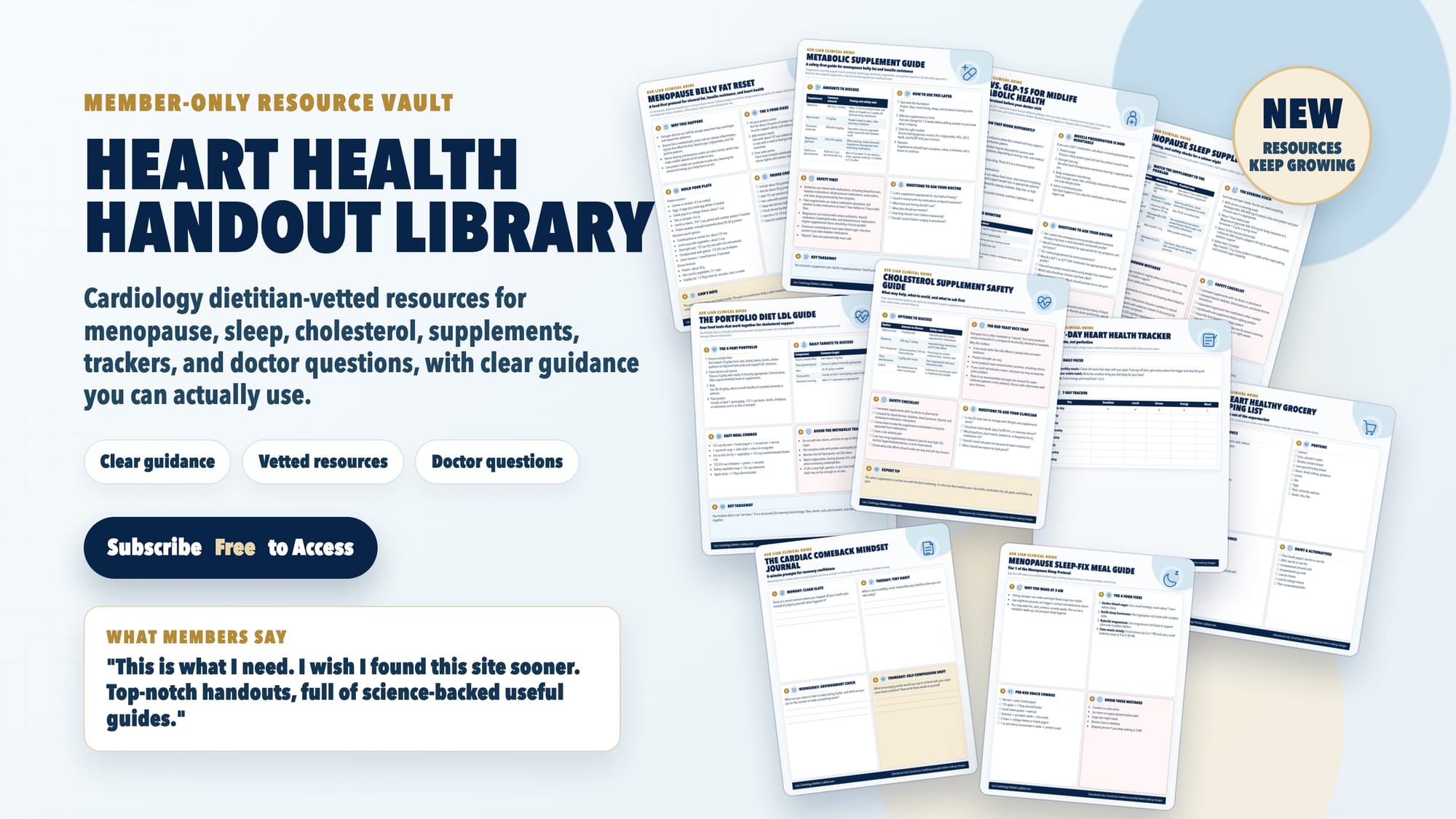
Download Vetted Clinical Handouts & Trackers
Get instant access to a growing library of evidence-based guides, food protocols, and symptom logs vetted by a cardiology dietitian. Access is completely free—simply subscribe to view.
Access Handout Library



Member discussion