
Recovery After Heart Cath: 5 Milestones for Your First 30 Days

The First 30 Days: A Patient's Guide to Recovery After Heart Cath
Written by: Lian Liu, MPH, RD, CDCES | Specializing in Cardiac & Menopause Nutrition. Reviewed and updated: June 2026.
> Direct Answer: Recovery after heart cath involves five key milestones in the first 30 days: initial healing of the access site within 48 hours, strict adherence to antiplatelet medications in week one, a follow-up kidney and lab check around week two, starting cardiac rehab by week four, and monitoring for long-term biological healing by day 30.
Key Takeaways
- The contrast dye used during a heart cath can stress the kidneys, making your two-week follow-up blood work critical for ruling out acute kidney injury (AKI).
- You must strictly adhere to your prescribed Dual Antiplatelet Therapy (DAPT) without interruption, as stopping early drastically increases the risk of a deadly clot.
- While it is normal to experience mild access site soreness, any rapidly enlarging bruising, sudden shortness of breath, or recurrent chest pain warrants immediate medical evaluation.
Disclosure: As an Amazon Associate and affiliate partner, I may earn a small commission from qualifying purchases at no extra cost to you.
When you are discharged after a cardiac catheterization, the relief is palpable. You are finally home, resting in your own bed, and the immediate procedure is behind you. But recovery after heart cath doesn't end when you leave the hospital—it is just beginning. Many patients tell me they feel anxious during those first few weeks at home, constantly wondering if a twinge or a bruise is normal or a sign of an emergency.
To help you navigate this vulnerable window, we have broken down the first 30 days into five essential milestones. Knowing exactly what to do, what to track, and when to call your doctor can turn a period of anxiety into an organized roadmap for recovery.
Milestone 1: The First 6 to 48 Hours – Access Site Healing and Early Ambulation
The first two days are all about safely getting back on your feet and ensuring the puncture site heals properly.
Most patients can begin walking within six hours or less after the procedure. Using a radial (arm) access rather than a femoral (groin) access usually allows for faster physical recovery and earlier mobility. However, regardless of the entry point, the primary focus during this window is hemostasis—stopping any bleeding.
Ensure your access site remains dry and only shows mild bruising. You should check that the affected arm or leg maintains normal temperature, color, and sensation. Watch out for warning signs of major bleeding, such as a rapidly enlarging hematoma (a hard, swollen pool of blood), fainting, or a sudden drop in blood pressure. If you had a femoral procedure, new severe back, flank, or abdominal pain can be a rare but dangerous sign of internal bleeding.
Milestone 2: Days 3 to 7 – Resuming Activities and Medication Adherence
By the end of your first week, you will likely be resuming many of your normal daily activities, provided you had an uncomplicated procedure.
This is the most critical window to ensure you have obtained and are strictly taking your Dual Antiplatelet Therapy (DAPT). This typically consists of aspirin and a P2Y12 inhibitor. Early interruption of or nonadherence to DAPT is one of the most important reversible causes of early stent thrombosis, increasing the risk of a deadly clot by two to over twenty-fold.
You should notice your walking tolerance improving without experiencing shortness of breath at rest. While mild soreness at the puncture site is expected, any new or worsening chest pain, fainting, or an abnormally fast or slow pulse must be evaluated immediately. You might find it helpful to use wearables to track your cardiac recovery safely.
Milestone 3: Weeks 2 to 4 – Clinical Follow-Up and Kidney Check
Around the two to four-week mark, you should have a scheduled follow-up appointment with your cardiologist or primary care provider.
At this visit, your provider will verify that the puncture site has healed completely. More importantly, they will check your blood work to assess your kidney function and hemoglobin levels. The contrast dye used during the catheterization can stress the kidneys, potentially leading to contrast-associated acute kidney injury (AKI). Patients with pre-existing kidney issues or who received high volumes of dye are at a higher risk. This follow-up ensures no hidden, slow bleeding is occurring and your body is properly clearing the contrast dye.
Milestone 4: Weeks 2 to 6 – Starting Outpatient Cardiac Rehab
As your physical capacity increases, eligible patients should be referred to and begin an outpatient cardiovascular rehabilitation program.
Track your increasing physical capacity as you start rehab. On average, patients return to work around six weeks, though this timeline varies heavily based on whether your cath was an emergency (like a heart attack) versus a stable, elective procedure. It also depends on the physical demands of your job.
If you experience a drop in exercise tolerance, swelling in your legs (edema), difficulty breathing when lying down (orthopnea), or palpitations during this phase, flag these symptoms to your care team immediately.
Milestone 5: Day 30 and Beyond – Ongoing Biological Healing
Understand that going "home the same day" does not mean you are fully "healed."
Even if you feel physically recovered, the artery is still undergoing biological endothelial healing as cells slowly grow over the new stent to incorporate it into the artery wall. It is essential to continue monitoring for recurrent chest pain. While early chest pain after intervention is common and often noncardiac, genuine cardiac symptoms in the first 30 days are usually due to a blood clot, an underexpanded stent, or incomplete revascularization, rather than the stent tissue re-narrowing (which typically takes 3 to 6 months).
| Milestone Phase | Timeframe | Primary Focus | Red Flags to Monitor |
|---|---|---|---|
| Milestone 1 | 6 - 48 Hours | Access site healing, early walking | Enlarging hematoma, severe back/flank pain |
| Milestone 2 | Days 3 - 7 | Resuming daily activities, DAPT adherence | Missed medication, new chest pain, fainting |
| Milestone 3 | Weeks 2 - 4 | Clinical follow-up, kidney function check | Abnormal lab results, signs of slow bleeding |
| Milestone 4 | Weeks 2 - 6 | Starting cardiac rehab | Drop in exercise tolerance, edema, palpitations |
| Milestone 5 | Day 30+ | Biological stent healing | Recurrent cardiac symptoms, severe fatigue |
Related Reading: For a comprehensive look at your overall recovery timeline, read our complete Guide to Recovery After Heart Stents and Caths.
Summary
Recovery after heart cath is a structured journey. By knowing what to expect during the first 30 days, you can protect your heart, adhere to life-saving medications, and rebuild your confidence safely. If you want to keep a close, objective eye on your recovery metrics without feeling anxious, upgrading to a reliable tracker is a smart move. A high-quality device like the Apple Watch Series 11 or a robust Garmin monitor can help you track your heart rate, walking tolerance, and recovery trends at home.
To help you organize your daily metrics and track your medications during these crucial first 30 days, download our Post Surgery Recovery Tips and Plans from the Free Resource Library.
Stay Ahead of Your Heart Health
Want to stay up-to-date with current science-backed nutrition tips to protect your cardiovascular future?
- Subscribe to the Newsletter: Get practical, clinical-strength tips on diet, labs, and lifestyle adjustments sent straight to your inbox.
- Get the Master Course: Secure immediate access to the Heart Disease Risk Reversal Master Course and start reversing your risk today. 👉 Join the Newsletter & Master Course here
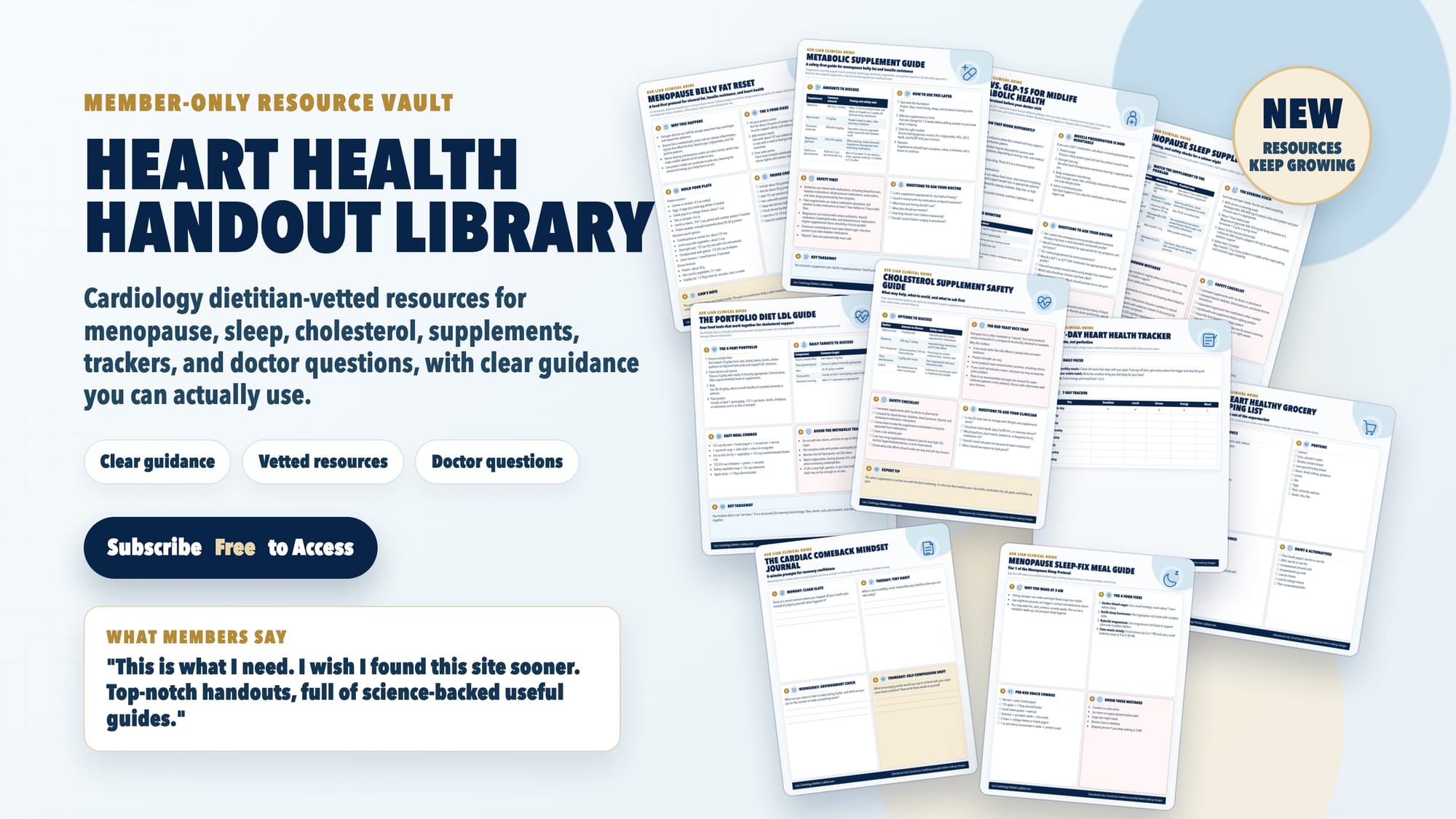
Download Vetted Clinical Handouts & Trackers
Get instant access to a growing library of evidence-based guides, food protocols, and symptom logs vetted by a cardiology dietitian. Access is completely free—simply subscribe to view.
Access Handout Library



Member discussion