How to Use Your Wearable to Track Recovery After a Heart Event (Without Obsessing Over Numbers)
How to Use Your Wearable to Track Recovery After a Heart Event (Without Obsessing Over Numbers)
Written by: Lian Liu, MPH, RD, CDCES | Specializing in Cardiac & Menopause Nutrition. Reviewed and updated: June 2026.
> Direct Answer: Use your wearable to monitor long-term trends in Heart Rate Variability (HRV) and resting heart rate rather than reacting to immediate notifications or daily fluctuations. By focusing on weekly data averages instead of acute spot-checks, you can effectively track recovery progress while avoiding the stress-induced physiological responses caused by hyper-vigilance.
Disclosure: Some of the links below are affiliate links. This means if you click through and take action, I may receive a small commission (at no extra cost to you). This helps support the free content on this blog while I only recommend tools and foods I truly believe in for your heart health journey.
For the first few weeks after his heart attack, Robert’s favorite app was his phone’s health dashboard.
Every time his phone buzzed, he checked his heart rate. When he climbed a flight of stairs, he stopped to check his pulse. Before bed, he stared at his Heart Rate Variability (HRV) chart, trying to decipher if a low number meant he was on the verge of another event.
Robert had a medical-grade sensor on his wrist, but instead of using it to guide his recovery, he was using it to feed his anxiety.
"I feel like I'm wearing a lie detector," Robert told me. "Every time I look at it, my heart rate goes up just from the stress of looking."
If this sounds familiar, you aren't alone. Modern health wearables like the Apple Watch, Oura Ring, and Garmin provide unprecedented access to your biometric data. But without a strategy, this data can trigger a cycle of hyper-vigilance and anxiety that actually raises your blood pressure and heart rate.
Here is the science of recovery biometrics, how to use your wearable to help you heal, and how to stop obsessing over the numbers.
What Your Wearable Can (And Cannot) Track
Before you look at your charts, you need to understand the biological boundaries of your device.
1. HRV: Your Stress Thermometer
Heart Rate Variability (HRV) is the variation in time between consecutive heartbeats.
Your heart does not beat like a metronome; it naturally speeds up slightly when you breathe in and slows down when you breathe out. This variation is regulated by your autonomic nervous system.
- High HRV: Indicates your parasympathetic nervous system (rest-and-digest) is dominant. Your body is relaxed and recovering well.
- Low HRV: Indicates your sympathetic nervous system (fight-or-flight) is dominant. Your body is under physical, mental, or inflammatory stress.
HRV is a highly validated metric for tracking your body's stress response and systemic recovery, as outlined in a comprehensive review in Frontiers in Public Health. However, it is not a direct measure of your arteries' mechanical health.
2. The Wearable Warning
Some online articles claim that consumer wearables can measure endothelial function (the flexibility of your blood vessels). This is clinically incorrect.
Consumer wearables cannot provide clinical-grade insights into endothelial function. If you are using your device to look for signs of arterial blockages or vessel damage, you are looking at the wrong data. Use your wearable for lifestyle and stress tracking, and leave arterial diagnostics to your cardiologist's office.
The Three Rules of Anxiety-Free Tracking
To keep your wearable from becoming an anxiety-trigger, follow these three behavior-designed rules:
Rule 1: Ban the Spot-Checks
Do not check your heart rate when you feel a sudden wave of worry or after climbing stairs. Spot-checking feeds your brain's threat-detection loop. If you check your heart rate when you are anxious, you will see an elevated number, which will make you more anxious, which will drive the number higher.
Rule 2: Focus on Weekly Trends, Not Daily Scores
Your HRV and resting heart rate will fluctuate daily based on minor changes in sleep, hydration, and digestion. A single low HRV score on Tuesday does not mean you are having a relapse. Look at your weekly averages to see if your cardiovascular fitness is improving over time.
Rule 3: Use Wearables to Track Actions, Not Outcomes
Instead of worrying about your autonomic nervous system scores, use your wearable to track your inputs:
- Did I hit my step goal today? (Research in JAMA shows that pedometers and activity trackers are highly effective at helping patients increase their physical activity levels.)
- Did I go to sleep within my target window?
Choosing the Right Tool for Recovery
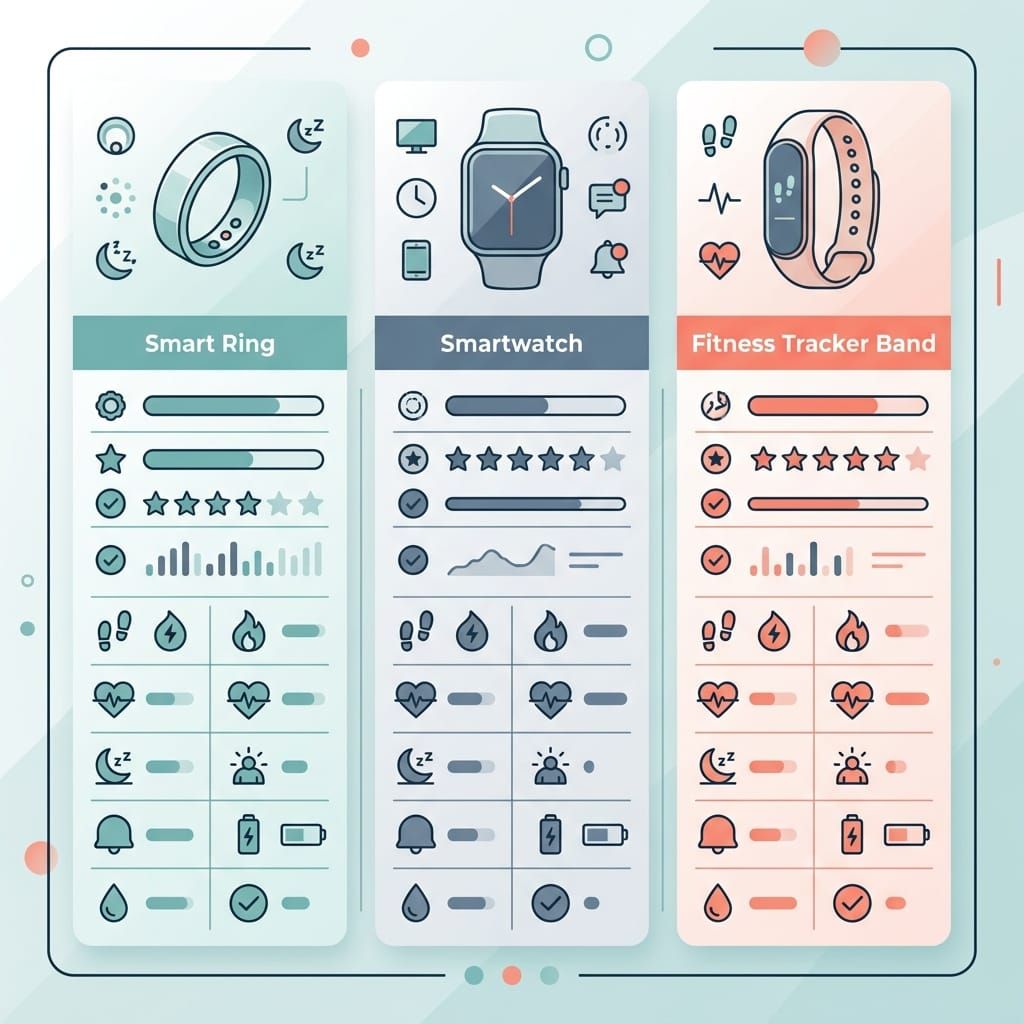
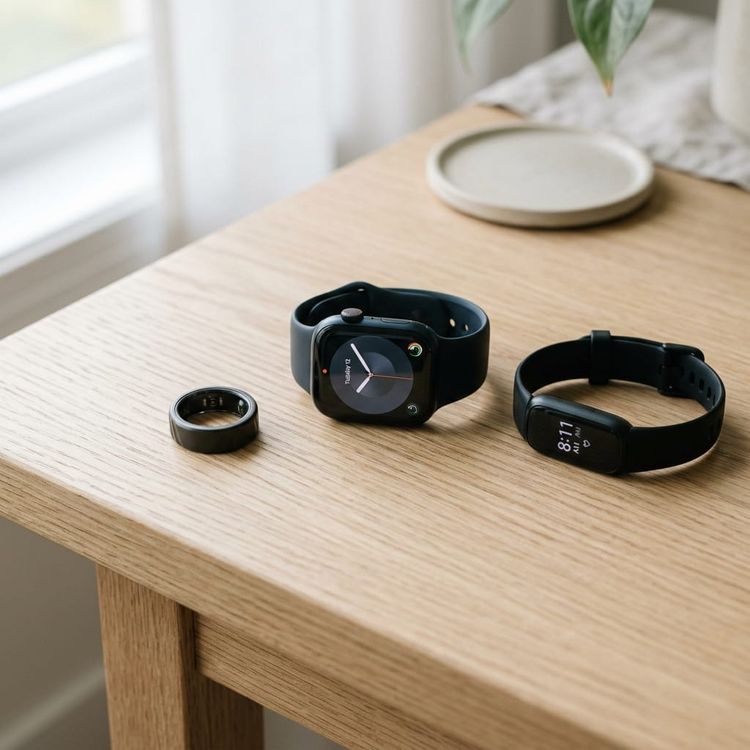
If you are looking to purchase a wearable to support your recovery, different devices offer different strengths. Here is a comparison of the top choices:
| Device | Price Tier | Primary Cardiac Benefit | Ease of Use |
|---|---|---|---|
| Oura Ring Gen3 | Premium | Track resting heart rate and HRV sleep recovery trends without screen distractions | 9/10 (Discreet, simple mobile app) |
| Apple Watch Series 9 | Premium | Direct ECG capture, irregular heart rhythm notifications, and active workout tracking | 8/10 (Requires frequent charging) |
| Garmin Vivosmart 5 | Budget | Reliable step tracking and basic HRV sleep tracking | 8/10 (Simple interface, excellent battery life) |
Which Wearable Fits Your Profile Best?
To help you decide which device makes sense for your recovery journey, choose the description that sounds most like you:
🧠 Profile A: The Anxiety-Prone Tracker
- Your traits: You find yourself checking your heart rate every time you feel a skipped beat, and looking at real-time metrics makes your pulse climb.
- Your match: Oura Ring Gen3. Because it has no screen, Oura completely eliminates the habit of nervous spot-checking. It quietly gathers your biometrics (resting heart rate, HRV, sleep stages) overnight while you sleep and presents them as simple morning recovery trends.
- 👉 Browse the Oura Ring Gen3 here
🏃♂️ Profile B: The Active Workouts Devotee
- Your traits: You are actively participating in cardiac rehabilitation or structured aerobic workouts, and you need to monitor your heart rate zones in real time to stay within your doctor's prescribed limits.
- Your match: Apple Watch Series 9 (or newer). The Apple Watch offers outstanding real-time heart rate zone alerts during exercise, direct single-lead ECG capture on demand, and fall detection. It is best if you want an active, screen-first companion and don't mind charging it daily.
- 👉 Browse the Apple Watch here
🔋 Profile C: The Set-and-Forget Minimalist
- Your traits: You want the core data—steps, resting heart rate, and basic sleep tracking—but you absolutely hate having to charge another device every night.
- Your match: Garmin Vivosmart 5. This budget-friendly, screen-light tracker focuses heavily on step count and baseline HRV metrics. With a battery life that lasts up to 7 days, you can wear it continuously without the friction of daily charging.
- 👉 Browse the Garmin Vivosmart 5 here
Your Action Step: The Wearable Fast
If you find yourself checking your device more than three times a day outside of active workouts, try a 7-Day Wearable Fast:
- Turn Off Notifications: Disable all high/low heart rate warnings (unless explicitly mandated by your physician) and activity reminders.
- Cover the Face: Wear a long sleeve or band over the screen, or choose a screen-free device like the Oura Ring.
- Check Once a Week: Only log into your health app on Sunday afternoon to review your weekly average steps and sleep duration.
Shifting your relationship with your data from constant vigilance to strategic review is the best way to let your heart heal in peace.
For a complete guide to managing cardiac anxiety, rebuilding your exercise capacity, and picking the right tools for recovery, pick up your copy of The Cardiac Comeback.
Stay Ahead of Your Heart Health
Want to stay up-to-date with current science-backed nutrition tips to protect your cardiovascular future?
- Subscribe to the Newsletter: Get practical, clinical-strength tips on diet, labs, and lifestyle adjustments sent straight to your inbox.
- Get the Master Course: Secure immediate access to the Heart Disease Risk Reversal Master Course and start reversing your risk today.
👉 Join the Newsletter & Master Course here
Keep recovery quiet.
Download Vetted Clinical Handouts & Trackers
Get instant access to a growing library of evidence-based guides, food protocols, and symptom logs vetted by a cardiology dietitian. Access is completely free—simply subscribe to view.
Access Handout Library



Member discussion