
Oura Ring vs. Apple Watch vs. Fitbit: Best Cardiac Recovery Monitor
How to Track Your Heart Rate After a Heart Attack Without Triggering Anxiety
Written by: Lian Liu, MPH, RD, CDCES | Specializing in Cardiac & Menopause Nutrition. Reviewed and updated: June 2026.
> Direct Answer: The Apple Watch Series 11 is the premier choice for active clinical safety features like FDA-cleared ECGs and irregular rhythm notifications. For those prioritizing a less intrusive, passive recovery experience centered on heart rate variability (HRV) and sleep architecture, the Oura Ring Gen3 is the most effective option.
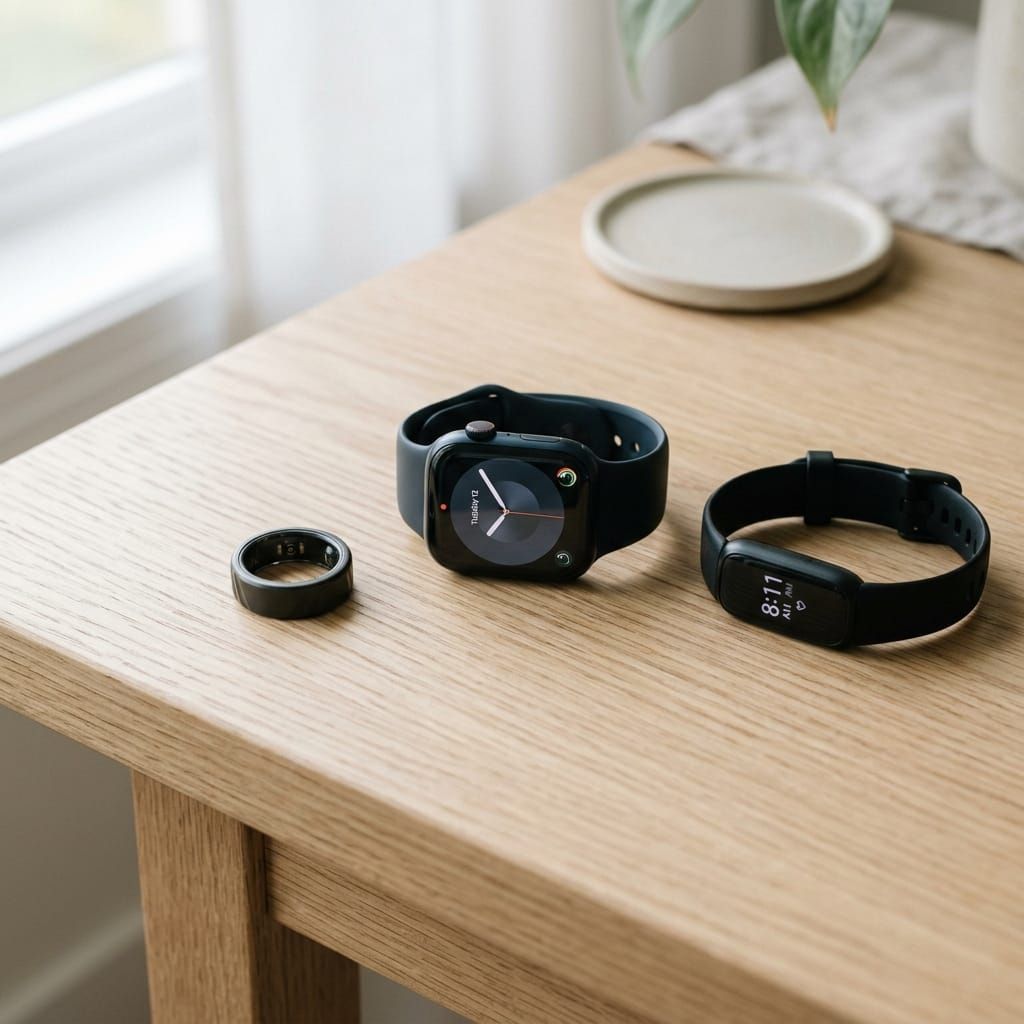
Greg walked into his first cardiac rehab session with two smartwatches on his left arm and a fitness band on his right. After surviving a sudden heart attack three weeks prior, he was terrified of his own heart rate. Every climb up the stairs felt like a high-stakes gamble. "One watch says my heart rate is 92, the other says 97, and the band says 88," he told me, completely exhausted. "I just want to know which one will keep me safe."
This paralyzing anxiety—a clinical phenomenon known as cardiophobia—is incredibly common. Wearables can either be a powerful tool to help you rebuild trust in your body, or a constant anxiety trigger that keeps you checking your wrist every two minutes.
Choosing the right device depends entirely on whether you need a passive health tracker, a strict exercise coach, or an on-demand medical safety net.
Key Takeaways
- The Apple Watch Series 11 is the top choice for active safety, featuring FDA-cleared on-demand ECGs, irregular rhythm notifications, and automatic fall detection.
- The Oura Ring Gen3 is the best option for passive, anxiety-free tracking, monitoring sleep architecture and heart rate variability (HRV) without screen-induced stress.
- The Garmin Vivosmart 5 (a premium, screen-simple tracker) serves as the ideal budget-friendly alternative for logging heart rate trends and basic recovery metrics.
- A wearable should guide your pacing, not dictate your mental health. Always prioritize your doctor's clinical guidelines.
Oura vs. Apple Watch vs. Fitbit: The Comparison at a Glance
If you are looking for a quick summary of how these three devices stack up for a heart patient, this breakdown compares their key biometric features, battery life, and safety tools.
| Feature | Apple Watch Series 11 | Oura Ring Gen3 | Garmin Vivosmart 5 |
|---|---|---|---|
| Best For | Active safety & on-demand ECG | Passive tracking & anxiety reduction | Budget-friendly heart rate logs |
| ECG (EKG) Capability | Yes (FDA-cleared, single-lead) | No | No |
| Fall / Incident Detection | Yes (With automatic emergency call) | No | Yes (Via connected smartphone) |
| Heart Rate Variability (HRV) | Yes (Captured periodically) | Yes (Highly accurate overnight average) | Yes (Calculated as Body Battery) |
| Battery Life | ~18 hours (Daily charging required) | Up to 7 days | Up to 7 days |
| Affiliate Link | Apple Watch Series 11 | Oura Ring Gen3 | Garmin Vivosmart 5 |
Disclosure: Some of the links below are affiliate links. This means if you click through and take action, I may receive a small commission (at no extra cost to you). This helps support the free content on this blog while I only recommend tools and foods I truly believe in for your heart health journey.
Apple Watch Series 11: The Medical Safety Net
The Apple Watch Series 11 is designed as a proactive medical companion. Rather than focusing solely on athletic performance, it creates a robust safety net around your wrist.
Why it works for cardiac patients:
- On-Demand ECG: If you feel a flutter or palpitation, you can take a 30-second single-lead ECG directly on your wrist to check for signs of atrial fibrillation (AFib).
- Fall Detection: If you take a hard fall while exercising or walking alone, the watch detects the impact and can automatically call emergency services with your location.
- Irregular Rhythm Notifications: The optical sensor runs background checks on your pulse rhythm, alerting you if it detects patterns suggestive of AFib.
Where it falls short:
The short battery life is its biggest drawback. Because it requires daily charging, many users end up charging it overnight, completely missing out on recovery sleep and resting heart rate data.
Oura Ring Gen3: The Passive recovery Companion
The Oura Ring Gen3 represents a completely different philosophy. It has no screen, no constant vibrations, and no alerts telling you to stand up or move. It is designed to track your body passively.
Why it works for cardiac patients:
- Anxiety-Free Tracking: Because there is no screen, you cannot obsessively check your heart rate while walking or resting. This is a game-changer for patients struggling with cardiophobia.
- Overnight Biometrics: Oura shines during sleep. It tracks your resting heart rate and Heart Rate Variability (HRV) when your body is relaxed and free from daytime stress, giving you a clean baseline of your nervous system's healing.
- Body Temperature and Sleep: The ring monitors subtle changes in skin temperature and sleep stages, helping you identify systemic inflammation or poor recovery before you feel it.
Where it falls short:
It cannot take an on-demand ECG and has no active safety alerts. It also requires a monthly subscription to access your full data trends.
Garmin Vivosmart 5: The Screen-Simple Budget Option
If you want reliable heart rate tracking without a heavy investment or a bulky screen, the Garmin Vivosmart 5 is an exceptional budget-friendly choice.
Why it works for cardiac patients:
- Continuous Heart Rate Tracking: It logs your pulse 24/7 and displays it on a simple, low-glare screen.
- Body Battery: Garmin uses your HRV and sleep quality to calculate your "Body Battery" score from 1 to 100, letting you know when to rest and when it is safe to exercise.
- Simplicity: It lacks complex smartwatch apps, focusing purely on health, steps, and basic stress metrics.
Where it falls short:
It does not have built-in GPS (it must connect to your phone) and lacks an FDA-cleared ECG sensor.
How to Choose the Right Device for Your Recovery
A wearable is only useful if it supports your mental and physical recovery. If checking your heart rate constantly makes your chest tighten with panic, you need a device that stays out of your way.
If your primary struggle is the fear of another event and you want the peace of mind that comes with fall detection and an ECG, the Apple Watch Series 11 is your best investment.
If you are prone to checking metrics constantly and want a passive, highly accurate view of your sleep and nervous system recovery, the Oura Ring Gen3 will be your best companion.
If you want basic, reliable biometrics on a budget without unnecessary smartwatch distractions, the Garmin Vivosmart 5 is the practical choice.
Remember, a smartwatch is just one small tool in your overall recovery system. For a complete, step-by-step roadmap to managing your medications, diet, and lifestyle changes, check out my comprehensive guide to preventing a second heart attack.
When to Take the Watch Off
If you find yourself checking your heart rate while sitting quietly on the couch, or if a minor fluctuation in your HRV ruins your morning, take the device off. A wearable is meant to build your confidence, not control your mood. If you feel symptoms like chest pain, pressure, or shortness of breath, do not wait for a watch to confirm it—seek medical attention immediately.
Stay Ahead of Your Heart Health
Want to stay up-to-date with current science-backed nutrition tips to protect your cardiovascular future?
- Subscribe to the Newsletter: Get practical, science-backed tips on diet, labs, and lifestyle adjustments sent straight to your inbox.
- Get the Master Course: Secure immediate access to the Heart Disease Risk Reversal Master Course and start reversing your risk today. 👉 Join the Newsletter & Master Course here
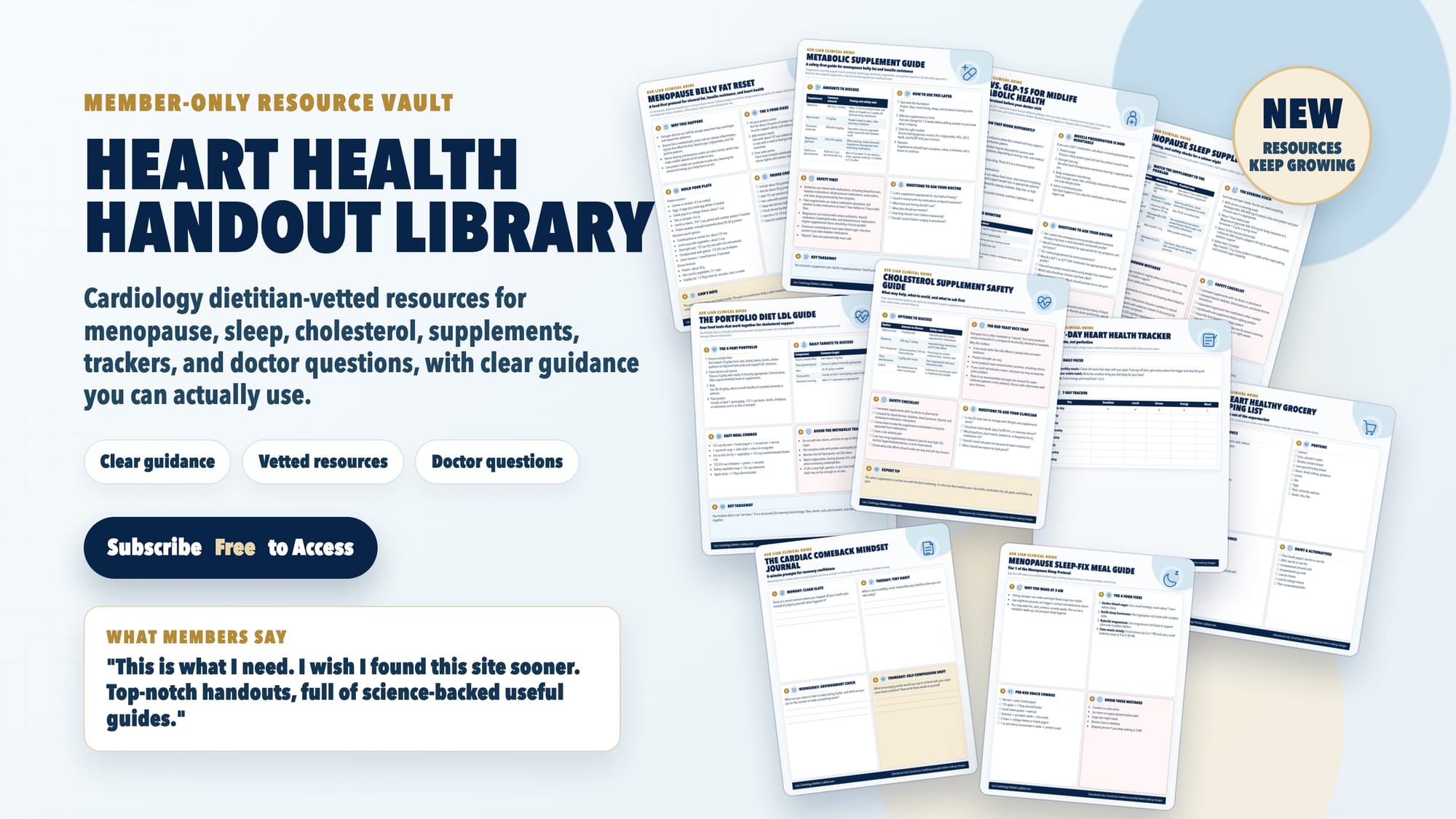
Download Vetted Clinical Handouts & Trackers
Get instant access to a growing library of evidence-based guides, food protocols, and symptom logs vetted by a cardiology dietitian. Access is completely free—simply subscribe to view.
Access Handout Library




Member discussion