
7 Lifestyle Changes After a Heart Attack You Can Start Today

7 Lifestyle Changes After a Heart Attack You Can Start Today
Written by: Lian Liu, MPH, RD, CDCES | Specializing in Cardiac & Menopause Nutrition. Reviewed and updated: June 2026.
> Direct Answer: Recovery after a heart attack is best achieved by adopting consistent, low-friction habits such as automated medication management, improved sleep hygiene, and incremental dietary improvements. These manageable changes reduce physiological stress while building a sustainable foundation for long-term secondary prevention and cardiovascular health.
Linda lay awake at 2:00 AM, staring at her ceiling. She had been home from the hospital for five days after her stent placement, and she was terrified to close her eyes. Her discharge paperwork was a stack of thirty pages warning her about blood pressure, low-sodium diets, daily exercise, and stress reduction. "I feel like I'm walking on eggshells," she told me at her follow-up. "If I make a mistake, will I have another one? I don't know where to start."
This sense of overwhelm is the single biggest barrier to a successful cardiac recovery. Trying to overhaul your entire life overnight only spikes your stress hormones, which is exactly what we want to avoid.
The secret to secondary prevention is focusing on small, low-friction habits that build momentum. Here are seven simple, science-backed lifestyle changes you can start today.
Key Takeaways
- Overhauling your lifestyle after a heart attack doesn't require perfection; it requires consistency with small, sustainable habits.
- Simple adjustments to medication organization, sleep hygiene, and meal prep can dramatically lower the stress of recovery.
- Focus on what you can add to your routine rather than what you must restrict.
- These daily steps form the foundation of a complete secondary prevention system to keep you out of the hospital.
The 7 Low-Friction Lifestyle Habits for Recovery
Here is the exact framework to start rebuilding your health, ranked from the easiest logistically to the most restorative biologically.
| Habit | Focus Area | Why It Works | Practical Step Today |
|---|---|---|---|
| 1. Automate Meds | Medication Adherence | Eliminates daily decision fatigue and anxiety | Set up a weekly pill organizer |
| 2. Add sol-fiber | Nutrition | Soluble fiber binds LDL cholesterol in the gut | Stir 1 tbsp of ground flaxseed into oatmeal |
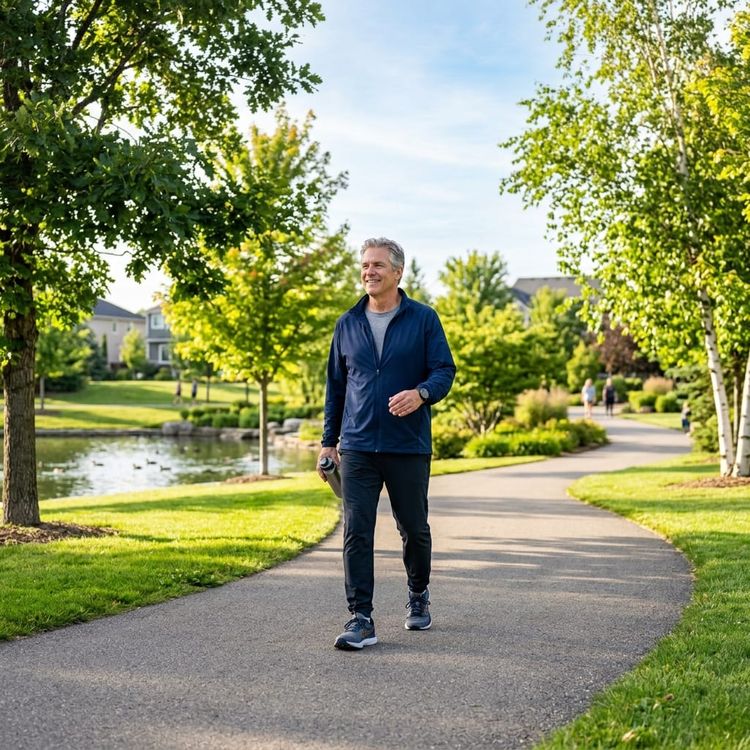
| 3. Step out | Exercise / Movement | Rebuilds cardiovascular efficiency safely | Walk on flat ground for 10 minutes |
| 4. Spices over salt | Nutrition / BP | Enhances flavor without raising blood pressure | Use salt-free herbal seasoning blends |
| 5. Cool the room | Sleep / Recovery | Lowers night sweats and protects deep sleep | Set your thermostat to 65–68°F |
| 6. The 4-7-8 breath | Stress / Nervous System | Stimulates vagus nerve to exit fight-or-flight | Practice for 2 minutes before bed |
| 7. Share the load | Social Support | Lowers isolation and builds accountability | Call one recovery partner to check in |
\n\nDisclosure: Some of the links below are affiliate links. This means if you click through and take action, I may receive a small commission (at no extra cost to you). This helps support the free content on this blog while I only recommend tools and foods I truly believe in for your heart health journey.
1. Automate Your Medication Management
Managing a new regimen of five to six daily heart medications is one of the most stressful parts of returning home. Missing a dose creates panic, while double-dosing is dangerous.
Answer-First: You can eliminate medication anxiety by using a structured pill organizer and setting recurring phone alarms. Taking the decision-making out of your mornings ensures 100% adherence and keeps your blood pressure stable.
Using a high-quality AM/PM Large Pill Organizer allows you to prep your entire week on Sunday, turning a daily chore into a weekly, automated task.
2. Upgrade Your Spices to Protect Your Blood Pressure
The American Heart Association recommends an optimal target of under 1,500 mg of sodium per day for secondary prevention in their science statement on sodium reduction. However, aiming for a range of 1,500 to 2,000 mg/day is a highly effective, more sustainable target for most survivors, especially since eating bland, unseasoned food leads to compliance fatigue.
Answer-First: Instead of removing salt and eating tasteless meals, focus on building flavor with acid (lemon juice, vinegar) and robust salt-free seasoning blends. This satisfies your palate without causing fluid retention or raising your blood pressure.
Swapping table salt for a high-quality blend like Mrs. Dash Salt-Free Seasoning is the fastest way to slash your sodium intake without sacrificing taste.
3. Practice the 4-7-8 Breathing Technique
Chronic stress raises cortisol, which directly promotes vascular inflammation and plaque instability.
Answer-First: You can lower your heart rate and exit "fight-or-flight" mode in under two minutes by practicing the 4-7-8 breathing method. This diaphragmatic breathing pattern actively stimulates your vagus nerve, signaling your cardiovascular system to relax.
How to do it:
- Inhale through your nose silently for 4 seconds.
- Hold your breath for 7 seconds.
- Exhale completely through your mouth with a "whoosh" sound for 8 seconds.
- Repeat this cycle 3 to 4 times.
How Daily Habits Prevent a Second Heart Attack
These seven habits do not work in isolation. They are designed to support each other. Better sleep lowers morning cortisol, which stabilizes blood pressure, making your daily walk feel easier and safer.
These lifestyle changes form the defensive wall of your recovery. For a complete look at how medication, nutrition, sleep, and testing fit together, read my comprehensive guide to preventing a second heart attack.
If you are struggling to build these habits safely or feel overwhelmed by physical activity, you can also read my guide on how to restart exercise after a heart attack for a detailed, step-by-step walking progression.
For a complete day-by-day roadmap that helps you transition safely from the hospital to your home life, pick up a copy of my book, The Cardiac Comeback, which outlines the exact mental and dietary frameworks you need.
Stay Ahead of Your Heart Health
Want to stay up-to-date with current science-backed nutrition tips to protect your cardiovascular future?
- Subscribe to the Newsletter: Get practical, clinical-strength tips on diet, labs, and lifestyle adjustments sent straight to your inbox.
- Get the Master Course: Secure immediate access to the Heart Disease Risk Reversal Master Course and start reversing your risk today. 👉 Join the Newsletter & Master Course here
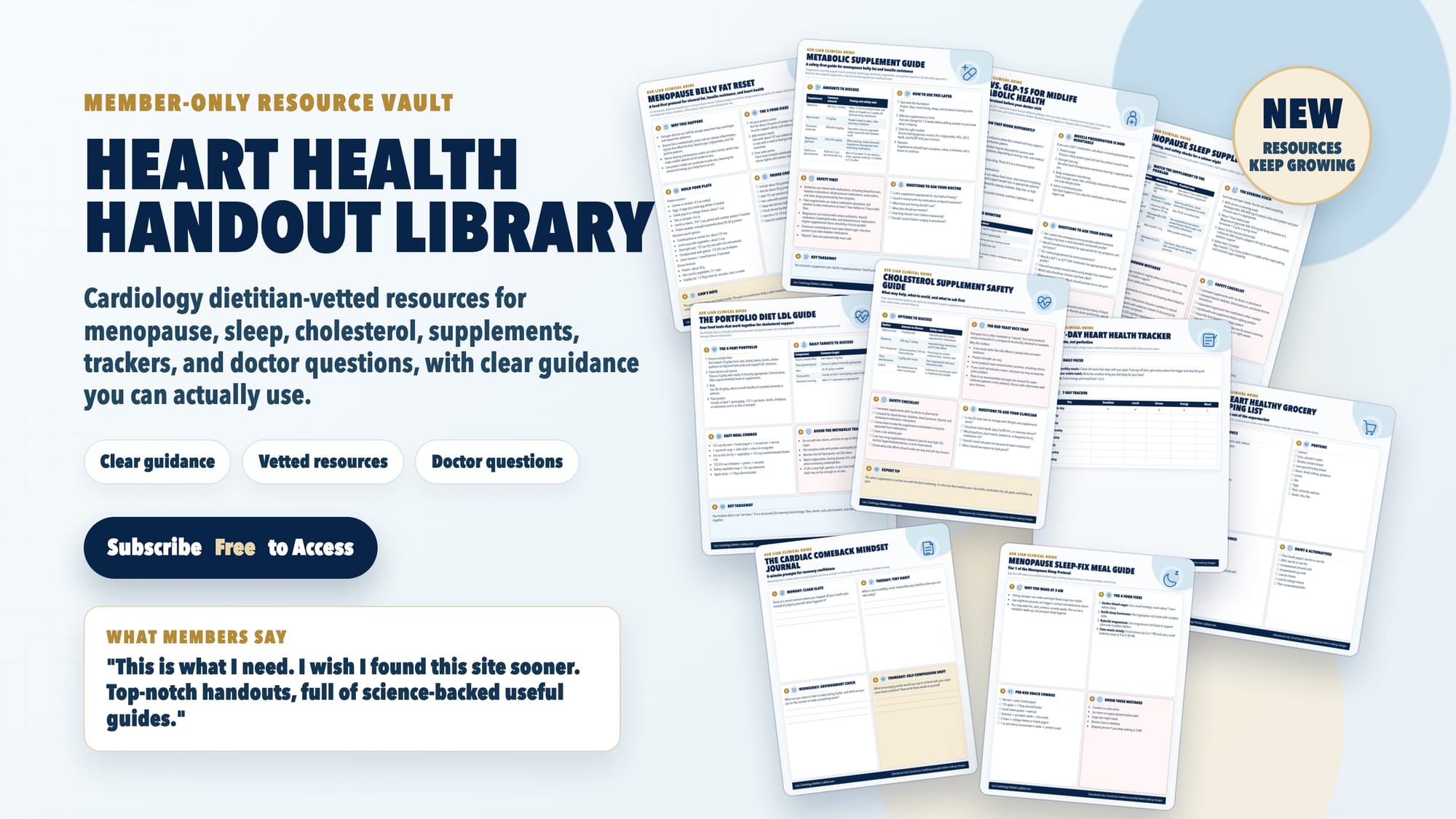
Download Vetted Clinical Handouts & Trackers
Get instant access to a growing library of evidence-based guides, food protocols, and symptom logs vetted by a cardiology dietitian. Access is completely free—simply subscribe to view.
Access Handout Library
Member discussion