How to Talk to Your Siblings & Kids About Inherited Heart Risk (Without Causing Panic)

How to Talk to Your Siblings & Kids About Inherited Heart Risk (Without Causing Panic)
Written by: Lian Liu, MPH, RD, CDCES | Specializing in Cardiac & Menopause Nutrition. Reviewed and updated: June 2026.
> Direct Answer: Frame the conversation around proactive "cascade screening" and empowerment rather than fear-based messaging. Explain that identifying genetic markers like high Lp(a) or Familial Hypercholesterolemia allows for early intervention, transitioning the narrative from "destiny" to a manageable health plan through evidence-based lifestyle modifications.
Disclosure: Some of the links below are affiliate links. This means if you click through and take action, I may receive a small commission (at no extra cost to you). This helps support the free content on this blog while I only recommend tools and foods I truly believe in for your heart health journey.
Shortly after Maria was discharged from the hospital following a heart attack at age 52, she sat at her kitchen table watching her 24-year-old son, Daniel, eat a slice of pizza.
Instead of feeling happy to be home, a wave of intense anxiety washed over her.
My father had a heart attack in his 50s, Maria thought. Now I’ve had one in my 50s. What did I pass down to Daniel? Is his heart already building plaque? Are my siblings walking around with the same ticking time bomb?
Maria wanted to warn them. She wanted to tell them to get tested immediately. But every time she thought about bringing it up, she stopped herself. She didn’t want to cause panic. She didn't want to make her children feel like they were doomed to repeat her medical history.
If you have survived a cardiac event or discovered that you carry a high genetic risk marker like Lipoprotein(a) or Familial Hypercholesterolemia (FH), this internal struggle is very real. You want to protect the people you love—but you don't want to shadow their lives with fear.
Talking to your siblings and children about inherited risk is one of the most important steps in cardiac recovery. Here is how to navigate this conversation with clinical clarity, empathy, and empowering action.
The Reality of Genetic Cardiac Risk
First, let's look at the science. Cardiological research published in Circulation highlights that a substantial portion of cardiovascular risk is influenced by inherited factors.
If a first-degree relative (a parent or sibling) has a history of early heart disease (defined as a heart attack, stroke, or stent before age 55 for men or age 65 for women), your baseline risk is significantly elevated.
This risk is particularly sharp for younger generations. Data published in the Journal of the American Heart Association demonstrates that young adults between the ages of 20 and 39 who have a family history of early heart disease face an estimated 6-fold (6x) higher risk of developing cardiovascular disease compared to their peers without a family history.
This means that sharing your diagnosis isn't just about sharing bad news—it is a critical, potentially life-saving warning system.
What Is Cascade Screening?
In cardiology, when a genetic lipid disorder like FH or elevated LP(a) is identified in a patient, clinical guidelines recommend a process called cascade screening.
Cascade screening is a systematic approach to testing first-degree biological relatives (parents, siblings, and children) of an individual diagnosed with an inherited condition.
- First-Degree Focus: If you test positive for high LP(a), your siblings and children have a 50% chance of carrying the exact same genetic marker.
- Testing Children: The National Lipid Association (NLA) recommends selective screening for children under 18 if there is a family history of premature cardiovascular disease or elevated LP(a), as detailed in their focused update in the Journal of Clinical Lipidology. Identifying elevated LP(a) early in a child's life allows for a lifetime of proactive cardiovascular protection.
By screening the immediate family, we can identify high-risk individuals decades before their first symptom or heart event occurs.
How to Frame the Conversation: DNA is Not Destiny
The biggest barrier to talking to family is the fear of fatalism—the belief that because a disease is in your genes, you are powerless to stop it.
To prevent panic, you must avoid labeling or stigmatizing your relatives. Your genes are not a dictatorship; they are a democracy. Your DNA might cast the first vote, but your daily lifestyle choices, nutritional patterns, and medical management cast the deciding votes. DNA is not destiny.
When you speak to your siblings or children, use these three communication guidelines to keep the conversation empowering:
1. Focus on Opportunity, Not Doom
Don't say: "I have bad genes, and you probably do too, so you need to get your heart checked." Instead, say: "I found out that my heart event was linked to a specific genetic marker. Identifying this is a huge advantage for our family, because now we know exactly how to prevent it from happening to you."
2. Emphasize Early Prevention
For children and young adults, emphasize that they have time on their side. Plaque buildup is a slow process that takes decades. By knowing their genetic risk factors now, they can implement simple lifestyle habits early, keeping their blood vessels clean and healthy.
3. Use the "Life's Essential 8" Framework
When discussing action steps, guide them away from restrictive, stressful diets and toward the American Heart Association's Life's Essential 8 framework. Focus on positive, additive goals:
- Optimal sleep quality
- Regular physical activity
- Eating a fiber-rich, whole-food diet
- Avoiding tobacco exposure
- Managing healthy weight, blood pressure, cholesterol, and blood sugar levels
Conversational Scripts to Use
If you aren't sure how to start the conversation, here are two simple scripts you can customize:
Script for Your Siblings:
"Hey [Name], since my heart event, my doctors did some genetic testing. They found that my LP(a) levels are high. It's a genetic marker that standard tests miss, and since it runs in families, there's a 50% chance you have it too. The guidelines recommend that siblings get tested at least once. It’s just a simple blood test you can ask your doctor for at your next physical. If you have it, it just means you need to be proactive. Let me know if you want me to send you the details."
Script for Your Adult Children:
"Daniel, I want to share something my doctors found. My heart disease was largely driven by a genetic marker called LP(a). Because it’s inherited, I want to make sure you have this information. It’s highly manageable, but knowing if you carry it early in life gives you a massive advantage. At your next checkup, ask your doctor to add an LP(a) blood test. DNA isn’t destiny—knowing your numbers just means we can protect your heart early."
Your Action Step
Do not carry the burden of genetic risk alone, and do not let fear prevent you from protecting your family.
- Commit to a Conversation: Choose one sibling or child to talk to this week.
- Share the Data: Share this post or send them the specific name of the test: Lipoprotein(a).
Knowledge is the ultimate tool for prevention. By initiating cascade screening, you aren't just managing your own recovery; you are rewriting the cardiovascular history of your family.
For a comprehensive guide to understanding inherited cardiac risk and building a low-stress lifestyle that keeps your genes silent, pick up a copy of The Cardiac Comeback.
Stay Ahead of Your Heart Health
Want to stay up-to-date with current science-backed nutrition tips to protect your cardiovascular future?
- Subscribe to the Newsletter: Get practical, clinical-strength tips on diet, labs, and lifestyle adjustments sent straight to your inbox.
- Get the Master Course: Secure immediate access to the Heart Disease Risk Reversal Master Course and start reversing your risk today.
👉 Join the Newsletter & Master Course here
Keep leading your family toward health.
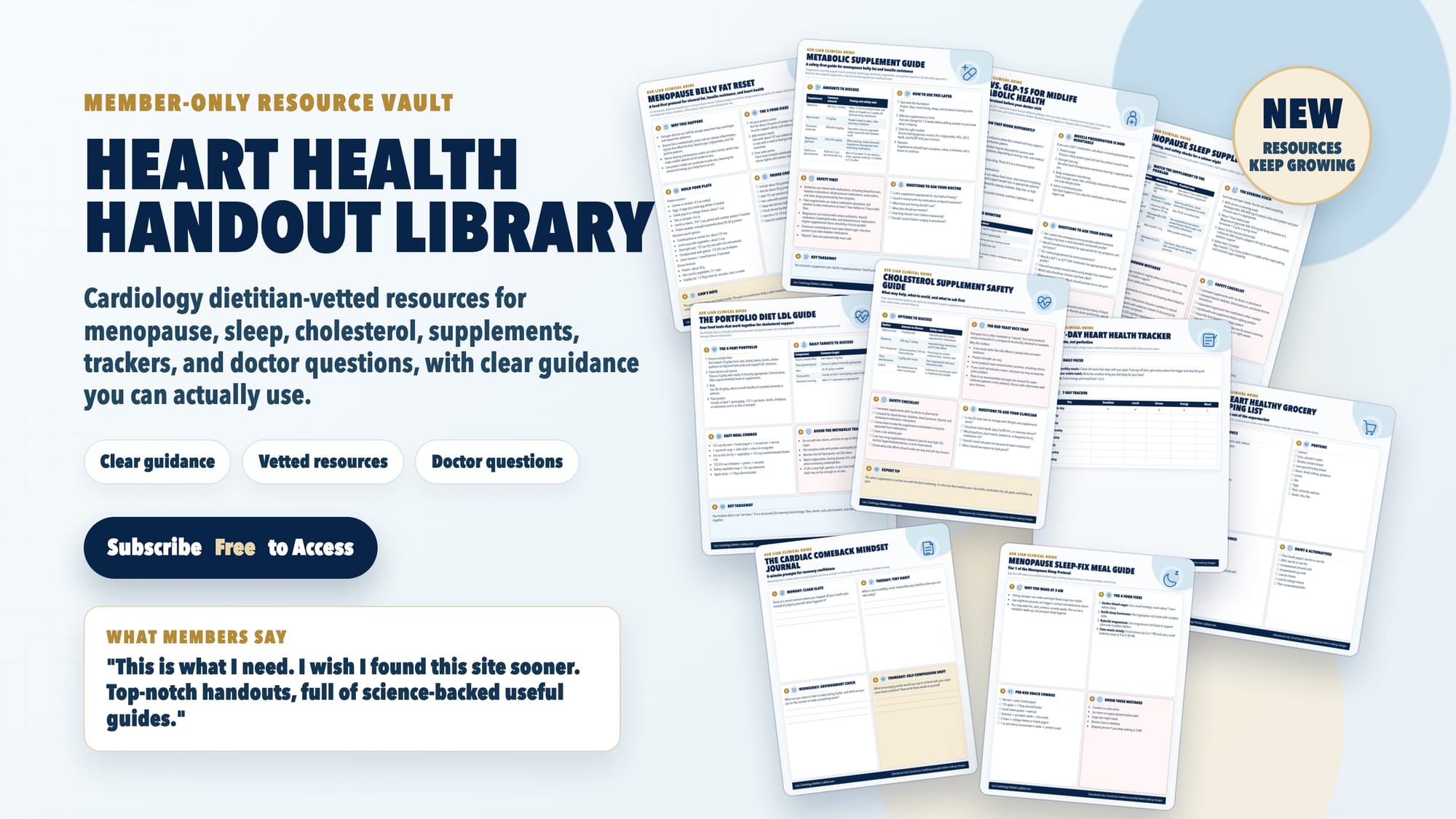
Download Vetted Clinical Handouts & Trackers
Get instant access to a growing library of evidence-based guides, food protocols, and symptom logs vetted by a cardiology dietitian. Access is completely free—simply subscribe to view.
Access Handout Library




Member discussion