
The Ultimate Cardiac Rehab Wearable Comparison: Apple vs. Garmin
Written by: Lian Liu, MPH, RD, CDCES | Specializing in Cardiac & Menopause Nutrition. Reviewed and updated: June 2026.
> Direct Answer: Choose the Apple Watch Series 11 if you prioritize medical-grade features like on-demand ECGs and fall detection for a comprehensive safety net. Select the Garmin Venu 3 if your primary goal is precise heart rate zone tracking to pace your physical exertion during active recovery.
Three weeks after his stent placement, Michael went for his first unsupervised walk around his neighborhood. He was cleared by his cardiologist, but every time his chest felt slightly tight, he panicked and stopped. He didn't know if his heart rate was too high, or if he was just out of shape. The fear of another event—what we call cardiophobia—was keeping him stuck on the couch. He asked me what a lot of patients ask: "Which smartwatch should I buy to make sure I'm safe?"
Key Takeaways
- Wearables are powerful tools for post-heart attack recovery, but they should build confidence, not create anxiety.
- The Apple Watch Series 11 is the top choice if you want medical-grade ECGs, fall detection, and an easy-to-read daily health dashboard.
- The Garmin Venu 3 is the winner if your primary goal is tracking specific heart rate zones during exercise and pacing your physical recovery.
- Neither watch replaces your doctor's advice, but both can help you transition safely out of cardiac rehab.
The Role of a Wearable in Cardiac Recovery
After a heart attack (myocardial infarction), your relationship with your body changes. You no longer trust the signals it sends you. A simple twinge in your shoulder can trigger a wave of anxiety.
A good smartwatch acts as an objective third party. It gives you data to pace your physical exertion, making sure you stay within the safe heart rate zones prescribed by your cardiac rehab team. But picking the right one depends entirely on what kind of data makes you feel secure.
Let's look at the two top contenders: the Apple Watch Series 11 and the Garmin Venu 3.
Apple Watch Series 11: The Safety Net
The Apple Watch is built around the concept of a comprehensive safety net. It is less of a strict fitness coach and more of a medical companion on your wrist.
Why it works for heart patients:
- On-Demand ECG: The Apple Watch can take a single-lead electrocardiogram (ECG) in 30 seconds. If you ever feel a flutter and worry about atrial fibrillation, this feature provides immediate, shareable data for your cardiologist.
- Fall Detection: If you take a hard fall while walking alone, the watch can automatically connect you to emergency services. This provides immense peace of mind for both you and your family during early recovery.
- Simplicity: The interface is clean. It simply tells you to move, stand, and exercise, without overwhelming you with complex training metrics.
Where it falls short:
The battery life is notoriously short, requiring daily charging. This means you might miss out on crucial sleep tracking data if you charge it overnight.
Garmin Venu 3: The Exercise Pacer
Garmin devices are built for training. If you are focused heavily on regaining your cardiovascular fitness and need strict guidance on pacing, the Garmin Venu 3 shines.
Why it works for heart patients:
- Precision Heart Rate Zones: Cardiac rehab is all about pacing. Your team will tell you to exercise at a specific heart rate (like 100-115 beats per minute). The Garmin interface makes it incredibly easy to set these zones and will alert you if you push too hard.
- Body Battery: Garmin tracks your heart rate variability (HRV) to calculate your "Body Battery." It tells you how much energy you have recovered overnight, helping you decide if today is a day to push or a day to rest.
- Battery Life: The battery lasts up to 14 days, meaning you rarely have to take it off, providing uninterrupted sleep and recovery data.
Where it falls short:
While it has excellent optical heart rate sensors, it lacks the FDA-cleared ECG feature of the Apple Watch. It is also a more complex device to learn.
Quick Comparison
| Feature | Apple Watch Series 11 | Garmin Venu 3 |
|---|---|---|
| Best For | Peace of mind & safety | Exercise pacing & training |
| ECG Capability | Yes (FDA-cleared) | No |
| Fall Detection | Yes (Automatic emergency SOS) | Yes (Incident Detection) |
| Heart Rate Zones | Basic | Advanced, highly customizable |
| Battery Life | ~18 hours (Requires daily charging) | Up to 14 days |
| Interface | Simple, health-dashboard focused | Complex, training-focused |
Disclosure: Some of the links below are affiliate links. This means if you click through and take action, I may receive a small commission (at no extra cost to you). This helps support the free content on this blog while I only recommend tools and foods I truly believe in for your heart health journey.
Summary
If your main struggle right now is the fear of another event, and you want the peace of mind that comes with an ECG and fall detection, the Apple Watch Series 11 is your best investment.
However, if you feel confident in your heart's stability and your main goal is getting your fitness back safely by strictly managing your exercise zones, the Garmin Venu 3 will be your best training partner.
Both are excellent tools to help you take the guesswork out of your cardiac comeback.
When to Stop Looking at the Numbers
A quick warning: If you find yourself checking your heart rate every three minutes while sitting on the couch, take the watch off for a day. Wearables are meant to guide your exercise, not diagnose every flutter. Always discuss your symptoms directly with your medical team.
Stay Ahead of Your Heart Health
Want to stay up-to-date with current science-backed nutrition tips to protect your cardiovascular future?
- Check out the Free Resource Library: Dive into the 7-Day Heart Health Tracker to start logging your resting heart rate and HRV today.
- Read the Book: If you're feeling overwhelmed by the transition home after your stent, grab a copy of the Cardiac Comeback Book for a step-by-step mindset and physical recovery guide.
- Join the Waitlist: Be the first to know when the Heart Disease Risk Reversal Master Course opens for enrollment.
👉 Access the Library & Waitlist here
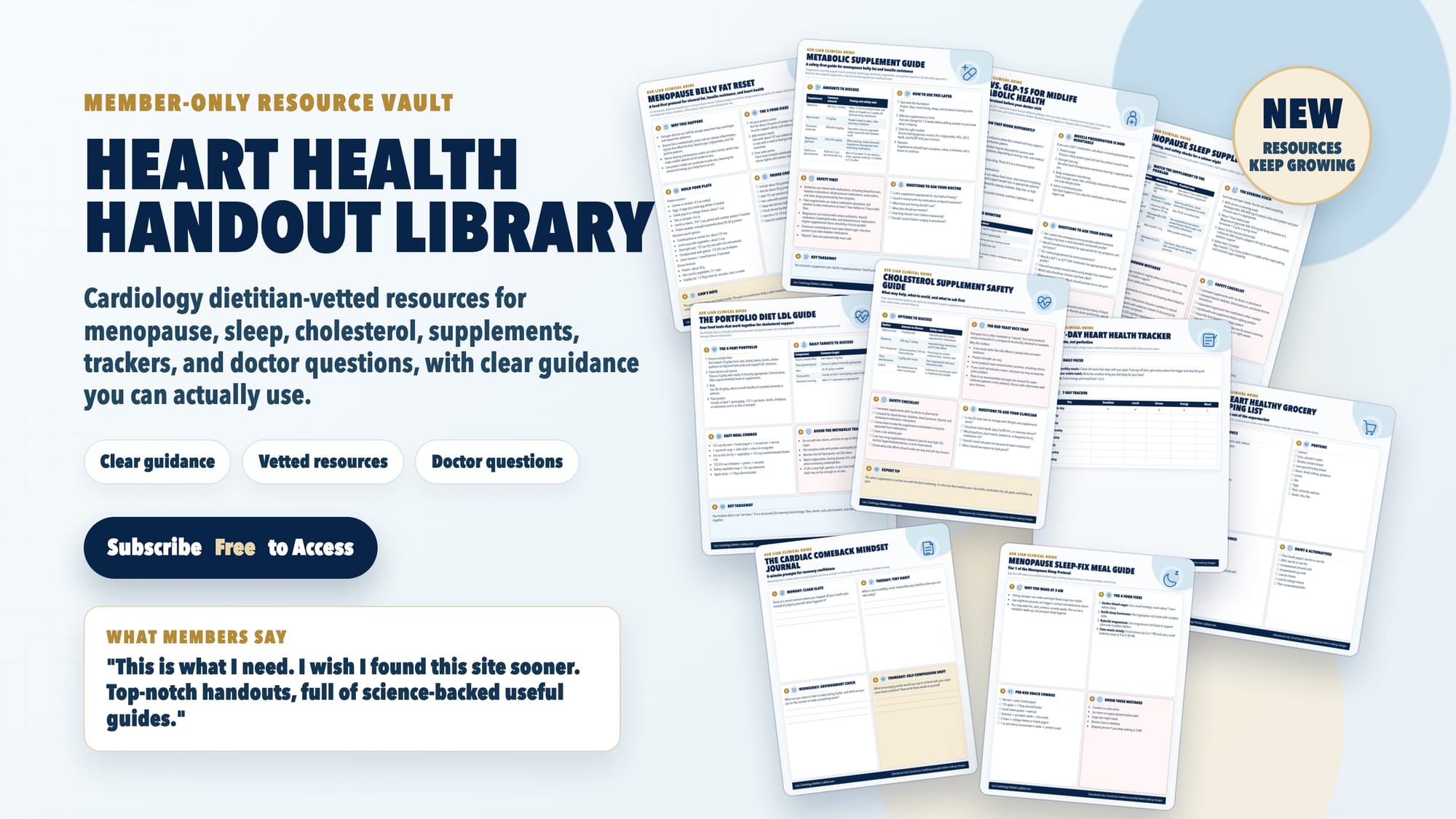
Download Vetted Clinical Handouts & Trackers
Get instant access to a growing library of evidence-based guides, food protocols, and symptom logs vetted by a cardiology dietitian. Access is completely free—simply subscribe to view.
Access Handout Library



Member discussion