
The Forbidden Fruit: Why Grapefruit and Common Heart Medications Don't Mix
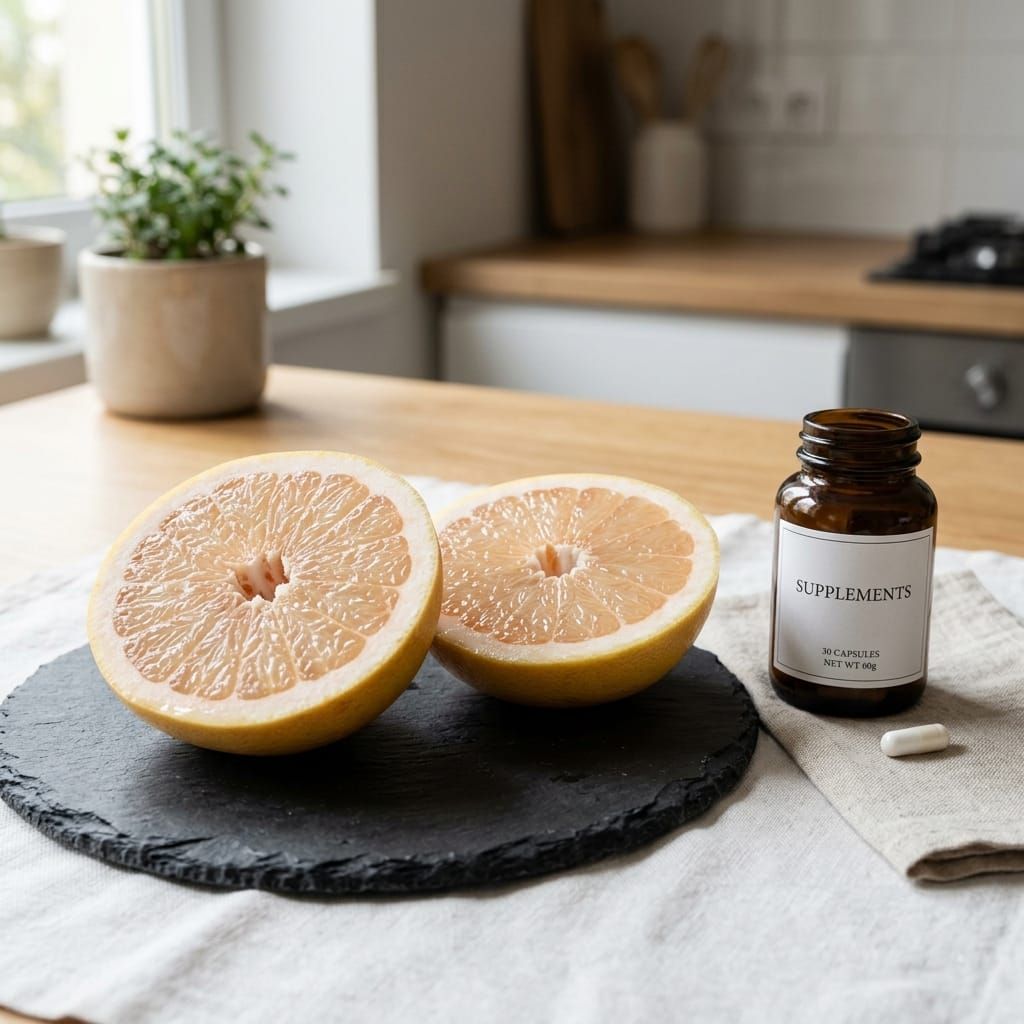
The Forbidden Fruit: Why Grapefruit and Common Heart Medications Don't Mix
Written by: Lian Liu, MPH, RD, CDCES | Specializing in Cardiac & Menopause Nutrition. Reviewed and updated: June 2026.
> Direct Answer: Grapefruit contains furanocoumarins that inhibit the CYP3A4 enzyme, which is responsible for metabolizing common heart medications like statins and calcium channel blockers. This interaction causes medication levels to spike dangerously in the bloodstream, significantly increasing the risk of severe side effects such as muscle breakdown or dangerous drops in blood pressure.
When Jeff suffered a mild heart attack, he doubled down on his recovery: eating clean, completing rehab, and taking his high-intensity statin, atorvastatin, every night. Yet, three months in, he developed deep, debilitating muscle aches in his thighs and arms, fearing his heart was failing again. The actual culprit? The fresh pink grapefruit he ate every single morning, which blocked his body's ability to metabolize his medication, causing the statin to accumulate to near-toxic levels in his bloodstream.
At the same time, Sarah, a heart patient who has loved grapefruit her entire life, is facing a different dilemma. She knows grapefruit juice carries a high risk of interaction with her blood pressure medication, so she has avoided it entirely out of caution. But she misses it deeply and wants to know: is there a way to safely reintroduce it, or are there citrus alternatives that will satisfy her cravings without triggering a dangerous drop in blood pressure?
Jeff's accidental reaction and Sarah's proactive caution are two sides of the exact same coin. Many cardiac survivors focus heavily on loading their plates with fresh, nutrient-rich fruits, only to introduce biochemistry that clashes with their life-saving prescriptions.
Whether you are trying to figure out why your muscles ache like Jeff, or looking for safe dietary swaps and medication adjustments like Sarah, you need to understand the precise science of grapefruit-drug interactions, which heart medications are affected, and how to safely enjoy a vibrant, citrus-friendly recovery.
The Gut-Wall Gatekeeper: How Grapefruit Alters Your Medicine
To understand why a simple piece of fruit can disrupt advanced pharmaceutical therapies, we have to look at how your body processes oral medications.
When you swallow a pill, it travels down your esophagus and into your stomach and small intestine. Before the drug can enter your general circulation and reach your heart or arteries, it must cross the intestinal wall and pass through the liver. This initial journey is known as first-pass metabolism.
Your intestinal lining is packed with an enzyme called cytochrome P450 3A4 (CYP3A4). Think of CYP3A4 as a protective gatekeeper. Its primary job is to break down foreign substances—including approximately 50% to 60% of all prescribed medications—so that only a controlled, safe amount enters your bloodstream.
The Mechanism of CYP3A4 Inhibition
Grapefruit contains organic chemical compounds called furanocoumarins, most notably bergamottin and 6,7-dihydroxybergamottin.
When furanocoumarins come into contact with the CYP3A4 enzymes in your intestinal wall, they bind to them and permanently disable them. This is known in pharmacology as mechanism-based, irreversible inhibition. Once disabled, the enzyme cannot be reactivated; your body must physically synthesize entirely new CYP3A4 proteins to replace them, a process detailed in a comprehensive clinical review in the Journal of Applied Pharmaceutical Science.
The Accidental Overdose Effect
With the gut's gatekeeper temporarily out of commission, any drug that relies on CYP3A4 for first-pass metabolism passes through your intestinal wall completely untouched.
Instead of absorbing the small, therapeutic percentage of the medication that your cardiologist intended, your body absorbs a massive, unchecked dose. For example, drinking a single glass of grapefruit juice while taking simvastatin can increase the drug's concentration in your blood by more than 200%. This effectively transforms your standard daily dose into a potentially toxic megadose.
Why You Can't Just Time Your Doses Apart
A common piece of advice circulating in online forums is that you can bypass this interaction by taking your medication at night and eating your grapefruit in the morning.
This is a dangerous clinical misconception.
Because the furanocoumarins in grapefruit destroy the CYP3A4 enzymes irreversibly, the inhibitory effect is exceptionally long-lasting. Research published in the Canadian Medical Association Journal demonstrates that the interaction can persist for up to 72 hours after consuming a single glass of grapefruit juice or half of a whole fruit. Separating your pill and your fruit by 12 hours does absolutely nothing to protect you; your intestinal enzymes are still disabled.
The White vs. Pink Citrus Variance
An interesting detail noted in the natural medicines literature is that the physical color of the grapefruit changes the concentration of furanocoumarins:
- White Grapefruits: Contain no lycopene (the pigment that makes fruit pink) but contain higher concentrations of furanocoumarins. This makes white grapefruit juice a more potent inhibitor of drug metabolism.
- Pink and Red Grapefruits: Contain lycopene and slightly lower concentrations of furanocoumarins. However, they still contain more than enough to cause severe, clinically significant drug interactions. All varieties must be avoided if you take susceptible medications.
Statins and Grapefruit: The Muscle-Toxicity Connection
Statins (HMG-CoA reductase inhibitors) are the absolute bedrock of secondary cardiovascular prevention. They lower LDL cholesterol, reduce arterial inflammation, and stabilize existing plaque to prevent recurrent heart attacks.
However, because different statins are metabolized through entirely different enzyme pathways, they react to grapefruit in very different ways.
Statins to Avoid
If you take any of the following statins, you must avoid grapefruit, grapefruit juice, and related hybrid citrus (like pomelos, Seville oranges, and tangelos) entirely:
- Simvastatin (Zocor): This medication has the highest risk of interaction. Simvastatin is highly dependent on CYP3A4. Grapefruit juice dramatically raises blood levels of this drug, multiplying your risk of severe muscle toxicity.
- Lovastatin (Mevacor): Like simvastatin, lovastatin is heavily metabolized by CYP3A4 and carries a high risk of adverse reactions when combined with grapefruit.
- Atorvastatin (Lipitor): Atorvastatin is metabolized by CYP3A4, though its interaction is slightly less pronounced than simvastatin. Still, blood levels of atorvastatin can double with grapefruit consumption, leading to a significant increase in side effects.
The Risk of Rhabdomyolysis and Kidney Injury
When statin levels in the blood climb too high, they can cause skeletal muscle cells to break down, a condition called statin-induced myopathy.
In rare and severe cases, this progresses to rhabdomyolysis, where damaged muscle tissue releases a protein called myoglobin into the blood. Myoglobin acts as a heavy physical filter in the kidneys, which can clog the renal tubules and lead to acute kidney injury or complete kidney failure.
The Clinical Paradox: Why the Guidelines Sound Contradictory
If you search the medical literature or talk to different healthcare providers, you might notice what seems like a contradiction. Some sources warn that even a bite of grapefruit with a statin is dangerous, while others seem far more relaxed.
This disagreement is not about whether grapefruit raises drug levels—clinical science has clearly established that it does. Instead, it comes down to two different clinical frames:
- The Regulatory and Product-Label Frame: Official drug labels and regulatory warnings advocate for strict avoidance. This is because increased statin exposure builds up the risk of muscle toxicity. This risk is amplified if you are taking high-dose statins (especially simvastatin or lovastatin), consume large quantities of grapefruit juice daily, are older, have kidney or liver disease, hypothyroidism, or take other interacting medications.
- The Risk-Benefit Review Frame: A prominent clinical review published in The American Journal of Medicine argued that a daily glass of grapefruit juice should not be broadly contraindicated for all statin users. The authors estimated that the absolute risk of developing rhabdomyolysis from moderate grapefruit juice consumption is extremely small compared to the immense, life-saving cardiovascular benefits that statins provide in preventing recurrent heart events.
The clinical bottom line is that the disagreement is not about the chemistry; it is about how often that chemistry translates into actual, real-world harm.
The Real-World Action Plan for Heart Patients
For patients navigating recovery, particularly women over 40 who are managing both hormonal shifts and cardiovascular health, the most accurate approach is balanced and personalized:
- Do not generalize: The belief that "grapefruit is strictly forbidden with all statins" is inaccurate. Statins are not all the same.
- Avoid with Simvastatin and Lovastatin: If you are on these medications, avoid grapefruit entirely, particularly daily juice or large quantities.
- Use caution with Atorvastatin: Be cautious if you are on a high-dose atorvastatin regimen or consume large amounts of grapefruit.
- Switch if you love citrus: If grapefruit is an essential part of your diet, work with your doctor to change your prescription to a safe alternative like pravastatin or rosuvastatin, rather than stopping your statin on your own.
- Know the warning signs: Watch for unexplained muscle pain, weakness, dark (tea-colored) urine, marked fatigue, or tenderness—especially if you have recently increased your citrus intake or started a new antibiotic, antifungal, or interacting heart medication.
Safe Statin Alternatives
If you are a cardiac patient who loves grapefruit and cannot bear the thought of giving it up, you can speak with your cardiologist about switching to a statin that does not use the CYP3A4 pathway:
- Rosuvastatin (Crestor): Rosuvastatin is metabolized primarily by a different enzyme family (CYP2C9) and is not affected by grapefruit.
- Pravastatin (Pravachol): Pravastatin is hydrophilic (water-soluble) and cleared primarily through the kidneys, making it completely safe to consume with grapefruit.
- Fluvastatin (Lescol): Metabolized by CYP2C9, fluvastatin does not interact with grapefruit furanocoumarins.
Calcium Channel Blockers: Blood Pressure Spikes and Hypotension
Calcium channel blockers (CCBs) are commonly prescribed to treat high blood pressure (hypertension) and chest pain (angina). They work by relaxing the muscles of your blood vessels, allowing them to dilate and lower the pressure inside your circulatory system.
Like statins, several prominent CCBs are metabolized by intestinal CYP3A4 and are highly sensitive to grapefruit.
Susceptible Medications
Consuming grapefruit with the following dihydropyridine calcium channel blockers can cause drug concentrations to skyrocket:
- Felodipine (Plendil): This medication has a highly sensitive interaction profile. In older adults, a single glass of grapefruit juice combined with felodipine can amplify the drug's blood pressure-lowering effects, potentially causing a dangerous drop in blood pressure.
- Nifedipine (Procardia, Adalat): Grapefruit juice increases the bioavailability of nifedipine, leading to rapid vasodilation.
- Nisoldipine (Sular) and Nisoldipine: Highly susceptible to CYP3A4 inhibition.
Clinical Consequences: Hypotension and Tachycardia
When calcium channel blocker levels climb too high, your blood vessels dilate excessively. This causes severe hypotension (critically low blood pressure).
You may experience symptoms such as:
- Extreme dizziness or lightheadedness, especially when standing up.
- Fainting (syncope).
- Reflex Tachycardia: As your blood pressure drops rapidly, your body's autonomic nervous system tries to compensate by forcing your heart to beat faster, leading to palpitations or a racing heart.
A clinical review in the American Journal of Hypertension notes that while a single dose of grapefruit juice can enhance hypotension, repeated daily consumption over a week can lead to unpredictable hemodynamic changes and autonomic stress, making strict avoidance the safest policy.
Safe CCB Alternatives
If you require blood pressure management and consume grapefruit:
- Amlodipine (Norvasc): Amlodipine is metabolized by CYP3A4, but clinical studies indicate its interaction with grapefruit is minimal and generally not clinically significant.
- Diltiazem (Cardizem): Shows only minor, typically negligible interactions compared to other CCBs.
The Clopidogrel (Plavix) Prodrug Danger: Disabling Stent Protection
While most grapefruit-drug interactions cause medications to accumulate to dangerous highs, one specific cardiac drug behaves in the exact opposite manner, presenting a quiet and severe threat.
Clopidogrel (Plavix) is a crucial antiplatelet medication prescribed to heart attack survivors and patients who have recently received coronary stents. Its job is to keep platelets in your blood from sticking together, preventing a blood clot from forming inside your newly placed stent.
The Prodrug Activation Barrier
Clopidogrel is a prodrug. This means that when you swallow the pill, it is completely inactive. To protect your heart, it must first be converted into its active, clot-fighting metabolite in your liver.
This conversion process relies heavily on cytochrome P450 enzymes, specifically CYP2C19 and CYP3A4.
Over 80% Reduction in Active Protection
When you consume grapefruit juice, the furanocoumarins do not just inhibit CYP3A4; they also inhibit CYP2C19. Because the enzymes responsible for activating clopidogrel are blocked, your body cannot convert the prodrug into its active form.
A landmark study published in Clinical Pharmacology & Therapeutics revealed that taking grapefruit juice with clopidogrel decreased active metabolite levels by over 80% and significantly impaired the antiplatelet effect of the drug.
If you have a coronary stent, an 80% drop in your antiplatelet protection means your risk of stent thrombosis—a sudden, catastrophic clotting of the stent that leads to a major heart attack—increases dramatically. For this reason, patients on clopidogrel must strictly avoid grapefruit products.
The OATP Pathway: When Grapefruit Lowers Drug Absorption
Most discussions of grapefruit focus entirely on the CYP3A4 enzyme pathway. But modern clinical pharmacology has uncovered a second pathway: Organic Anion Transporting Polypeptides (OATP).
OATPs are drug transporter proteins located in the lining of your small intestine. Instead of acting as gatekeepers that break drugs down, OATPs act as entry vehicles that help pull certain medications out of the gut and transport them into your bloodstream.
The Opposite Interaction: Reducing Drug Levels
Grapefruit juice contains the flavonoid naringin, which inhibits OATP transporters. When OATPs are blocked, your body cannot absorb the target medication, leading to significantly lower levels of the drug in your system.
According to the natural medicines clinical data, this pathway affects several key cardiovascular drugs:
- Aliskiren (Tekturna): Consuming grapefruit juice can decrease aliskiren blood levels by approximately 60%, rendering the blood pressure medication ineffective.
- Celiprolol (Celicard): Grapefruit juice can decrease celiprolol levels by up to 85%.
- Nadolol (Corgard): A beta-blocker whose absorption may be reduced by OATP inhibition.
- Pitavastatin (Livalo): Unlike other statins, pitavastatin is not metabolized by CYP3A4. However, it is a substrate of liver-uptake OATPs. Grapefruit juice can cause a modest 13% to 14% increase in pitavastatin blood levels by blocking its clearance pathway into the liver.
The 4-Hour Separation Rule for OATPs
Unlike the CYP3A4 enzyme pathway—which is destroyed irreversibly for days—the inhibition of OATP transporters is temporary and short-lived.
Clinical data indicates that if you are taking an OATP-susceptible drug like aliskiren or celiprolol, separating your medication dose from your grapefruit or fruit juice consumption by at least 4 hours is sufficient to prevent the interaction.
Cardiac Arrhythmias and Grapefruit: The Rhythm Risk
Beyond specific drug pathways, consuming excessive amounts of grapefruit juice can pose a direct threat to your heart's electrical rhythm, particularly if you have an underlying cardiac condition.
QT Prolongation
Research indicates that consuming large quantities of pink grapefruit juice (e.g., 1000 mL or more daily) can cause QT prolongation—a delay in the time it takes for your heart's electrical system to recharge between beats.
If you have a cardiomyopathy (weakened heart muscle) or an existing rhythm disorder, QT prolongation can trigger dangerous, life-threatening ventricular arrhythmias.
High-Risk Combinations to Avoid
If you have a history of irregular heartbeats (like atrial fibrillation or long QT syndrome), be extremely cautious with these combinations:
- Grapefruit Juice and Amiodarone (Cordarone): Amiodarone is a potent antiarrhythmic drug. Grapefruit juice inhibits its metabolism, raising amiodarone blood levels by 50% and peak concentration by 84%. This excessive buildup can paradoxically worsen arrhythmias or cause severe thyroid and pulmonary toxicity.
- Grapefruit Juice and Tonic Water: Tonic water contains quinine. Grapefruit inhibits the enzymes that break down quinine, which can lead to quinine toxicity and worsen QT prolongation in patients with rhythm disorders.
- Grapefruit Juice and Red Wine: Clinical monographs suggest that red wine and grapefruit juice have an additive inhibitory effect on CYP3A4, further magnifying drug levels compared to fruit juice alone.
Guide to Cardiac Medication and Grapefruit Interactions
Use this reference table to understand the interaction risk of common cardiovascular medications with grapefruit and whether dose separation can resolve the issue:
| Medication Class | Generic Name (Brand Name) | Interaction Mechanism | Effect on Drug Levels | Risk Level | Can Separation Resolve It? |
|---|---|---|---|---|---|
| Statins | Simvastatin (Zocor) | CYP3A4 Inhibition | Increases Levels | Major | No (Avoid grapefruit) |
| Lovastatin (Mevacor) | CYP3A4 Inhibition | Increases Levels | Major | No (Avoid grapefruit) | |
| Atorvastatin (Lipitor) | CYP3A4 Inhibition | Increases Levels | Moderate | No (Avoid grapefruit) | |
| Rosuvastatin (Crestor) | None | No Effect | Safe | Yes (No interaction) | |
| Pravastatin (Pravachol) | None | No Effect | Safe | Yes (No interaction) | |
| Calcium Channel Blockers | Felodipine (Plendil) | CYP3A4 Inhibition | Increases Levels | Major | No (Avoid grapefruit) |
| Nifedipine (Procardia) | CYP3A4 Inhibition | Increases Levels | Moderate | No (Avoid grapefruit) | |
| Amlodipine (Norvasc) | Minimal CYP3A4 | Minor Increase | Safe | Yes (Minimal risk) | |
| Antiplatelets | Clopidogrel (Plavix) | CYP2C19/CYP3A4 | Decreases Active Drug | Major | No (Avoid grapefruit) |
| Antiarrhythmics | Amiodarone (Cordarone) | CYP3A4 Inhibition | Increases Levels | Major | No (Avoid grapefruit) |
| Direct Renin Inhibitors | Aliskiren (Tekturna) | OATP Inhibition | Decreases Levels | Moderate | Yes (Separate by 4+ hours) |
| Beta-Blockers | Celiprolol (Celicard) | OATP Inhibition | Decreases Levels | Major | Yes (Separate by 4+ hours) |
| Nadolol (Corgard) | OATP Inhibition | Decreases Levels | Moderate | Yes (Separate by 4+ hours) |
To help you easily cross-reference your heart medications with citrus safety, I have created a printable one-page cheat sheet. You can download the Grapefruit + Heart Medications Cheat Sheet for free in the Free Resources Library (available to all email community members).
Safe Dietary Swaps and Action Steps
If your medication profile requires you to avoid grapefruit, you do not have to give up the health benefits of fresh fruit.
Vetted Citrus Alternatives
You can safely enjoy several other vitamin-rich fruits that do not contain the furanocoumarins responsible for CYP3A4 inhibition:
- Sweet Oranges: Navel oranges, Valencia oranges, and clementines are completely safe and do not interact with CYP3A4 or OATP pathways.
- Tangerines and Mandarins: Excellent source of vitamin C and soluble fiber with zero interaction risk.
- Lemons and Limes: Safe to use in standard culinary amounts for flavoring water, fish, or salads.
- Note on Seville Oranges: Avoid Seville oranges (often used in orange marmalades) and pomelos, as they do contain furanocoumarins and carry the same interaction risks as grapefruit.
Strategic Nutrient Rebuilding
If you are taking a statin and experiencing mild muscle discomfort (even without grapefruit), it is essential to support your muscle cells' energy production. Statins deplete your body's levels of Coenzyme Q10 (CoQ10), a critical nutrient for cellular energy.
Disclosure: Some of the links below are affiliate links. This means if you click through and take action, I may receive a small commission (at no extra cost to you). This helps support the free content on this blog while I only recommend tools and foods I truly believe in for your heart health journey.
Supplementing with a high-quality, bioavailable form of CoQ10 (Ubiquinol) can help alleviate statin-induced muscle aches and support overall cardiovascular function. You can browse my clinical-strength, third-party tested CoQ10 formulations and premium Omega-3s at a discount in my Fullscript Dispensary.
Your Action Step
If you currently consume grapefruit or grapefruit juice and take cardiovascular medications, take these protective steps today:
- Audit Your Cabinet: Lay out all your prescription bottles and compare them against the interaction table.
- Contact Your Provider: If you are taking an interacting drug (like simvastatin or clopidogrel) and regularly consume grapefruit, call your physician or pharmacist. Ask: "Can we switch my medication to a safe alternative like rosuvastatin so I can continue enjoying citrus, or should I eliminate grapefruit from my diet?"
- Check Your Labels: Read the ingredients on fruit juice blends, marinades, and sodas (such as Fresca or Squirt) to ensure they do not contain concentrated grapefruit juice.
- Download the Cheat Sheet: Access the printable, two-page Grapefruit + Heart Medications Cheat Sheet in the Free Resources Library to keep a handy reference on your refrigerator or in your wallet.
Taking a proactive approach to your nutrition means ensuring that the healthy foods you put on your plate are working in perfect harmony with the therapies keeping your heart safe.
For a complete, step-by-step nutrition guide and environmental design blueprint to navigate life after a cardiac event, secure your copy of The Cardiac Comeback.
Stay Ahead of Your Heart Health
Want to stay up-to-date with current science-backed nutrition tips to protect your cardiovascular future?
- Subscribe to the Newsletter: Get practical, clinical-strength tips on diet, labs, and lifestyle adjustments sent straight to your inbox.
- Get the Master Course: Secure immediate access to the Heart Disease Risk Reversal Master Course and start reversing your risk today.
👉 Join the Newsletter & Master Course here
Keep recovery safe.
Download Vetted Clinical Handouts & Trackers
Get instant access to a growing library of evidence-based guides, food protocols, and symptom logs vetted by a cardiology dietitian. Access is completely free—simply subscribe to view.
Access Handout Library



Member discussion