
Safe Exercise After Heart Attack: The Tiny Movements Method

Tiny Movements: How to Safely Start Exercising Again
Written by: Lian Liu, MPH, RD, CDCES | Specializing in Cardiac & Menopause Nutrition. Reviewed and updated: June 2026.
> Direct Answer: Safe exercise after a heart attack focuses on "Tiny Movements," which prioritize building confidence through brief, low-intensity activities like 5-minute walks at a conversational pace. Progression should be gradual—increasing duration by no more than 10% per week—and must only begin once you have received explicit medical clearance from your cardiologist or cardiac rehab team.
One of the most terrifying things after a cardiac event is getting your heart rate up intentionally. For months, you've been hyper-aware of your chest. The idea of lacing up your sneakers and going for a run probably sounds like a terrible idea.
And honestly, depending on where you are in your recovery, it might be.
But movement is medicine. The key is to start so small that it feels completely safe. We call these Tiny Movements.
Your Quick Takeaways:
- You should never push into pain or extreme breathlessness.
- A 5-minute walk is infinitely better than 0 minutes.
- Consistency and safety matter far more than intensity.
Before you begin: Always get explicit medical clearance from your cardiologist or cardiac rehab team before starting any exercise program.
The Fear of the Pounding Heart
It is perfectly normal to experience anxiety around exercise after a heart attack. Your brain associates a rapid heartbeat with danger.
To overcome this, we have to prove to your brain that an elevated heart rate from a brisk walk is safe, controlled, and beneficial. We do this through gradual exposure.
Starting with Tiny Movements
Forget "No Pain, No Gain." Your new mantra is "Easy and Consistent." Here is how to structure your return to exercise using Tiny Movements:
Step 1: The 5-Minute Out-and-Back
For your first week, your only goal is to walk out your front door in one direction for 2.5 minutes, turn around, and walk back. That's it. 5 minutes total. Do this at a conversational pace (you should be able to speak full sentences easily).
If 5 minutes feels completely fine, do it again the next day.
Step 2: The 10% Rule
Once you are comfortable with an amount of time (say, 10 minutes), do not double it the next day. Increase your time by no more than 10% per week.
If you walked 10 minutes a day this week, try 11 minutes next week. It sounds ridiculously slow, but it builds unshakable confidence and prevents musculoskeletal injuries.
Step 3: Listen to Your Body
Stop immediately if you feel:
- Chest pressure, tightness, or pain
- Dizziness or lightheadedness
- Unusual shortness of breath (unable to speak)
Consistency Over Intensity
Your heart is a muscle. Like any muscle, it needs gentle, consistent stress to grow stronger. You don't need to run a marathon to be healthy; a daily 20-30 minute brisk walk has massive cardiovascular benefits.
Start tiny. Stay safe. Keep moving.
Track Your Tiny Wins
The best way to build a habit is to track it visually.
Download My Free 7-Day Heart Health Tracker(Print this PDF and check off your walk each day to visually prove to yourself that you can do this!)
🛒 Recommended Tools for a Healthy Heart
(Note: Some of the links below are affiliate links, meaning I may earn a small commission at no extra cost to you. I only recommend products I trust for cardiac recovery.)
- Oura Ring Gen3: My favorite wearable for tracking sleep quality, stress recovery, and HRV without a bulky watch.
- Garmin Venu 3: Essential for tracking your heart rate zones and ensuring you are exercising safely during cardiac rehab.
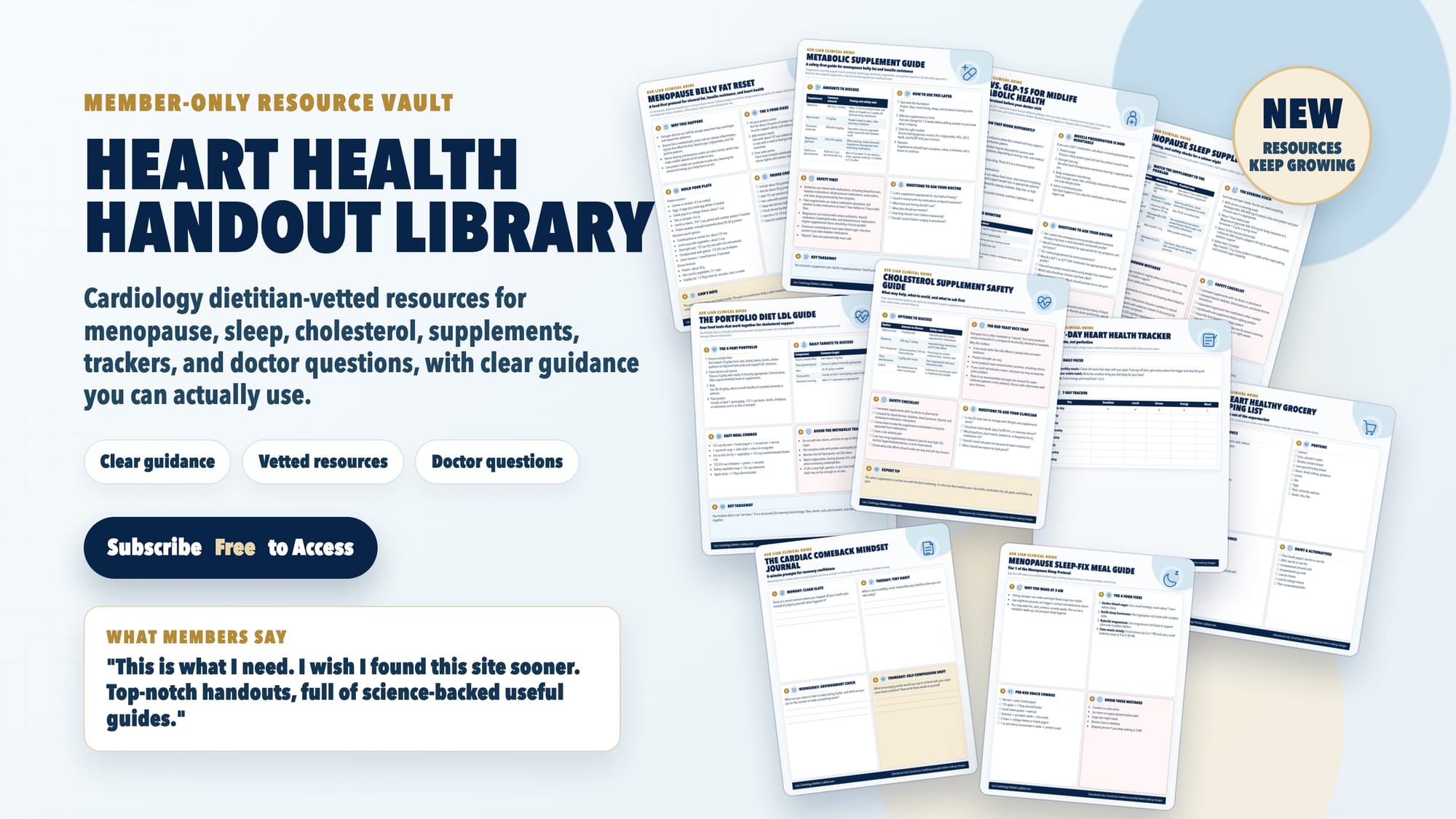
Download Vetted Clinical Handouts & Trackers
Get instant access to a growing library of evidence-based guides, food protocols, and symptom logs vetted by a cardiology dietitian. Access is completely free—simply subscribe to view.
Access Handout Library




Member discussion