The 3 AM Cortisol Trap: Why Menopause Wrecks Your Sleep (And the Food Protocol to Fix It)

The 3 AM Cortisol Trap: Why Menopause Wrecks Your Sleep (And the Food Protocol to Fix It)
Written by: Lian Liu, MPH, RD, CDCES | Specializing in Cardiac & Menopause Nutrition. Reviewed and updated: June 2026.
> Direct Answer: The 3 AM wake-up is often caused by nocturnal blood sugar instability from declining estrogen levels, which triggers a cortisol and adrenaline "fire alarm" as your body reacts to falling glucose. You can break this cycle by stabilizing overnight blood sugar with a pre-bed snack containing protein and healthy fats, combined with magnesium and tryptophan-rich foods to regulate hormones and improve sleep quality.
Disclosure: Some of the links below are affiliate links. This means if you click through and take action, I may receive a small commission (at no extra cost to you). This helps support the free content on this blog while I only recommend tools and foods I truly believe in for your hormonal and heart health journey.
Sarah fell asleep just fine. Exhausted from a day of juggling work and family, she crashed at 10 PM.
But at exactly 3:05 AM, her eyes snapped open. Her heart was pounding against her ribs like a trapped bird. Her sheets were drenched in sweat, and her mind was suddenly spinning with every "to-do" list and worry she’d successfully ignored all day.
No matter how many deep breaths she took or how many sheep she counted, she was wide awake for the next two hours. By the time she finally drifted back off, her alarm went off for work.
"I think I'm just stressed," she told me. "Or maybe my brain is just broken."
Sarah isn't broken. And if this sounds like your nightly reality, you aren't either. You aren't experiencing "stress" in the traditional sense—you are caught in The 3 AM Cortisol Trap.
This is Part One of The Menopause Sleep Protocol. Today, we’re going to look at why your brain snaps awake at 3 AM and the Tier 1 Food Protocol that can turn that alarm off for good.
1. The Science: Why Your Brain Pulls the Fire Alarm at 3 AM
To fix your sleep, you have to understand the "Why."
In your 30s, estrogen was your metabolic bodyguard. It kept your cells sensitive to insulin and maintained steady glucose levels while you slept. But as you enter perimenopause and menopause, estrogen decline leads to peripheral insulin resistance.
In plain English: your body becomes worse at absorbing glucose from your blood overnight.
If you eat dinner at 6 PM and go to bed at 10 PM, by 3 AM your blood sugar has drifted dangerously low (nocturnal hypoglycemia). Your brain perceives this as a genuine survival threat. To save you, it activates your stress system (the HPA axis) to release a massive surge of adrenaline and cortisol.
Cortisol forces your liver to dump glucose into your blood to fuel your brain. The side effect? You are wide awake, heart racing, and in full fight-or-flight mode.
This is why melatonin gummies often fail. The problem isn't a melatonin deficiency; it's a blood sugar crash triggering a cortisol alarm.
2. Fix #1: The Pre-Bed Blood Sugar Anchor
The first and most important food fix is to "anchor" your blood sugar so it doesn't fall off a cliff at 3 AM. This means eating a small, strategic snack about 60 minutes before bed.
This isn't a "cheat meal." It's a blood sugar insurance policy.
The goal is a combination of complex carbohydrates (for slow-release glucose) and protein (to slow digestion even further). Research shows that low-glycemic index foods actually increase the duration of deep, slow-wave sleep—the restorative phase menopause steals first.
Real-World Examples (100–150 calories):
- The Classic Anchor: Half an apple with 1 tbsp of almond butter.
- The Protein Powerhouse: A small bowl of berries with plain Greek yogurt.
- The Deep Sleeper: A small roasted sweet potato with a few walnuts.
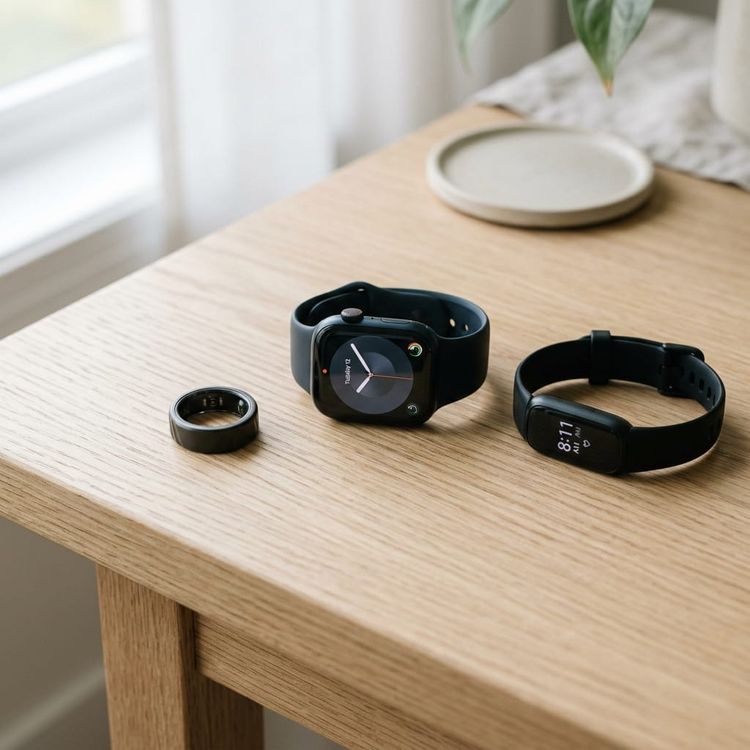
If you’re tracking your sleep with a tool like the Oura Ring, you’ll likely see your "Restfulness" score improve and your heart rate variability (HRV) stabilize as you eliminate these overnight glucose crashes.
3. Fix #2: Build Your Sleep Hormones (The Tryptophan Pathway)
Your body manufactures its own melatonin through a specific pathway: Tryptophan → Serotonin → Melatonin.
But Tryptophan is a "weak" amino acid. To cross the blood-brain barrier and get to work, it has to compete with other amino acids. You give Tryptophan a "clear lane" by pairing it with—you guessed it—complex carbohydrates. The carbs trigger a small insulin release that clears the competition, letting Tryptophan into your brain.
The Sleep-Support Superfoods:
- Pumpkin Seeds: The #1 tryptophan-dense food. They also provide a massive dose of magnesium.
- Chia Seeds: High in tryptophan and omega-3s.
- Montmorency Tart Cherry Juice: A natural source of melatonin and anti-inflammatory anthocyanins. Clinical trials show it increases total sleep time and reduces night wakings.
- Lian's Tip: If you prefer to avoid the sugar in juice, I recommend Sports Research Tart Cherry Capsules. They are made from Montmorency cherries and provide the same melatonin benefits without the extra carbs.
- Kiwi Fruit: Research found that eating two kiwis one hour before bed for four weeks significantly improved sleep onset and duration.
4. Fix #3: The Magnesium Foundation
Magnesium is the "off switch" for your nervous system. It maintains healthy levels of GABA (your brain's primary calming neurotransmitter) and helps convert serotonin into melatonin.
The problem? Roughly 40% of women are deficient, and estrogen decline makes absorption even harder.
Where to find it:
- Pumpkin Seeds: 1/4 cup gives you nearly 50% of your daily needs.
- Dark Leafy Greens: Spinach and Swiss chard (concentrated when cooked).
- Dark Chocolate: 70% cacao or higher is a legitimate sleep-support treat.
While food is the foundation, menopausal magnesium needs are often so high that a high-quality supplement is necessary. I recommend practitioner-grade forms like Magnesium L-Threonate or Magnesium Glycinate for their superior absorption. You can find my vetted practitioner recommendations in my Fullscript Dispensary.
5. The Timing Strategy: When You Eat Matters
It’s not just what you eat, but when.
Research on shift workers and cardiovascular health suggests that consistency is protective. Ideally, you should finish your last full meal by 7 PM to allow your digestive system to rest, and then have your small "anchor snack" at 9 PM.
This creates a 12–16 hour overnight fasting window, which improves insulin sensitivity and helps your body drop its core temperature for deeper sleep.
Wait—isn't fasting better? If you are waking up at 3 AM with a racing heart, "pure" fasting might be working against you. Your body doesn't have the metabolic flexibility yet to sustain glucose levels all night. Shift your eating window so you go to bed with a "full tank" of slow-burning fuel.
6. The Cardiac Connection: Why This Saves Your Heart
As a Cardiology Dietitian, I don't just care about your sleep because you’re tired. I care because sleep is your heart's recovery time.
During deep sleep, your blood pressure drops, your heart rate lowers, and your sympathetic nervous system quiens down. Chronic sleep fragmentation—like the 3 AM wakeup—prevents this recovery, contributing to arterial stiffening and increased cardiovascular risk over time.
By fixing your sleep with the Tier 1 Food Protocol, you aren't just gaining energy for tomorrow; you are changing the long-term trajectory of your heart health.
Your Action Step: The Menopause Sleep-Fix Meal Guide
Don't try to memorize all of this. I’ve put it together for you in a one-page, printable guide.
Download the free "Menopause Sleep-Fix Meal Guide" to get:
- The exact "Blood Sugar Anchor" snack combinations.
- A 7-day meal plan featuring Tryptophan-rich dinners.
- The "3 AM Emergency Protocol" for when you do wake up.
[GET THE FREE GUIDE HERE] (Or type SLEEP in the comments if you're reading this on social!)
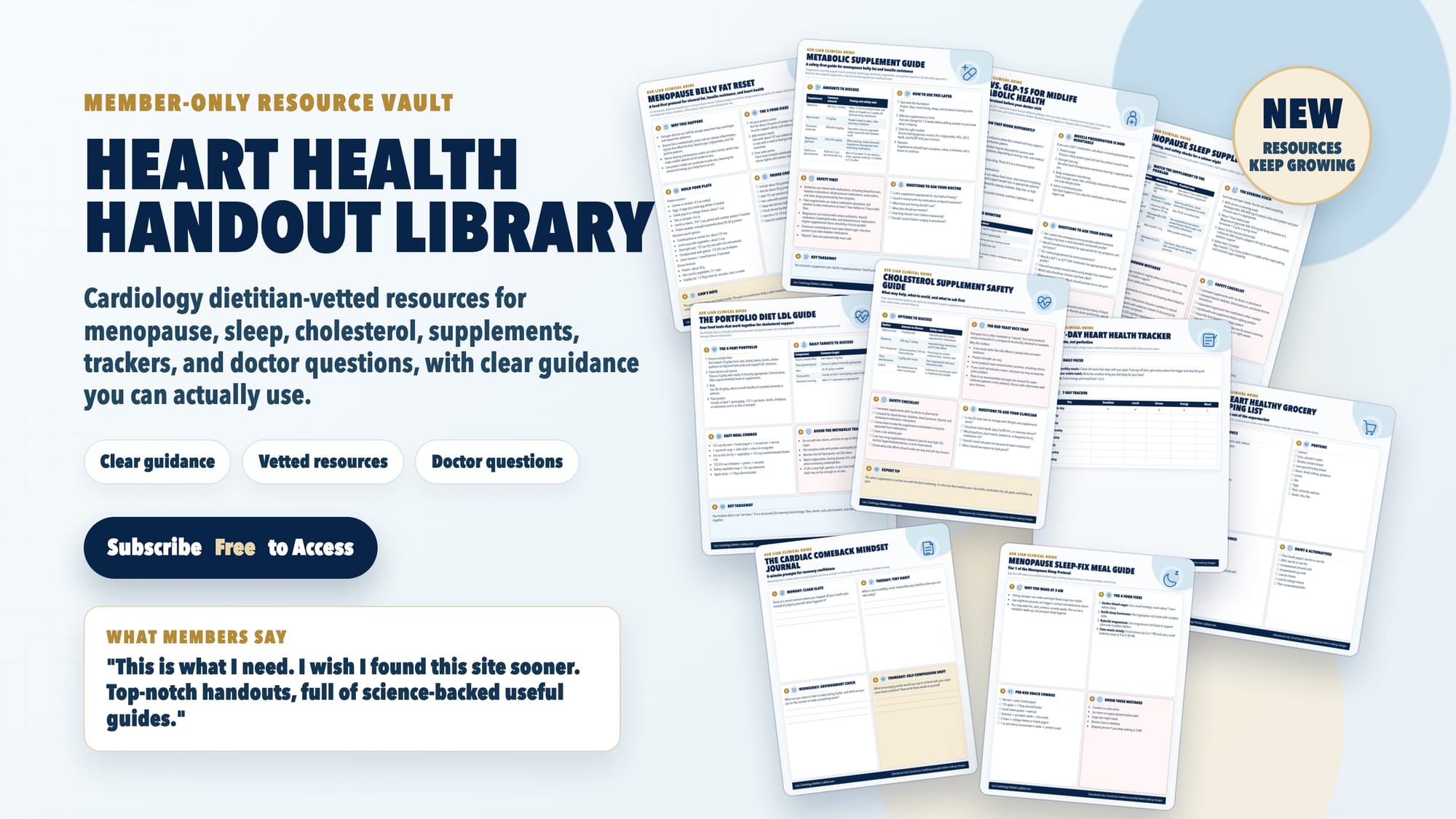
Download Vetted Clinical Handouts & Trackers
Get instant access to a growing library of evidence-based guides, food protocols, and symptom logs vetted by a cardiology dietitian. Access is completely free—simply subscribe to view.
Access Handout Library


Member discussion