
The First 30 Days Post-MI: How to Restart Exercise Without Fear

Written by: Lian Liu, MPH, RD, CDCES | Specializing in Cardiac & Menopause Nutrition. Reviewed and updated: June 2026.
> Direct Answer: During the first 30 days post-MI, focus on low-intensity activities like walking or light housework while using the "Talk Test" to ensure you can maintain a conversation without gasping for breath. This graduated approach builds confidence and ensures safety during initial recovery, ideally supported by formal Cardiac Rehabilitation as the clinical gold standard for supervised progression.
As an Amazon Associate, I earn from qualifying purchases.
David used to run 5Ks every weekend. But two weeks after his stent placement, walking to the mailbox felt like a life-or-death mission. His chest felt heavy—not with angina, but with anxiety. Every time his heart rate ticked up, his brain screamed, "Stop! You're going to break it!" This fear of physical exertion after a cardiac event is incredibly common, and it’s the biggest hurdle to a successful recovery.
Key Takeaways
- The fear of another heart attack during exercise (cardiophobia) is normal, but avoiding movement entirely is far more dangerous for your long-term health.
- Start slow: The goal of the first 30 days is consistency and confidence, not cardiovascular endurance.
- Use the "Talk Test" to ensure you are staying within a safe zone of exertion.
- Formal Cardiac Rehabilitation is the gold standard for safely returning to activity under medical supervision.
The Danger of Doing Nothing
When you've survived a myocardial infarction (MI), your instinct is to protect your heart by doing as little as possible. However, the heart is a muscle. If you don't use it, it weakens. Prolonged bed rest leads to muscle atrophy, worsening insulin resistance, and a slower recovery.
Your cardiologist wants you moving. But how you move matters immensely.
A Safe Framework for the First 30 Days
The first month at home is not the time to train for a marathon. It is the time to re-establish trust with your body.
1. Master the "Talk Test"
Forget complex heart rate zones for a moment. The easiest way to gauge if you are exercising safely in the early days is the Talk Test. You should be able to hold a full conversation without gasping for breath. If you can sing, you aren't working hard enough. If you can only get out one or two words, you are pushing too hard. Slow down.
2. Understand METs (Metabolic Equivalents)
Cardiac rehab uses a scale called METs to measure energy expenditure. Sitting on the couch is 1 MET. Walking at a slow pace around your living room is about 2 METs. In the first few weeks, your goal is gentle, low-MET activities:
- Light housework (dusting, folding laundry)
- Walking on flat ground at a leisurely pace
- Gentle stretching
Avoid heavy lifting, shoveling snow, or walking up steep hills until explicitly cleared by your doctor.
3. Enroll in Cardiac Rehab
If your insurance covers it, enroll in a formal Cardiac Rehabilitation program. Working out while hooked up to an EKG monitor with nurses watching your vitals is the absolute best way to cure cardiophobia. They will show you exactly what your heart is capable of.
If you aren't able to enroll in a formal Cardiac Rehab program, consider educating yourself on how to recover the right way. Sign up for my free newsletter to learn the exact steps to safely regain your strength. It helps calm the nerves and heal the heart, one post at a time.
Summary
The transition from a hospital bed to your daily life requires patience. You must honor the trauma your body went through, while simultaneously challenging it to grow stronger. Start with a five-minute walk today, and a six-minute walk tomorrow.
If you are struggling to build the confidence to get off the couch, you don't have to navigate this alone. My Cardiac Comeback Book provides a complete, step-by-step physical and mental framework to help you safely reclaim an active life after a stent.
Stay Ahead of Your Heart Health
Want to stay up-to-date with current science-backed nutrition tips to protect your cardiovascular future?
- Check out the Free Resource Library: Dive into the 7-Day Heart Health Tracker to start logging your resting heart rate and HRV today.
- Join the Waitlist: Be the first to know when the Heart Disease Risk Reversal Master Course opens for enrollment.
👉 Access the Library & Waitlist here
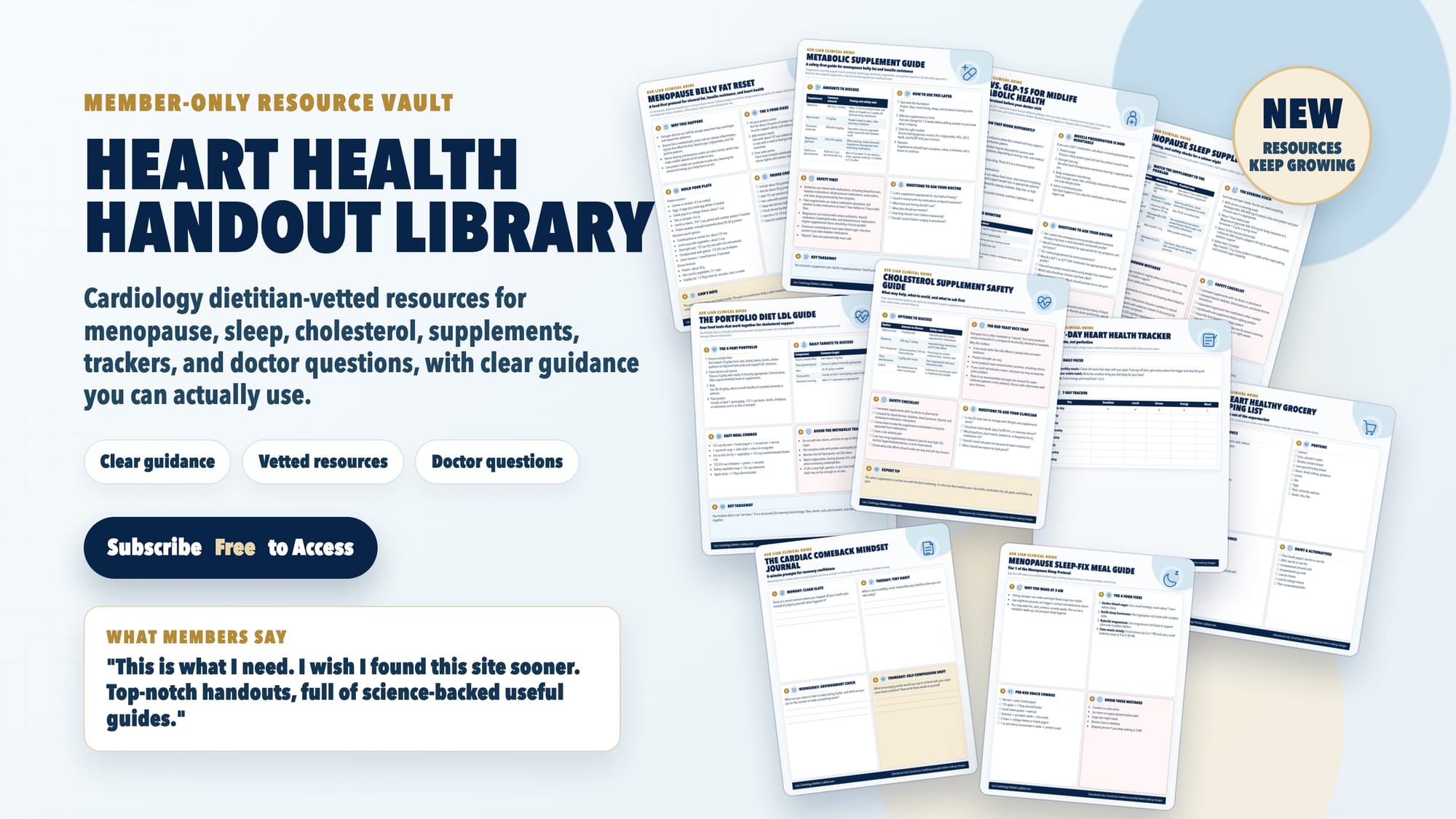
Download Vetted Clinical Handouts & Trackers
Get instant access to a growing library of evidence-based guides, food protocols, and symptom logs vetted by a cardiology dietitian. Access is completely free—simply subscribe to view.
Access Handout Library




Member discussion