
Recovery After Heart Stent: The Complete 30-Day Timeline

Recovery After Heart Stent: The Complete 30-Day Timeline
Written by: Lian Liu, MPH, RD, CDCES | Specializing in Cardiac & Menopause Nutrition. Reviewed and updated: June 2026.
> Direct Answer: Recovery after heart stent placement varies by access point and urgency. Most patients can walk within 6 hours and resume normal daily activities in about a week. Driving and light lifting typically resume within 24 to 48 hours for elective procedures, while a full return to work generally takes 2 to 6 weeks depending on job intensity.
Key Takeaways
- The physical puncture site heals within a week, but the stented artery biologically requires weeks to months to fully integrate the stent.
- Most patients can safely walk shortly after the procedure, but you must avoid lifting objects heavier than 10 lbs for the first few days to protect the access site.
- You must strictly adhere to your prescribed Dual Antiplatelet Therapy (DAPT) medications to prevent dangerous blood clots from forming inside the newly placed stent.
The Reality of Coming Home
Walking through your front door after a heart procedure is a jarring experience. The hospital monitors are gone, the nurses aren't right outside the door, and you are suddenly responsible for managing your own recovery after heart stent placement.
It is completely normal to feel hesitant. You might find yourself hyper-aware of every twinge in your chest or worried about moving too quickly. But here is the truth: modern percutaneous coronary intervention (PCI) is remarkably advanced. While the internal healing process takes time, your return to daily living and safe exercise can safely begin much faster than you might think.
The First 48 Hours: Discharge and Early Mobility
The immediate recovery phase focuses on ensuring the access site (usually in your wrist or groin) is stable and that your heart is responding well to restored blood flow.
When Can I Walk?
Early mobility is a primary milestone. Many patients are able to walk within 6 hours or less after the procedure. Recovery is often faster and allows for earlier mobility if the physician used radial (wrist) access rather than femoral (groin) access.
Leaving the Hospital
For uncomplicated, elective procedures, you may be discharged the same day or stay just overnight. A successful early recovery includes stable blood pressure, a dry or only mildly bruised access site, and preserved feeling and color in the affected limb.
Days 3 to 7: Resuming Daily Activities
During your first week home, the focus shifts to gradually reintroducing normal movements while protecting the access site.
When Can I Drive and Lift Things?
While clinical guidelines emphasize individualized advice from your cardiologist, standard practice suggests:
- Driving: Often permitted 24 to 48 hours after an elective stent, provided you are not taking narcotic pain medications. If you had a heart attack, this may be delayed.
- Lifting: Avoid lifting anything heavier than 10 pounds (about the weight of a gallon of milk) for the first 3 to 7 days, especially if the catheter was inserted through your groin.
Warning Signs to Watch For
Mild soreness at the access site is expected, but your walking tolerance should steadily improve. You should not experience shortness of breath at rest. Any new or worsening chest pain is a critical warning sign that requires immediate medical attention, as it could indicate early stent thrombosis (A blood clot forming inside a heart stent).
Weeks 2 to 6: Return to Work and Rehabilitation
By weeks two through six, your physical capacity should noticeably increase, allowing for a return to broader responsibilities.
When Can I Return to Work?
According to clinical data, the median return to work after PCI is about 6 weeks. This timeline accounts for more than just the puncture site healing; it reflects the severity of the initial blockage, the physical demands of your job, and your participation in cardiac rehabilitation. Office jobs may allow for an earlier return, while physically demanding labor requires full medical clearance.
| Recovery Milestone | Elective Stent (Typical) | Emergency Stent (Heart Attack) |
|---|---|---|
| Walking Around House | Same Day | 1–3 Days |
| Driving | 24–48 Hours | Variable (Ask Doctor) |
| Return to Desk Work | 1–2 Weeks | 2–6 Weeks |
| Return to Physical Labor | 4–6 Weeks | 6+ Weeks |
Long-Term Biological Healing
Patients must remember that feeling better physically is not the same as being fully healed inside.
Even if you feel fully recovered within a week, the stented artery continues to heal biologically for weeks to months. Endothelial cells must slowly grow over the new stent to incorporate it into the artery wall. This is why strictly adhering to prescribed blood thinners (DAPT) during the first few months is paramount to your survival.
Disclosure: As an Amazon Associate, I earn from qualifying purchases.
Summary
Recovering from a heart stent is a process of balancing rest with progressive movement. By following the 30-day timeline and listening to your body, you can safely regain your independence. Keep a close eye on your access site, adhere strictly to your medications, and prioritize your follow-up appointments. Managing your new medications is critical during this period. I highly recommend picking up an AM/PM Large Pill Organizer to reduce anxiety and ensure you never miss a dose of your prescribed DAPT.
Free Resource Library
Want to make sure you're fully prepared? Head over to the Free Resource Library to download our comprehensive Cardiac Recovery Checklist and Pre-Surgery Prep Tips. It's perfect for those taking a proactive approach to learning and striving for the optimal outcome!
Stay Ahead of Your Heart Health
Want to stay up-to-date with current science-backed nutrition tips to protect your cardiovascular future?
- Subscribe to the Newsletter: Get practical, clinical-strength tips on diet, labs, and lifestyle adjustments sent straight to your inbox.
- Get the Master Course: Secure immediate access to the Heart Disease Risk Reversal Master Course and start reversing your risk today. 👉 Join the Newsletter & Master Course here
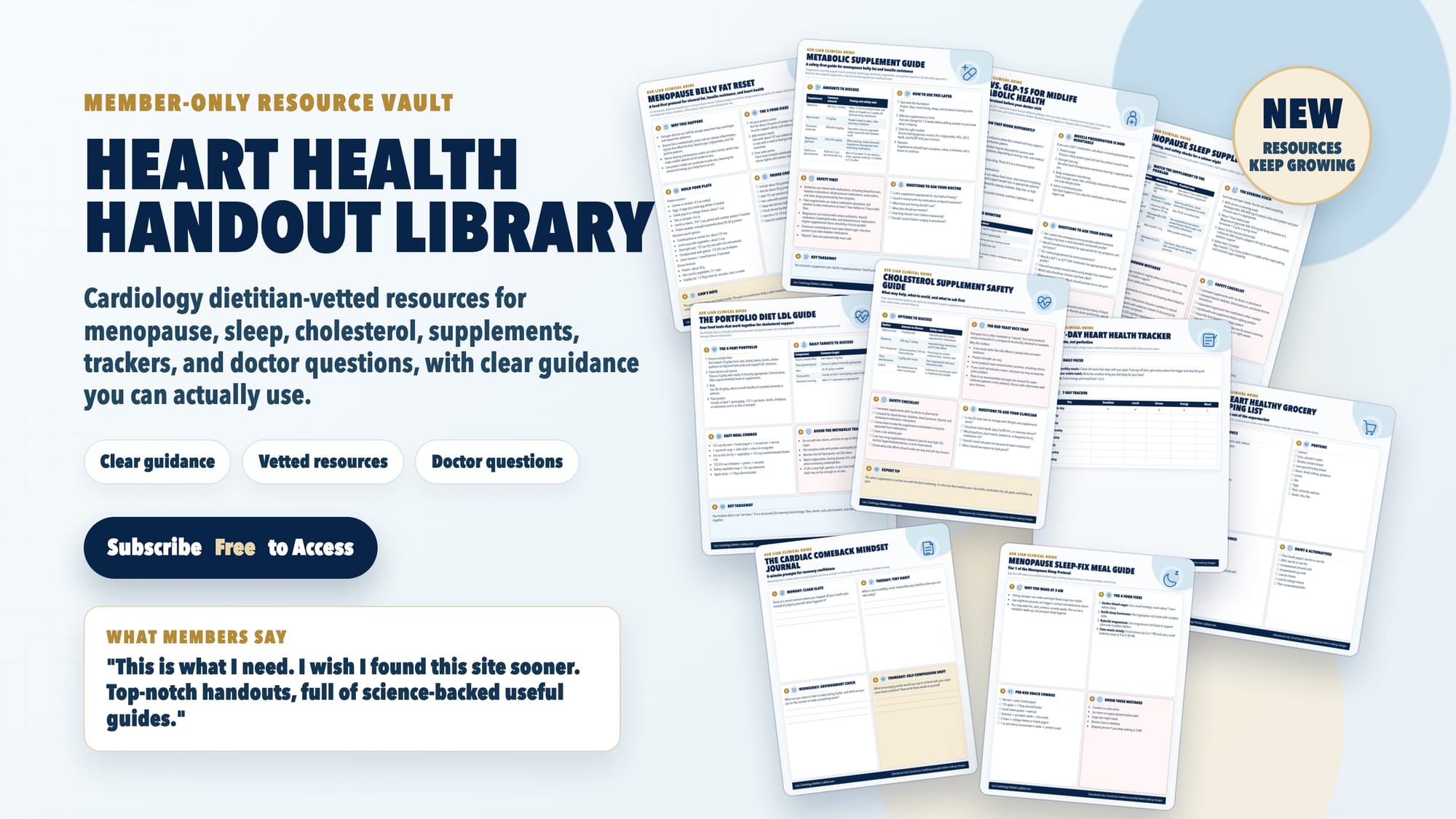
Download Vetted Clinical Handouts & Trackers
Get instant access to a growing library of evidence-based guides, food protocols, and symptom logs vetted by a cardiology dietitian. Access is completely free—simply subscribe to view.
Access Handout Library




Member discussion