
What to Do After a Heart Attack: The 90-Day Blueprint for Cardiac Comebacks

What to Do After a Heart Attack: The 90-Day Blueprint for Cardiac Comebacks
Written by: Lian Liu, MPH, RD, CDCES | Specializing in Cardiac & Menopause Nutrition. Reviewed and updated: June 2026.
> Direct Answer: Immediately after a heart attack, prioritize secondary prevention by adhering to prescribed medications, adopting the Mediterranean diet (proven to reduce recurrence by up to 70%), gradually progressing from gentle walking to 150-330 minutes of weekly aerobic exercise, and securing 7-9 hours of nightly sleep to repair arterial damage.
Key Takeaways
- Clinical trials show the Mediterranean diet reduces the recurrence of cardiovascular events by 26% to 70% in patients with established heart disease.
- Start with 5-10 minute gentle walks twice daily post-discharge, eventually aiming for 150+ minutes of weekly aerobic exercise to control plaque progression.
- Prioritizing 7-9 hours of sleep is critical; short sleep (under six hours) raises the risk of a secondary event by 20% and severely impairs arterial endothelial function.
Rebuilding Without Fear
The most common question I hear from patients sitting in the recovery room is simply, "What to do after a heart attack?" You’ve survived the acute event, but the fear of a second one can feel paralyzing. Navigating the conflicting advice on diet, exercise, and lifestyle while managing the trauma of a cardiovascular event is overwhelming. But recovery isn't about restrictive punishments—it’s about systematic, evidence-based rebuilding. This 90-day blueprint provides a clear, actionable protocol for your cardiac comeback. For a complete overview of all recovery phases, read our complete guide on preventing a second heart attack.
Why the First 90 Days Matter So Much
The first few months following an acute coronary syndrome (ACS) event represent your highest vulnerability window. It is also the period where proactive interventions have the most profound impact on stabilizing plaque and preventing thrombotic complications.
When determining what to do after a heart attack, striking early with intensive therapies is the clinically recommended approach to protect your arteries and secure your cardiovascular future.
How Should You Change Your Diet After a Heart Attack?
The answer is definitively the Mediterranean diet. While much of the buzz around the Mediterranean diet focuses on preventing a first heart attack, its power for secondary prevention (stopping a second attack) is rigorously documented.
In the CORDIOPREV trial, patients with established coronary heart disease who followed a Mediterranean diet experienced a 26% reduction in cardiovascular event recurrence over seven years. An earlier study, the Lyon Diet Heart Study, demonstrated a staggering 70% reduction in cardiovascular recurrence and mortality using a Mediterranean-style protocol. For a deeper understanding of this eating pattern, see our guide on how the Mediterranean diet protects your heart.
Focus on additive nutrition rather than deprivation:
- Add extra-virgin olive oil as your primary fat source.
- Add daily servings of nuts and seeds.
- Add fatty fish (like salmon) at least twice a week.
> Want to jumpstart your Mediterranean diet? Download our Heart-Healthy Grocery List and 7-Day Tracker from the Free Resource Library to make your cardiac comeback as frictionless as possible.
How Do You Safely Resume Exercise?
Rebuilding cardiovascular stamina requires a phased, careful approach rather than jumping straight back into high-intensity workouts.
Early Recovery Phase (Weeks 1-4)
In the immediate weeks following a heart attack, the goal is simple movement. Begin with short, gentle walks of 5 to 10 minutes, twice a day. Strictly avoid heavy lifting, bending, or strenuous household chores.
Plaque Control vs. Regression (Weeks 5-12+)
As you undergo cardiac rehabilitation and gain medical clearance, your exercise volume should increase:
| Goal | Recommended Weekly Volume | Impact on Coronary Plaque |
|---|---|---|
| Disease Control | 150 minutes of moderate-to-vigorous aerobic exercise | Helps stabilize existing plaque and manage overall cardiovascular risk factors. |
| Plaque Regression | 300 to 330 minutes (approx. 5.5 hours) | Clinical data indicates this higher volume is necessary to actively reduce the size of coronary artery plaque. |
Safety Note: While moderate activity is highly cardioprotective, extreme or very vigorous endurance exercise can paradoxically accelerate coronary artery calcification. Stick to the prescribed therapeutic ranges.
Why Are Medications Critical in the Early Months?
During the first few weeks post-event, your risk of thrombotic complications is at its absolute peak. Clinical guidelines emphasize initiating intensive lipid-lowering therapies and essential medications (like aspirin, ACE inhibitors, and beta-blockers) before you even leave the hospital.
However, studies reveal a dangerous trend: adherence to these life-saving medications drops significantly by the 3- and 6-month marks. This rapid decline leaves recovering patients highly vulnerable to progressive atherosclerotic disease. Setting up automated pill dispensers or daily alarms is a non-negotiable step in your 90-day blueprint.
How Does Stress Drive Heart Disease?
Psychological well-being is not just a secondary concern; it is heavily intertwined with cardiac survival. Chronic stress locks your nervous system into a "fight-or-flight" state, continuously releasing cortisol, which directly raises blood pressure and drives insulin resistance.
PET scan research reveals a literal biological pathway from stress to heart attacks: high activity in the brain's fear center (the amygdala) signals the bone marrow to produce inflammatory white blood cells. These cells travel directly to the coronary arteries, inflaming existing plaque and making it unstable. Prioritizing mental health support is as vital as managing your cholesterol.
Is Sleep Really That Important for Cardiac Recovery?
Yes. Sleep is officially designated as one of "Life's Essential 8" for cardiovascular health, with a firm target of 7 to 9 hours per night.
Chronic short sleep (less than six hours) increases the risk of a heart attack by roughly 20%. Restricting sleep to just five hours for eight days causes arterial endothelial function to plummet to levels seen in patients with decades of smoking history. Severe sleep restriction also triggers profound metabolic dysfunction, mimicking the severe insulin resistance of obesity in just a few days. For more on the sleep-cardiac connection, read how poor sleep triggers cardiac events.
If you suspect you have sleep apnea—a condition affecting up to 80% of patients with coronary artery disease—getting tested and treated is critical. Obstructive sleep apnea causes nocturnal hypoxia, directly promoting systemic inflammation and endothelial dysfunction.
Related Reading: Continue your recovery journey with our guide on Sheet Pan Shrimp & Asparagus: 15-Minute Heart-Healthy Dinner.
Summary
Navigating what to do after a heart attack doesn't have to be a confusing, fear-driven process. By systematically adopting the Mediterranean diet, adhering to your medication schedule (an AM/PM Large Pill Organizer can be a lifesaver here), scaling your exercise safely, and rigorously protecting your sleep and stress levels, you take direct control of your cardiovascular future.
Stay Ahead of Your Heart Health
Want to stay up-to-date with current science-backed nutrition tips to protect your cardiovascular future?
- Subscribe to the Newsletter: Get practical, clinical-strength tips on diet, labs, and lifestyle adjustments sent straight to your inbox.
- Get the Master Course: Secure immediate access to the Heart Disease Risk Reversal Master Course and start reversing your risk today. 👉 Join the Newsletter & Master Course here
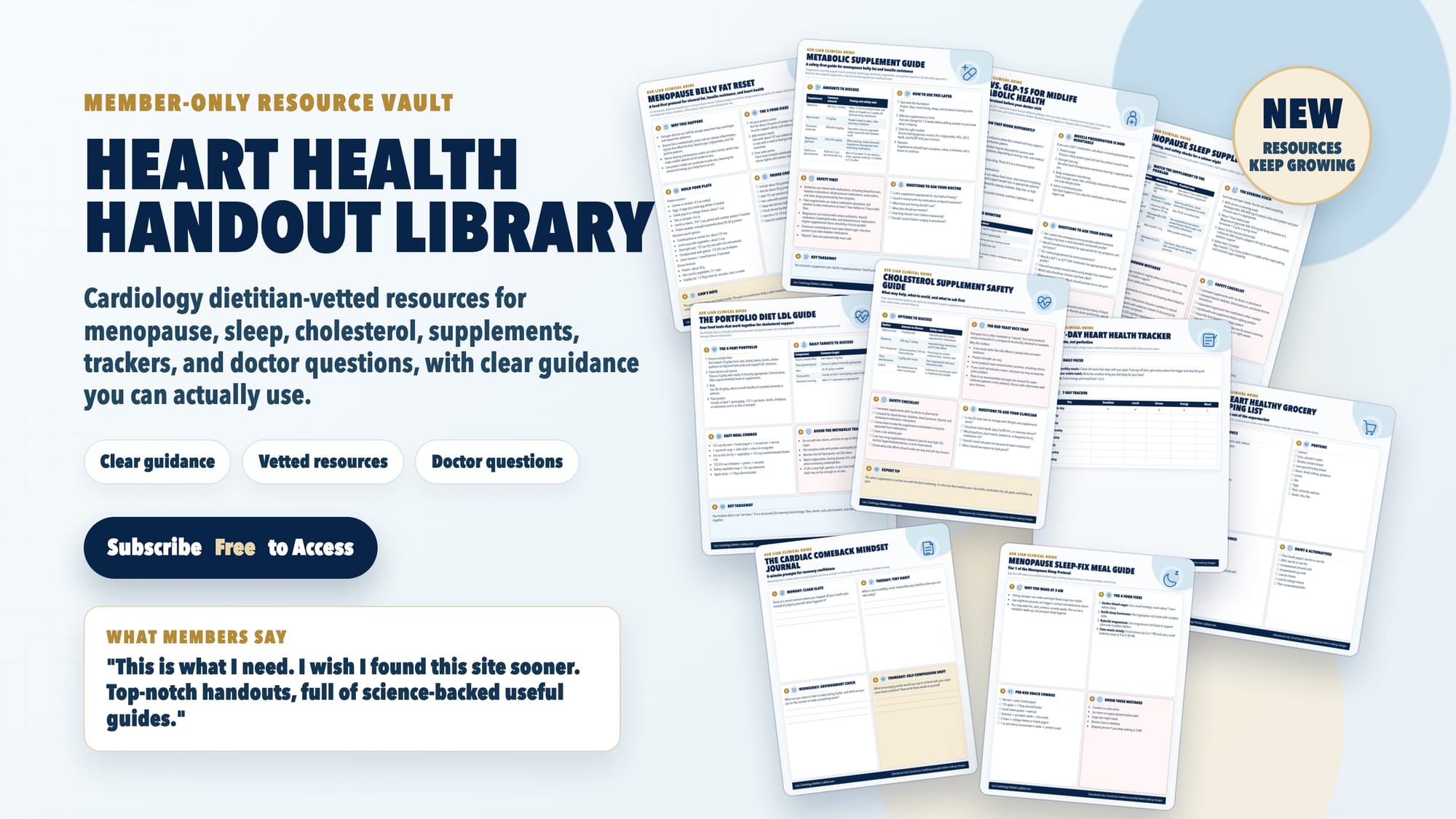
Download Vetted Clinical Handouts & Trackers
Get instant access to a growing library of evidence-based guides, food protocols, and symptom logs vetted by a cardiology dietitian. Access is completely free—simply subscribe to view.
Access Handout Library
Member discussion