
The Omega-3 Guide for Cardiac Patients: Which Foods Actually Help
The Omega-3 Guide for Cardiac Patients (Which Foods Actually Help)
Written by: Lian Liu, MPH, RD, CDCES | Specializing in Cardiac & Menopause Nutrition. Reviewed and updated: June 2026.
> Direct Answer: Prioritize marine-derived omega-3s—specifically EPA and DHA found in fatty fish like mackerel, sardines, and wild salmon—as they have the strongest clinical evidence for reducing cardiac inflammation and protecting heart rhythm. Unlike plant-based ALA, which your body converts poorly, these marine sources are directly utilized to lower triglycerides and provide essential structural support for heart muscle cells.
"Eat more omega-3s" is advice you've probably heard a hundred times since your cardiac event. But there's a critical distinction your doctor may not have explained clearly: not all omega-3s work the same way in your heart.
Some are powerful. Some are overhyped. This guide cuts through the confusion.
Your Quick Takeaways:
- There are 3 types of omega-3: ALA (plant-based) and EPA & DHA (marine-based).
- EPA and DHA are the clinically proven ones for reducing cardiac risk.
- Your body can only convert about 5% of ALA to EPA/DHA — marine sources are far more efficient.
The Three Types of Omega-3 Fatty Acids
1. ALA (Alpha-Linolenic Acid)
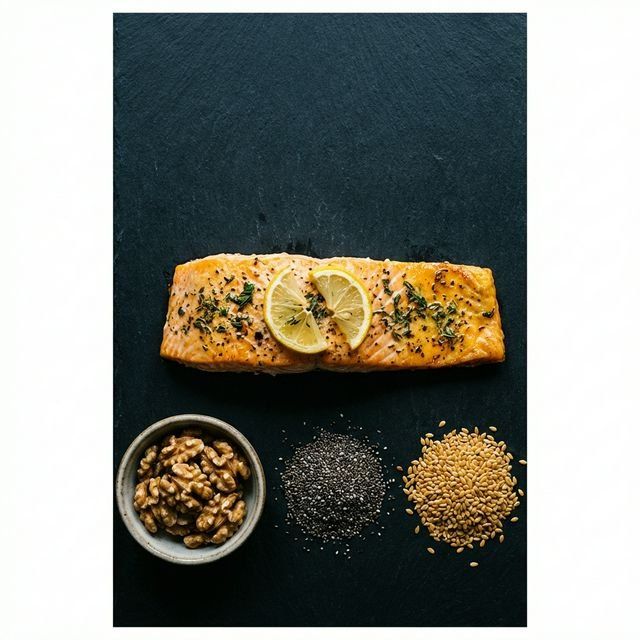
Found in: Flaxseeds, chia seeds, walnuts, hemp seeds, canola oil.
ALA is essential, meaning your body can't make it on its own. The problem: your body only converts about 5% of ALA to EPA and even less to DHA. So while beneficial overall, it's not very efficient for cardiac purposes on its own.
2. EPA (Eicosapentaenoic Acid)
Found in: Fatty fish (salmon, mackerel, sardines, herring), algae oil.
EPA is the "anti-inflammatory" omega-3. It directly reduces inflammatory compounds in your bloodstream. Multiple clinical trials show EPA supplementation reduces heart attack risk in high-risk patients.
3. DHA (Docosahexaenoic Acid)
Found in: Same fatty fish sources as EPA, algae oil.
DHA is the "structural" omega-3. It's incorporated into cardiac muscle cells and influences the electrical stability of your heart. Low DHA is linked to increased arrhythmia risk.
The Best Food Sources (Ranked by EPA + DHA Content)
| Fish (3 oz cooked) | EPA + DHA Combined |
|---|---|
| Atlantic Mackerel | 2,600mg ⭐⭐⭐ |
| Pacific Sardines | 1,480mg ⭐⭐⭐ |
| Wild Atlantic Salmon | 1,830mg ⭐⭐⭐ |
| Canned Pink Salmon | 1,050mg ⭐⭐ |
| Albacore Tuna (canned) | 750mg ⭐⭐ |
| Rainbow Trout | 1,190mg ⭐⭐⭐ |
| Tilapia | 220mg ⭐ |
| Shrimp | 270mg ⭐ |
Target: Most cardiologists recommend at least 1,000-2,000mg combined EPA+DHA per day after a cardiac event. Two servings of fatty fish per week gets you there.
The Supplement Question
Fish oil supplements are very commonly recommended. If you take them:
- Look for "triglyceride form" (better absorbed than ethyl ester form).
- Brands should be third-party tested (look for IFOS or USP certification).
- Take with a meal to reduce "fish burps."
- Prescription-strength omega-3 (Vascepa/icosapentaenoic acid) provides >4g EPA/day and has proven cardiac risk reduction. Ask your cardiologist.
Plant-Based Option: Algae Oil
If you don't eat fish, algae oil is the only plant-based source that provides pre-formed EPA and DHA directly — because the fish get their omega-3s from algae anyway. Algae oil capsules are now widely available.
Build Your Heart-Smart Meal Plan
Download My Free Heart-Healthy Grocery Shopping List (Includes the best high-omega-3 fish to buy every week!)
🛒 Recommended Tools for a Healthy Heart
(Note: Some of the links below are affiliate links, meaning I may earn a small commission at no extra cost to you. I only recommend products I trust for cardiac recovery.)
- KardiaMobile 6L: Gain peace of mind with clinical-grade EKGs right from your smartphone whenever you feel an irregularity.
- High-Quality Clinical Supplements: Access my Fullscript dispensary for practitioner-grade Omega-3s and Magnesium at a discount.
- Vitamix 5200 Blender: Perfect for building flavor with sodium-free dressings, cashew creams, and hearty soups.
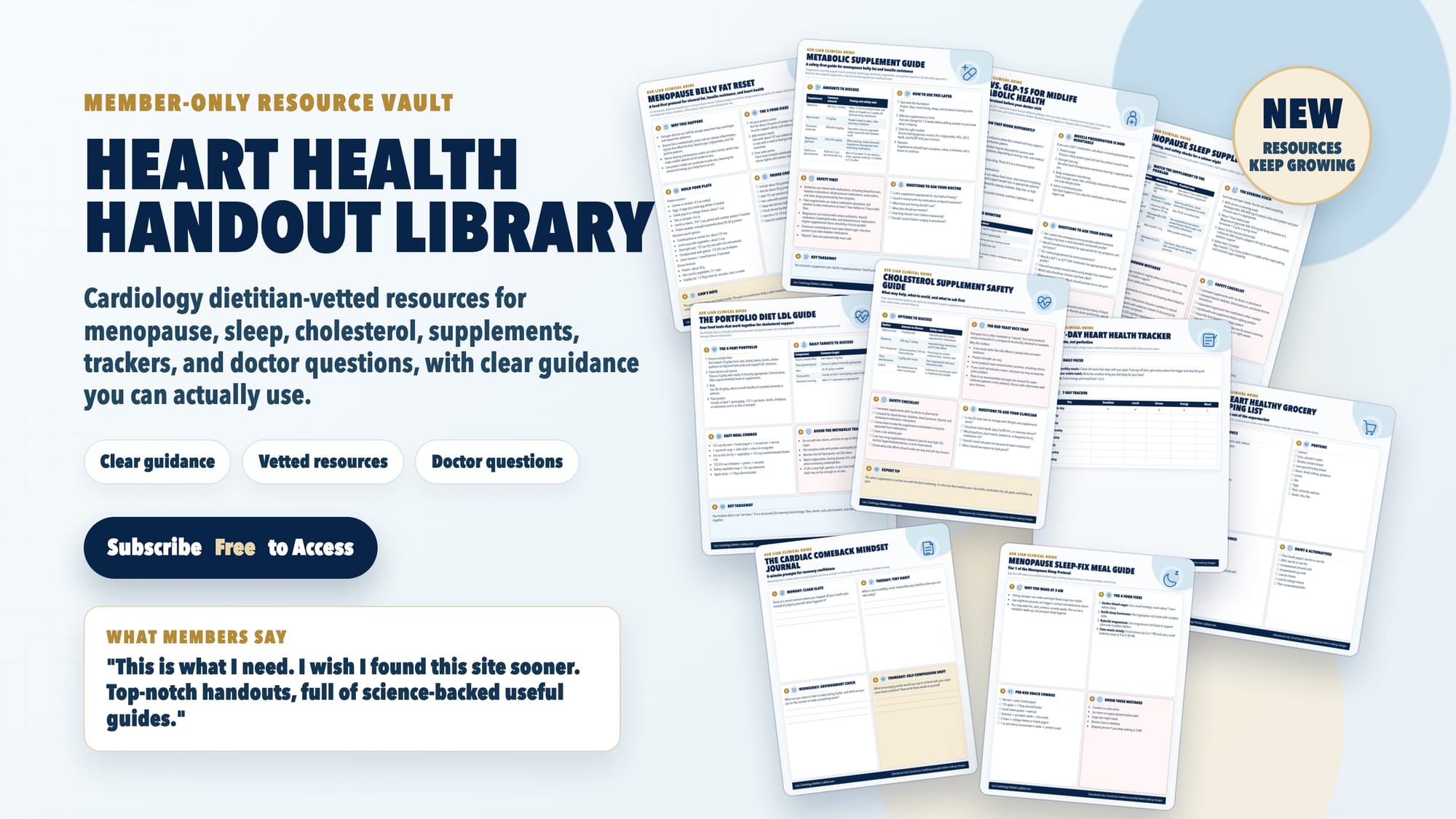
Download Vetted Clinical Handouts & Trackers
Get instant access to a growing library of evidence-based guides, food protocols, and symptom logs vetted by a cardiology dietitian. Access is completely free—simply subscribe to view.
Access Handout Library



Member discussion