LDL vs HDL Cholesterol Explained: A Cardiac Patient's Plain-English Guide

Written by: Lian Liu, MPH, RD, CDCES | Specializing in Cardiac & Menopause Nutrition. Reviewed and updated: June 2026.
> Direct Answer: LDL ("bad") cholesterol builds up plaque in your artery walls, while HDL ("good") cholesterol acts as a "cleaner" by transporting that excess out of the bloodstream. For cardiac patients, the primary goal is to lower LDL levels through heart-healthy lifestyle choices and medication while maintaining higher HDL levels to protect cardiovascular health.
LDL vs. HDL: Understanding Your Cholesterol Panel in Plain English
After your cardiac event, your doctor likely handed you a "lipid panel" report with four different numbers and sent you on your way. Most patients stare at these numbers in confusion — or worse, sheer panic.
Let's break this down so clearly that you could explain it to a friend.
Your Quick Takeaways:
- LDL ("bad") cholesterol builds plaques in arteries. The lower, the better after a cardiac event.
- HDL ("good") cholesterol cleans those plaques up. The higher, the better.
- Triglycerides are dietary fat in your blood. High carbs and alcohol raise them.
The Four Numbers on Your Lipid Panel
1. Total Cholesterol
A general snapshot. Less useful on its own — it's the ratio of good to bad that truly matters. Target: Below 200 mg/dL.
2. LDL Cholesterol ("Bad" Cholesterol)
Low-density lipoprotein. This is the molecule that deposits cholesterol into artery walls, forming plaques (atherosclerosis). After a cardiac event, your target is extremely aggressive: below 70 mg/dL (and often below 55 mg/dL if you're on statins).
What raises LDL: Saturated fat (from red meat, butter, full-fat dairy), trans fat, excess sugar.
What lowers LDL: Soluble fiber (oats, beans, lentils, apples), monounsaturated fats (olive oil, avocado), statins (medication).
3. HDL Cholesterol ("Good" Cholesterol)
High-density lipoprotein. This molecule literally transports LDL particles back to your liver to be broken down. It removes the bad stuff from your arteries.
- Men: Target above 40 mg/dL (aim for 60+).
- Women: Target above 50 mg/dL (aim for 60+).
What raises HDL: Exercise (the most powerful lever), olive oil, omega-3 rich fish, quitting smoking.
4. Triglycerides
These are fat molecules from your food that circulate in your blood. When glucose is not used for energy, the liver converts it to triglycerides and stores them. High triglycerides are an independent cardiac risk factor.
- Normal: Below 150 mg/dL
- At-Risk: 150-199 mg/dL
- High: 200-499 mg/dL
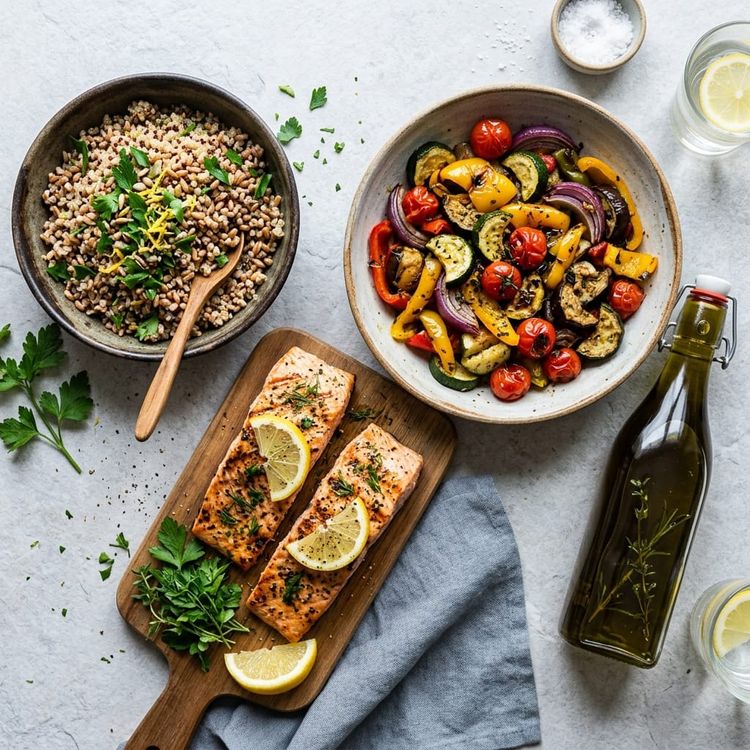
What raises triglycerides: Sugar, refined carbs, alcohol, inactivity. What lowers triglycerides: Exercise, omega-3 fish, cutting sugar and alcohol, choosing whole grains.
The Ratio That Matters Most
Your cardiologist may focus on your Total Cholesterol to HDL Ratio (Total ÷ HDL). A ratio below 4.0 is considered heart-protective. Below 3.5 is ideal.
What You Can Do Starting Today
- Eat oats every morning: 3g of beta-glucan fiber daily reduces LDL by 5-7%.
- Replace butter with olive oil: Monounsaturated fats actively lower LDL.
- Walk 30 minutes daily: The single most powerful lever for raising HDL.
- Cut sugary drinks: Directly lowers triglycerides faster than most other changes.
Track Your Progress
Download My Free 7-Day Heart Health Tracker (Monitor diet, movement, and blood pressure to see the impact on your cholesterol.)
🛒 Recommended Tools for a Healthy Heart
(Note: Some of the links below are affiliate links, meaning I may earn a small commission at no extra cost to you. I only recommend products I trust for cardiac recovery.)
- Withings BPM Connect: A highly accurate, easy-to-use home blood pressure monitor that syncs data directly to your phone for your cardiologist.
- Garmin Venu 3: Essential for tracking your heart rate zones and ensuring you are exercising safely during cardiac rehab.
- High-Quality Clinical Supplements: Access my Fullscript dispensary for practitioner-grade Omega-3s and Magnesium at a discount.
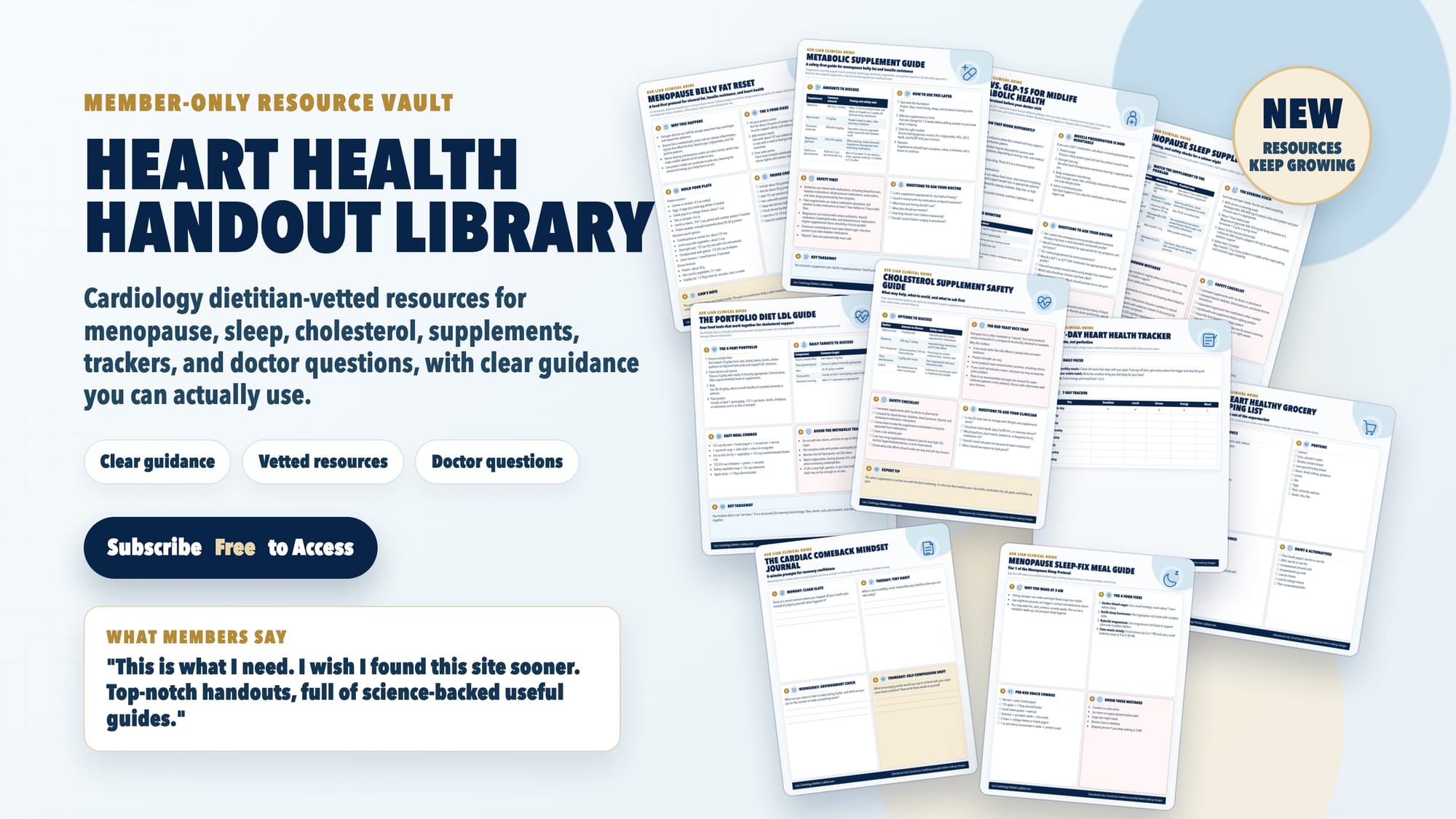
Download Vetted Clinical Handouts & Trackers
Get instant access to a growing library of evidence-based guides, food protocols, and symptom logs vetted by a cardiology dietitian. Access is completely free—simply subscribe to view.
Access Handout Library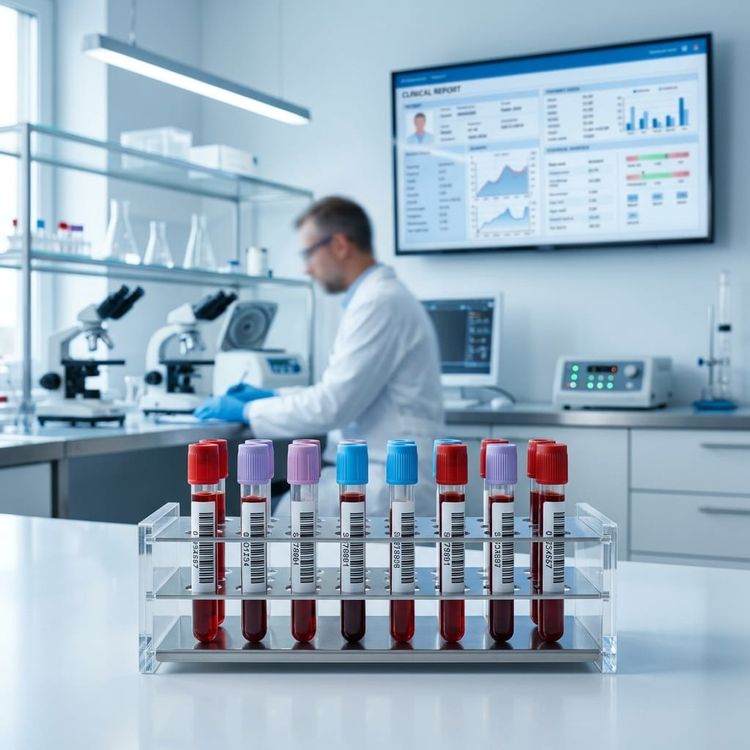


Member discussion