
How to Track Your Heart Rate Variability (HRV) Post-Stent

Written by: Lian Liu, MPH, RD, CDCES | Specializing in Cardiac & Menopause Nutrition. Reviewed and updated: June 2026.
> Direct Answer: You can track Heart Rate Variability (HRV) using wearable devices or chest straps that monitor the millisecond variations between heartbeats. To effectively assess post-stent recovery, focus on long-term trends rather than daily fluctuations to gauge your autonomic nervous system's transition from "fight or flight" toward balanced rest and resilience.
As an Amazon Associate, I earn from qualifying purchases.
Robert was six months out from his heart attack. He was eating perfectly, taking his meds, and walking daily. Yet, he felt constantly exhausted and on edge. His cardiologist said his stent looked great, but Robert's body was still stuck in "fight or flight" mode. It wasn't until he started tracking his Heart Rate Variability (HRV) that he realized his nervous system had never truly recovered from the trauma of the event.
Key Takeaways
- Heart Rate Variability (HRV) measures the microscopic changes in time between each heartbeat.
- A higher HRV indicates a resilient, relaxed nervous system. A consistently low HRV indicates chronic stress and poor recovery.
- A heart attack is a massive trauma, and it is normal for your HRV to plummet in the early days of recovery.
- Focus on the long-term trend of your HRV, not the day-to-day fluctuations, to measure your true healing progress.
The Nervous System and Your Heart
We tend to think of the heart as a mechanical pump, but it is deeply wired into your autonomic nervous system. This system has two main branches:
- The Sympathetic Nervous System: The "fight or flight" accelerator. It raises your heart rate and prepares you for danger.
- The Parasympathetic Nervous System: The "rest and digest" brake. It slows your heart rate and promotes healing.
When you experience a heart attack, your sympathetic nervous system kicks into overdrive. The problem is, for many patients, it never fully powers down.
Why HRV Matters
Heart Rate Variability (HRV) is the literal tug-of-war between these two systems. It measures the slight variance in milliseconds between your heartbeats.
If your heart beats exactly like a metronome (e.g., exactly one beat per second), your HRV is low. This means the sympathetic "accelerator" is dominating, and your body is stressed. If there is healthy variation between beats, your HRV is high, indicating your parasympathetic "brake" is working well and you are recovering optimally.
Tracking HRV gives you a direct window into how your body is handling the stress of life, medication changes, and cardiac rehab.
How to Track It Safely
The key to tracking HRV is context. Because it fluctuates based on sleep, alcohol, and stress, a single low reading means nothing. You must look at the trend over weeks.
The best way to track HRV is during sleep, when external stressors are minimized. This provides a clean, baseline reading of your nervous system's recovery state.
How to Actually Improve Your HRV (Without the Anxiety)
It is notoriously difficult to "hack" or force your HRV to increase quickly, so do not panic if your numbers remain low for months after your stent. Your body experienced a profound trauma, and the nervous system heals at its own slow pace.
If your HRV is low, treat it as a gentle reminder to rest, not a reason to worry. Here are the most effective, science-backed ways to slowly raise your baseline over time:
- Prioritize Sleep Hygiene: Go to bed and wake up at the exact same time every day to lock in your circadian rhythm. Keep the room cold and dark.
- Deep Breathing (Resonance Frequency): Practicing slow, diaphragmatic breathing (about 5.5 breaths per minute) for just 10 minutes a day actively stimulates the vagus nerve, which applies the "brakes" to your nervous system.
- Gentle Movement: In the early days, heavy exercise will lower your HRV because it is a stressor. Stick to Zone 2 cardio (like walking) which builds cardiovascular efficiency without overwhelming your system.
- Alcohol Abstinence: Even a single glass of wine before bed can significantly tank your overnight HRV.
Summary
Recovering from an MI requires more than just unblocking an artery; it requires re-regulating your nervous system. By monitoring your HRV trend, you can objectively see if your meditation, sleep hygiene, and exercise routines are actually helping your body relax.
To track this effectively without having to wear a bulky watch to bed, the Oura Ring Gen3 is an exceptional tool. It provides highly accurate, frictionless HRV and sleep tracking overnight, allowing you to wake up and immediately see if your body is ready to push in cardiac rehab, or if it needs a day of deep rest.
Stay Ahead of Your Heart Health
Want to stay up-to-date with current science-backed nutrition tips to protect your cardiovascular future?
- Check out the Free Resource Library: Dive into the 7-Day Heart Health Tracker to start logging your resting heart rate and HRV today.
- Join the Waitlist: Be the first to know when the Heart Disease Risk Reversal Master Course opens for enrollment.
👉 Access the Library & Waitlist here
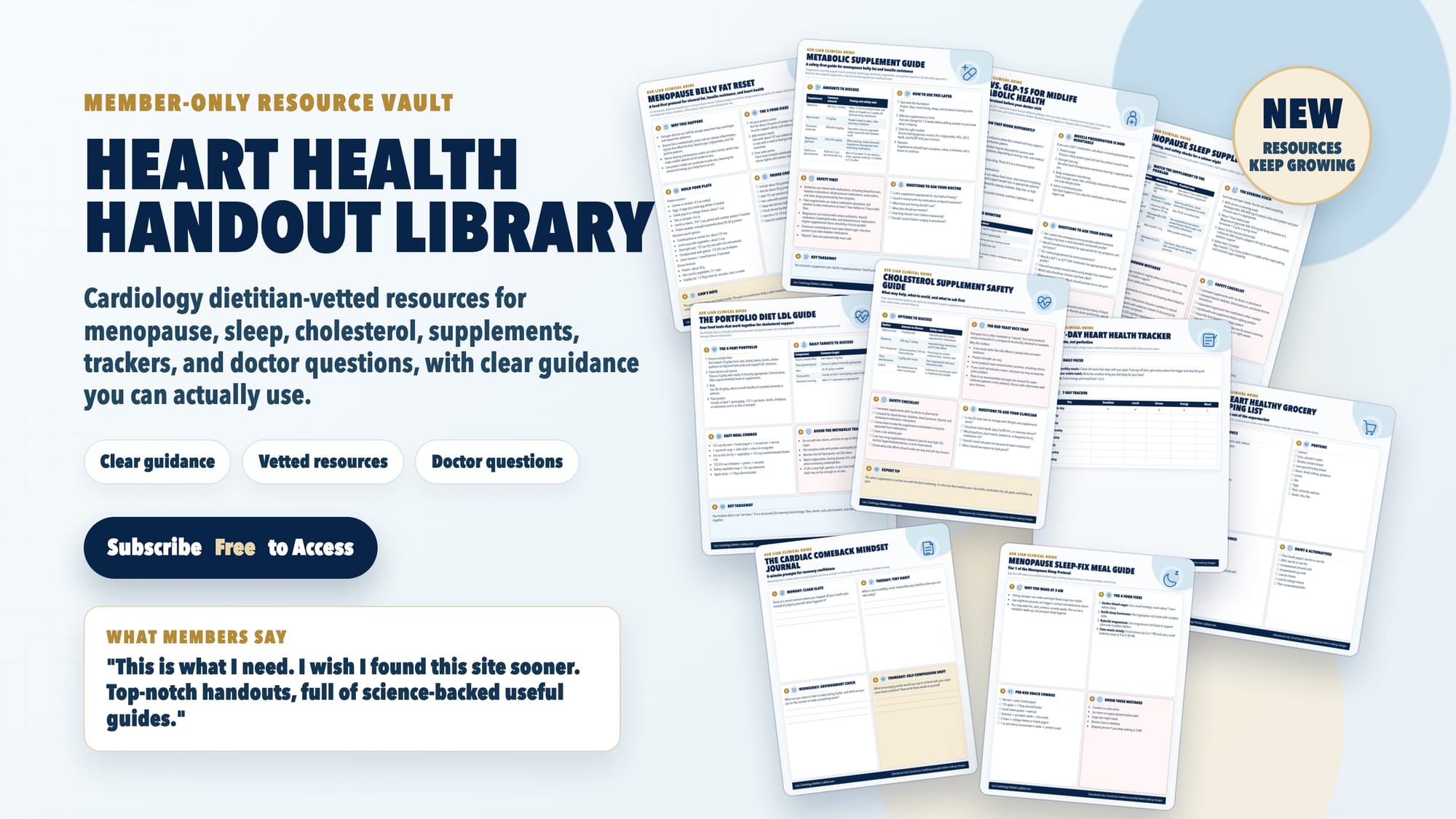
Download Vetted Clinical Handouts & Trackers
Get instant access to a growing library of evidence-based guides, food protocols, and symptom logs vetted by a cardiology dietitian. Access is completely free—simply subscribe to view.
Access Handout Library




Member discussion