Cortisol & Your Heart: 3 Habits to Lower Cardiac Stress

The Silent Link Between Stress and Heart Health
Written by: Lian Liu, MPH, RD, CDCES | Specializing in Cardiac & Menopause Nutrition. Reviewed and updated: June 2026.
> Direct Answer: Chronic stress triggers a surge of cortisol and adrenaline, which can lead to elevated blood pressure and arterial inflammation over time. You can lower cardiac stress by practicing 4-7-8 breathing, establishing boundaries for your morning routine, and using journaling to clear mental tension and activate the parasympathetic nervous system.
When we talk about cardiac recovery, the conversation usually centers around diet and exercise. We count mg of sodium and track steps.
But there is a "silent" risk factor that is just as dangerous: Chronic Stress.
Your Quick Takeaways:
- Stress triggers a physical cascade that raises blood pressure and inflammation.
- Managing stress is just as important as eating your vegetables.
- You don't have to meditate for hours; 5 minutes of focused breathing can lower your heart rate.
How Stress Physically Impacts Your Heart
When you experience stress, your adrenal glands release cortisol and adrenaline. Your heart beats faster, your blood vessels constrict, and your blood pressure spikes.
This is a helpful response if you need to run away from a predator. But if you are stressed about an email from your boss, this physical response provides no benefit. Over time, this constant constriction and elevated blood pressure damages your artery walls.
3 Simple Ways to De-Stress Today
You can't eliminate stress from your life, but you can change how your body reacts to it. Start with these tiny habits:
1. The 4-7-8 Breath
When you feel overwhelmed, try this:
- Inhale quietly through your nose for 4 seconds.
- Hold your breath for 7 seconds.
- Exhale completely through your mouth for 8 seconds. This activates your parasympathetic nervous system, acting as a natural tranquilizer.
2. Guard Your Mornings
Don't check your email or the news the second you wake up. Give yourself the first 30 minutes of the day to stretch, drink a glass of water, or simply look out the window.
3. Let It Go on Paper
If racing thoughts keep you awake, keep a journal by your bed. Write down everything you are worried about. The act of getting it out of your head and onto paper signals to your brain that it no longer needs to hold onto it.
Reframe Your Narrative
A strong recovery starts with a strong mindset. If you're struggling with the emotional weight of a cardiac event, you're not alone.
Download My Daily Mindset Journal Prompts (Take 5 minutes a day to reframe your internal narrative and build unshakable confidence in your recovery!)
🛒 Recommended Tools for a Healthy Heart
Disclosure: Some of the links below are affiliate links. This means if you click through and take action, I may receive a small commission (at no extra cost to you). This helps support the free content on this blog while I only recommend tools and foods I truly believe in for your heart health journey.
- Withings BPM Connect: A highly accurate, easy-to-use home blood pressure monitor that syncs data directly to your phone for your cardiologist.
- Oura Ring Gen3: My favorite wearable for tracking sleep quality, stress recovery, and HRV without a bulky watch.
- Garmin Venu 3: Essential for tracking your heart rate zones and ensuring you are exercising safely during cardiac rehab.
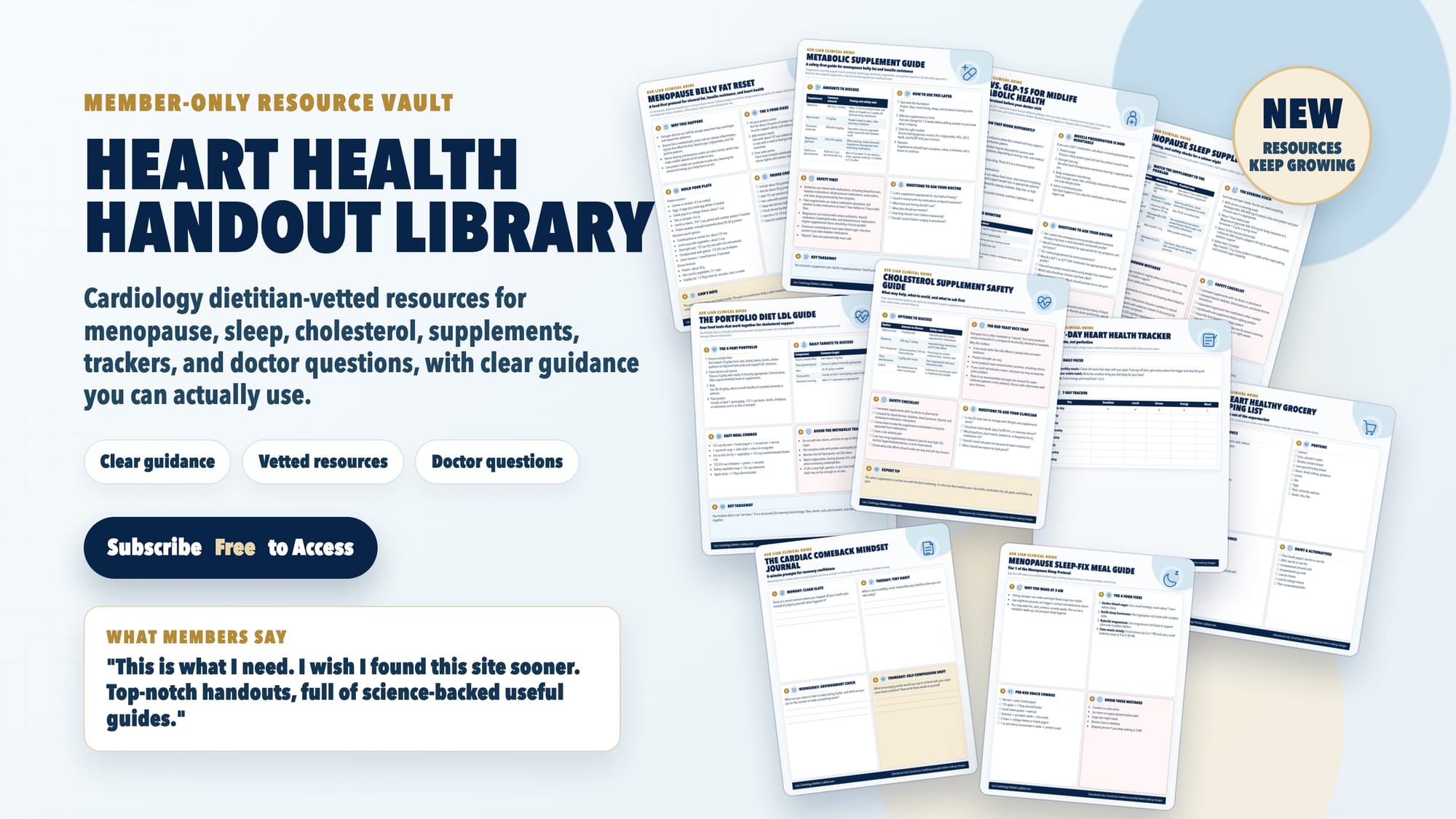
Download Vetted Clinical Handouts & Trackers
Get instant access to a growing library of evidence-based guides, food protocols, and symptom logs vetted by a cardiology dietitian. Access is completely free—simply subscribe to view.
Access Handout Library




Member discussion