
Building Your Support Network After a Cardiac Event

Building Your Support Network After a Cardiac Event
Written by: Lian Liu, MPH, RD, CDCES | Specializing in Cardiac & Menopause Nutrition. Reviewed and updated: June 2026.
> Direct Answer: Building a multi-layered support network is a critical evidence-based intervention because social isolation significantly increases mortality risk following a cardiac event. A comprehensive system includes medical professionals for clinical management, an inner circle for daily practical and emotional support, and peer communities to reduce physiological stress markers like cortisol and inflammation.
Here is a medical fact that doesn't get nearly enough attention: Social isolation after a cardiac event is an independent risk factor for mortality — comparable in severity to smoking cigarettes.
You are not designed to heal in isolation. Your nervous system literally responds to genuine human connection with physiological changes that support your heart.
This is not a soft, feel-good topic. This is clinical cardiac care.
Your Quick Takeaways:
- Social isolation increases mortality risk for cardiac patients by up to 29%.
- Different people in your life play different roles in recovery — know who does what.
- Asking for help is not weakness; it's evidence-based recovery strategy.
Why Connection Heals
When you feel genuinely supported and connected, your body produces oxytocin — a hormone that actively lowers blood pressure, reduces cortisol, and reduces inflammatory response. Loneliness does the exact opposite, keeping your nervous system in a "threat state" that chronically elevates these same markers.
Doctors know this. The literature is clear. Yet rarely does anyone tell a cardiac patient: "Your homework is to have a real conversation with someone who loves you."
The Three Layers of Your Recovery Network
Layer 1: Your Medical Team
- Cardiologist: The quarterback. Reviews labs, manages medications.
- Primary Care Physician: Manages non-cardiac health and coordinates care.
- Cardiac Rehab Team: Exercise physiologists, nurses, and dietitians who specialize in recovery.
- Mental Health Provider: Depression and anxiety are extremely common after cardiac events (up to 40% of survivors). A therapist is not optional if this applies to you.
Make sure every member of this team knows who else is involved. Siloed care is dangerous care.
Layer 2: Your Inner Circle
These are the people you interact with daily: a spouse, partner, close family members, or a best friend. They need:
- Practical roles: Who handles which meals? Who accompanies you to cardiac rehab appointments?
- Communication frameworks: What does a "good" day look like? What does a "bad" day look like? What should they say vs. not say?
- Respite: Supporting a recovering cardiac patient is emotionally demanding. Acknowledge that and protect their wellbeing too.
Layer 3: Your Peer Community
"Peer support" — connecting with other cardiac survivors — is one of the most underutilized resources in cardiac recovery. There is something uniquely healing about talking to someone who has been exactly where you are.
Ways to find your peer community:
- Cardiac Rehab: Most programs include group exercise sessions — these are social by design.
- Online Communities: The r/hearthealthy Reddit community, the AHA's Support Network (heart.org), and Facebook groups for heart attack survivors.
- Heart Association Events: Local AHA "Heart Walks" and support groups.
How to Ask for What You Need
Most people in your life want to help but don't know how. Make it easy for them by being specific:
Instead of: "I'm fine."
Try: "What would actually help me this week is if you could come with me to my appointment on Thursday."
Instead of: "I don't need anything."
Try: "I'd love to have dinner together on Friday — even if it's simple."
The specificity transforms good intentions into actual support.
Track Your Recovery Holistically
Download My Free 7-Day Heart Health Tracker (Includes a daily mood and energy check-in alongside your health metrics!)
🛒 Recommended Tools for a Healthy Heart
(Note: Some of the links below are affiliate links, meaning I may earn a small commission at no extra cost to you. I only recommend products I trust for cardiac recovery.)
- Withings BPM Connect: A highly accurate, easy-to-use home blood pressure monitor that syncs data directly to your phone for your cardiologist.
- Garmin Venu 3: Essential for tracking your heart rate zones and ensuring you are exercising safely during cardiac rehab.
- Vitamix 5200 Blender: Perfect for building flavor with sodium-free dressings, cashew creams, and hearty soups.
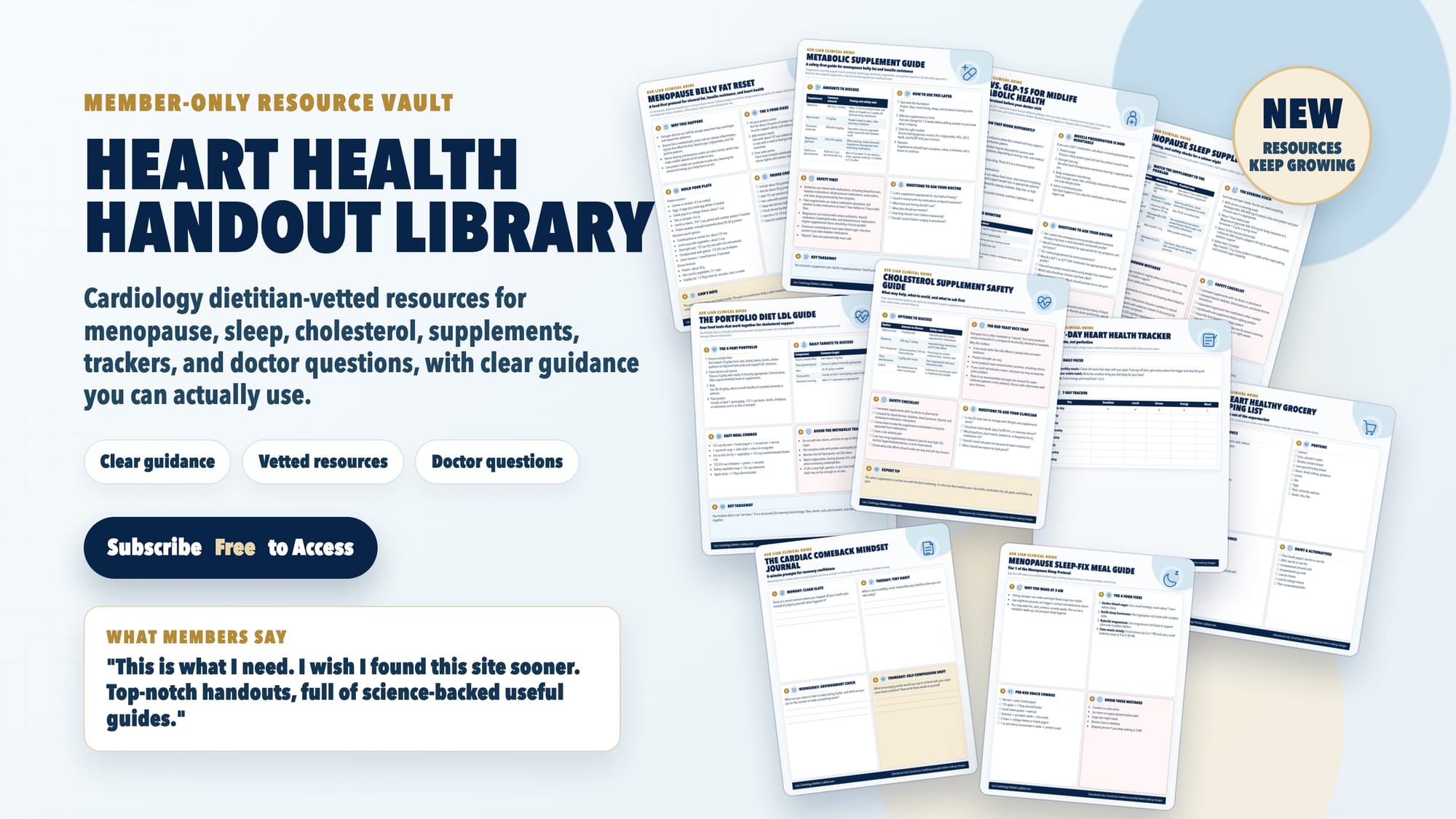
Download Vetted Clinical Handouts & Trackers
Get instant access to a growing library of evidence-based guides, food protocols, and symptom logs vetted by a cardiology dietitian. Access is completely free—simply subscribe to view.
Access Handout Library



Member discussion